Petah Tikva has been designated a red city due to a rise in measles cases in recent weeks, the Health Ministry announced on Monday.
As part of the declaration, residents are asked to bring their children for an additional vaccine dose starting at six months of age, which will not count toward the routine vaccination schedule. When the children reach one year of age, they will receive another dose of the vaccine, in accordance with updated guidelines.
According to the ministry’s statement, the step was taken due to the rapid spread of the disease in the city and the makeup of the population, including a high proportion of ultra-Orthodox families. In these groups, significant gaps in vaccination coverage have been recorded in recent years, increasing the risk of local outbreaks of infectious diseases.
The ministry emphasizes that the guidelines are intended to protect children and reduce the risk of infection across the wider community.
Petah Tikva has joined a series of localities recently designated as red cities or significant morbidity hotspots. Among the cities where measles outbreaks have been recorded are Jerusalem, Beit Shemesh, Ashdod, Bnei Brak, Harish, and additional communities.

The Health Ministry noted that a common denominator among many of these hotspots is the concentration of populations with low vaccination rates, alongside high residential density, which allows the disease to spread rapidly.
One of the most contagious infectious diseases
Measles is among the most contagious infectious diseases. The virus is transmitted through tiny airborne droplets during coughing, sneezing, and even speaking, and can remain suspended in the air in enclosed spaces for extended periods.
An infected person can transmit the disease to between 12 and 18 unvaccinated individuals, an especially high transmission rate compared to other infectious diseases.
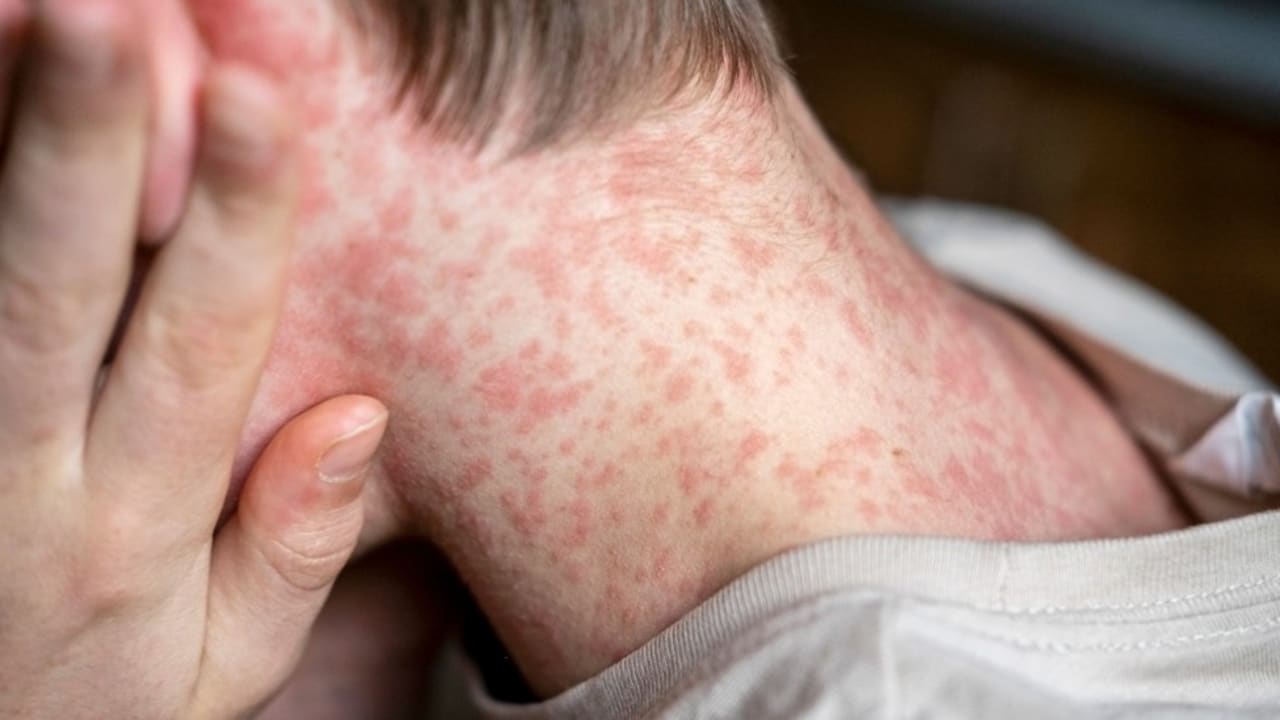
The illness usually begins with flu-like symptoms: high fever, runny nose, cough, and inflammation of the eye conjunctiva. After several days, a characteristic red rash appears, spreading from the face to the rest of the body.
Although it is sometimes a relatively mild illness, measles can cause severe complications, including pneumonia, encephalitis, permanent damage to the nervous system, and even death. The risk is particularly high among infants, young children, and people with weakened immune systems.
In Israel, the vaccination schedule includes two doses of the measles vaccine, the first at one year of age and the second at six.
In outbreak situations, such as the one currently recorded in Petah Tikva, the Health Ministry recommended administering an early dose to infants starting at six months of age. This dose provides temporary protection but does not replace routine vaccinations; children will therefore be required to complete the remaining doses at the scheduled times.