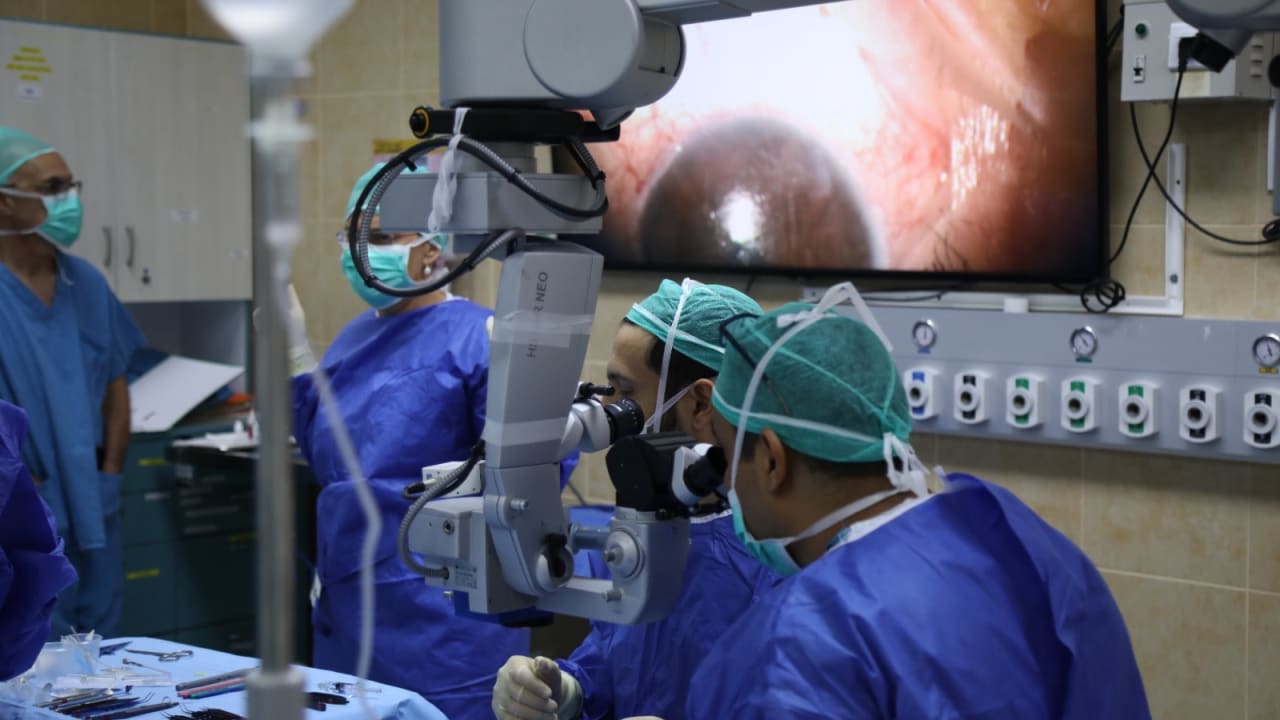
A woman in her 70s has regained partial vision after receiving what may be the world’s first implant of a 3D-printed biological cornea, in a pioneering surgery performed at Rambam Health Care Campus in Haifa.
The cornea was bio-printed using human cells and implanted in a patient who had suffered from corneal blindness in one eye. Developed by Israeli biotech company Precise Bio, the implant represents a major breakthrough in regenerative medicine and could help resolve the global shortage of donor corneas.
More than 13 million people around the world are currently waiting for a corneal transplant due to a critical lack of donor tissue. The new technology allows for the creation of hundreds of implants from a single donor sample, offering a scalable solution.
“This transplant is a moment of real hope for millions of people waiting for corneal donations,” said Arie Batt, co-founder and CEO of Precise Bio. “It’s the first time an implant made entirely in a laboratory from human source cells has been successfully used in a human being. This is not only a scientific breakthrough—it’s a historic moment.”
The printed cornea was produced through a process combining biological materials and human cells to replicate the structure and function of a natural cornea. The technology includes advanced quality control measures and offers improved predictability during surgery, according to the company.

Rambam implants world’s first 3D-printed biological cornea
Unlike synthetic or traditional donor implants, the printed cornea is free from contaminants and features a high cell density, which could improve healing outcomes and visual clarity over time.
Prof. David Tzadok, head of ophthalmology at Jerusalem’s Shaare Zedek Medical Center and a medical adviser to Precise Bio, said the implant was the result of nearly a decade of research.
"Over nearly a decade of work with the company, we have seen how a combined team of researchers, engineers, and physicians succeeds in peeling away layer after layer of the challenges posed by evolution. The cornea managed to simulate the essential properties of human tissue, including transparency and biomechanics, which are so crucial for long-term results while reducing the risk of complications."
Prof. Michael Mimouni, head of Rambam’s cornea unit, confirmed that the surgery went well and that the patient’s vision has already begun to improve. The team continues to monitor her recovery closely.
Prof. Eitan Livni, head of the cornea unit at Rabin Medical Center and also a medical adviser to Precise Bio, emphasized the international importance of the innovation.
"Just last week, I returned from performing a series of eye surgeries in Africa, where many patients suffer from blindness due to a lack of corneal implants and the absence of cornea banks responsible for processing them," he said.
"It is moving to think that the day is approaching when we will be able to offer blind people worldwide, who have no access to corneal implants, an engineered cornea that does not require processing by a cornea bank and arrives ready for transplantation directly from the distributing company. This will be nothing short of a revolution and will restore vision to thousands of blind people."