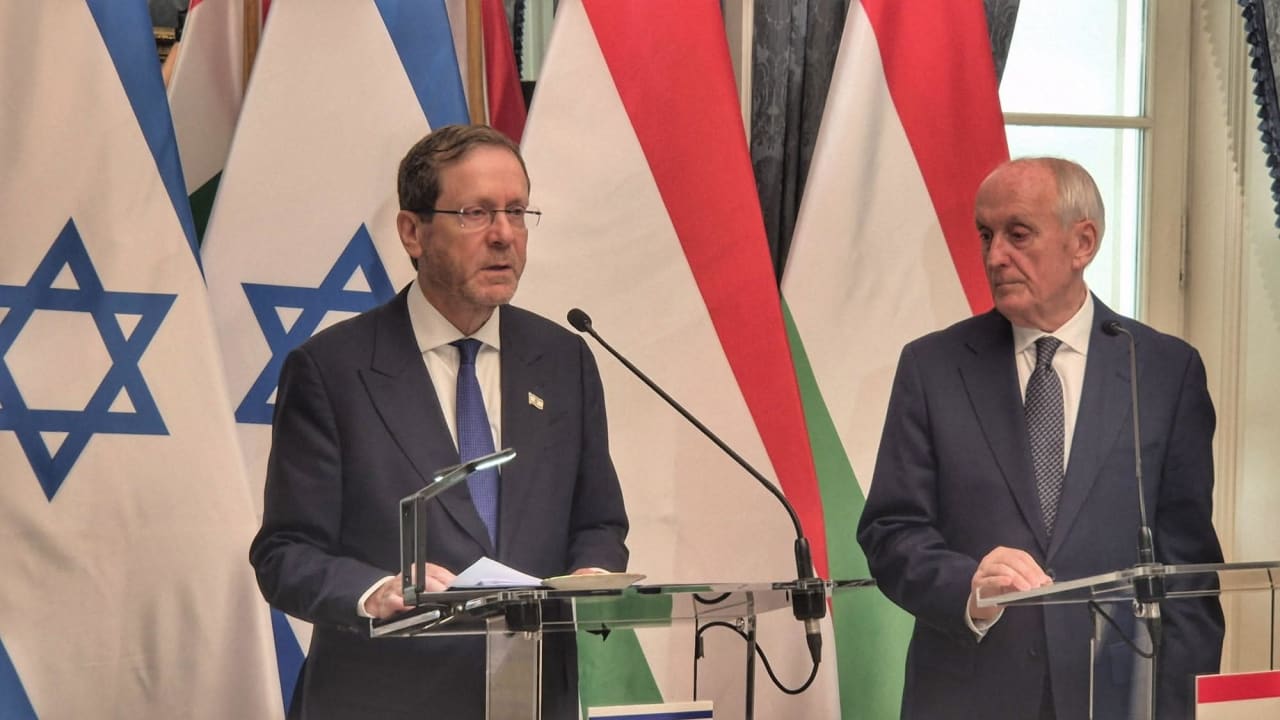
A network of Jewish leaders assembled by President Isaac Herzog has completed its inaugural term with more than 20 initiatives under development, nearly 2,500 applications for its next cohort, and a new challenge: turning the relationships and projects formed since its launch into lasting programs.
For more stories from The Media Line go to themedialine.org
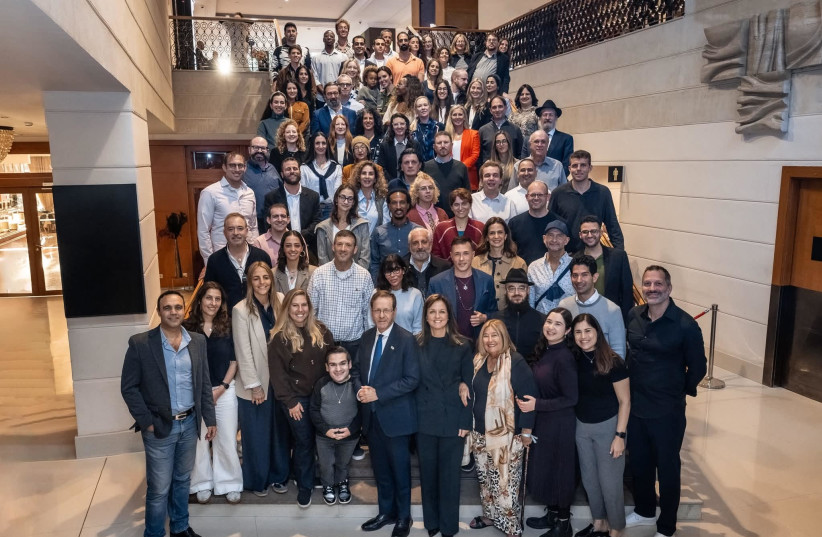
Voice of the People concluded its first council term in Budapest from October 19 to 21, bringing together Jewish professionals and community leaders from around the world to discuss challenges ranging from antisemitism and disability inclusion to public communication and business cooperation across the Middle East.
Jewish leaders assembled from across the world
The council consists of 150 members, with 50 from Israel, 50 from North America, and 50 from other parts of the world. Its first gathering took place in Haifa in March 2025. Herzog established the initiative with the World Zionist Organization, the Jewish Agency for Israel, the Azrieli Foundation, Wilf Family Foundations, and the Patrick and Lina Drahi Foundation.
Members have since worked on initiatives involving education, communication, technology, and regional cooperation. According to the organization, more than 20 projects have reached the proof-of-concept stage. Approximately 2,500 people completed applications for the second cohort, more than double the number who applied for the first. The inaugural members will remain involved through an alumni network as a new group is selected.
The gathering took place against a backdrop of political polarization, rising antisemitism, and unrest affecting Jewish communities in several countries.
Recent riots in France were still unfolding when Robert Ejnes, executive director of the Representative Council of Jewish Institutions of France (CRIF), spoke to The Media Line in Budapest.
“What you’ve seen over the last few days are riots that concern all of France, not only the Jews,” Ejnes said at the event.
He rejected the suggestion that the disturbances were primarily directed at Jews, saying there was no evidence that the Jewish community had been targeted more than other parts of French society.
Antisemitism, however, remained a separate concern. Ejnes said incidents targeting French Jews and hostile social media posts had increased sharply since October 7, 2023, creating considerable anxiety within the community. He blamed much of the increase on parties on the far left, particularly La France Insoumise (France Unbowed), or LFI, and said Jewish organizations were working with French police and government authorities.
Helping diaspora Jews respond to threats
The events in France illustrated one of the challenges facing the council: helping Jewish communities respond to local threats while drawing on the experience and resources of an international network.
Herzog attended the Budapest gathering during an official visit to Hungary. On October 20, he met Hungarian President András Baka at Sándor Palace and Prime Minister Péter Magyar at the Hungarian Parliament.
Baka said Herzog’s visit served “an important purpose,” connecting Hungary’s efforts to strengthen relations with Israel to the Voice of the People conference. Herzog called Hungary “a friend and an ally” and praised its role in promoting what he described as balanced and constructive relations between Israel and the European Union.
Addressing the council, Herzog acknowledged the disagreements and polarization within the Jewish world.
“There have always been disagreements, and there always will be, but our responsibility is to create encounters and connection,” he said.
Antisemitism also featured prominently in the presidents’ discussions. Baka described Hungary as a safe country for Jews and reiterated his government’s policy of zero tolerance toward antisemitism.
Israeli Ambassador to Hungary Maya Kadosh offered a similar assessment, contrasting Jewish life in Budapest with conditions elsewhere in Europe.
“You can live freely as a Jew. You can walk in the street with your kippah, or whatever way you want to look Jewish,” Kadosh told The Media Line.
Baka also addressed the Middle East, calling for full respect for international humanitarian law and the safe, uninterrupted delivery of humanitarian aid.
“Israelis and Palestinians alike must be able to live in security and dignity,” he said.
Inside the conference, participants described the opportunity to engage with Jews from different countries, backgrounds, and professions as one of the council’s principal achievements.
Rebecca Spagnoletto, a British council member, said meaningful cooperation began with bringing people with substantial differences together and encouraging them to remain in conversation.
“We’re finally together in the same room,” Spagnoletto said. “We are getting over our differences and sitting together at the same table to talk to each other. And I think that’s the most important thing, which unfortunately doesn’t happen too often.”
For Hannah Geller, an American video producer and director who leads video production and strategy at the American Jewish Committee, the council provided access to Jewish experiences far removed from her own.
Geller called it “an unparalleled opportunity” to build relationships and understand Jewish life in different countries through individual experiences. The encounters, she said, have informed her goal of producing videos that reflect the diversity of Jewish backgrounds and communities.
Discussions of Jewish security, public advocacy
Other participants focused on issues that receive less attention in discussions of Jewish security and public advocacy.
British journalist Josh Aronson, who is autistic, advocated greater inclusion of people with disabilities. He pointed to Israel’s experience in disability inclusion as something Jewish communities could share more widely.
“I want the Jewish people to bring that to the world, that people with disabilities are capable of doing everything,” Aronson said.
Naftali Aklum, director of educational programs for Israel's Ethiopian National Project SPACE program, emphasized the importance of public communication.
He described the media as another front in Israel’s continuing conflicts and argued that Jewish communities should take greater responsibility for how they are portrayed.
“This is on us, to change the way people think about the Jewish people around the world,” Aklum said.
He credited Voice of the People with providing a framework for developing that work alongside participants with different professional skills and experiences.
Some of the council’s initiatives have extended beyond Jewish communal institutions.
Mikhal Ben Joseph and Israeli entrepreneur Noam Meirov created the Abraham Executive Academy, a network intended to connect business leaders and professionals from across the Middle East and neighboring regions.
Its first summit brought approximately 30 participants from about 10 countries to Berlin in May.
According to Ben Joseph, participants included businesspeople from Lebanon, the United Arab Emirates, Kazakhstan, Azerbaijan, and Indonesia. She said the gathering received support from the German Bundestag and took place during a period of regional war that had initially cast doubt on whether all the invited participants would attend.
“Nobody thought it was going to be possible in the middle of the war to bring these people together for a week of reimagining what Middle Eastern business, geopolitics and collaboration could look like,” Ben Joseph said.
The organizers hope to expand the network. Ben Joseph described their ambition as creating a “Davos of the Middle East,” bringing together business leaders who might otherwise have limited opportunities for direct engagement.
The Budapest gathering also marked a transition for an initiative that began as an experiment.
Deborah Apeloig, founder of Tikun Talks, described the inaugural council members as “guinea pigs in this first experiment.”
She said the program’s staff relied on focus groups and regular conversations with participants to refine its structure and activities. That flexibility proved particularly important because much of the council’s term unfolded during the war.
Apeloig expects the original 150 members to remain involved as ambassadors after the next cohort is selected, preserving relationships and helping newer participants build on the work already underway.
American journalist and filmmaker Yuval David said the council should not define its purpose solely through responses to crises affecting Jewish communities.
“We can’t only be reactive. We need to be proactive,” he said.
David described Voice of the People as a movement rather than a temporary conference, emphasizing the importance of initiative and long-term cooperation.
The second cohort will join an established international network, with more than 20 projects already in development and a substantially larger applicant pool than the first.
For the inaugural members, however, the central challenge has shifted. Bringing Jewish leaders together was the beginning. Keeping their partnerships alive, securing support, and turning promising ideas into sustainable programs will determine how much of the council’s first-term work endures.