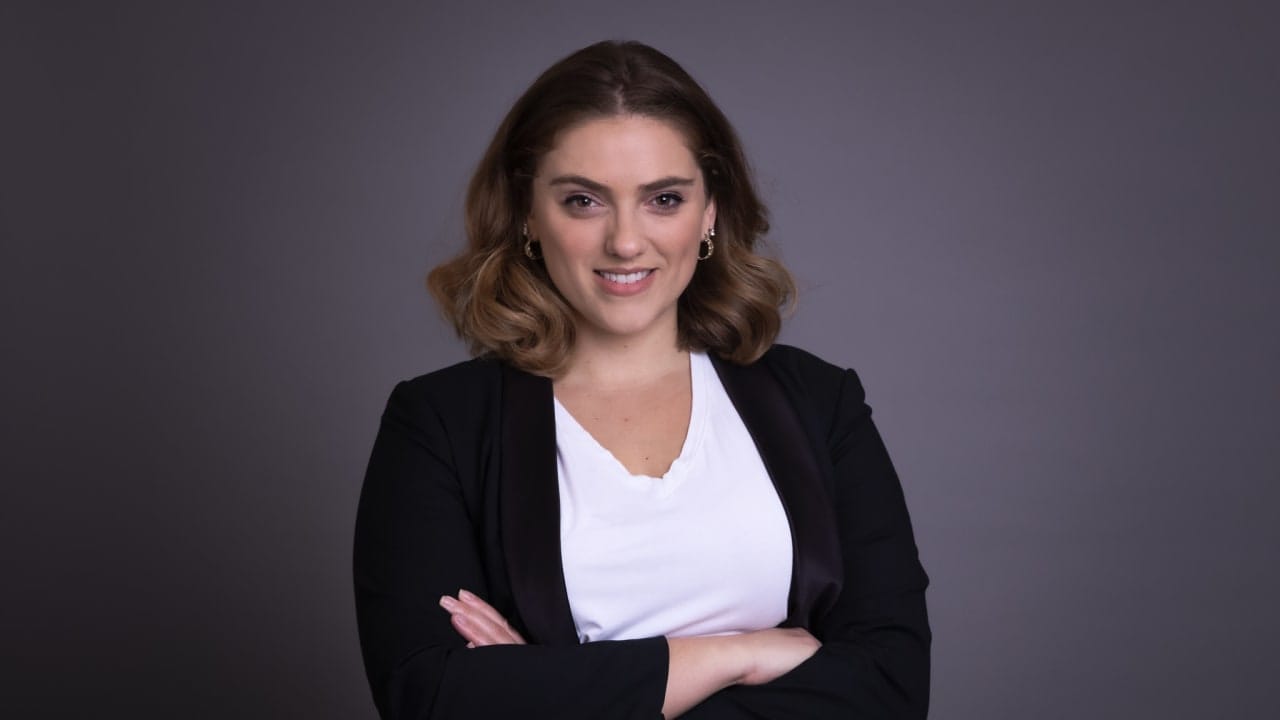
To confront online antisemitism, CyberWell founder and CEO Tal-Or Cohen Montemayor argued that communal leadership must fundamentally shift its strategy. "We absolutely must lead with a technology-first approach," she said, adding that institutions "also must lead with a digital literacy-first approach."
Following her appearance as a panelist at the Jewish Federations of North America’s General Assembly last Tuesday, Cohen Montemayor sat down for an interview with The Jerusalem Post this week to examine how automated systems, generative artificial intelligence, and shifting platform policies are driving modern online antisemitism.
Cohen Montemayor, who leads the online antisemitism compliance solutions organization, told the Post that "Antisemitism as we're dealing with it today started on the platforms and the internet much earlier than what our established Jewish organizations and leaderships understand, and they are actually dealing with interpersonal antisemitism, antisemitism at the workplace, the exclusionary anti-Zionist movement in our institutions, as a result of what people have been algorithmically fed for close to a decade."
Cohen Montemayor warned that the rapid rollout of generative AI poses both a national security risk and a major challenge for the information space. As users increasingly bypass traditional search engines in favor of AI chatbots, the integrity of underlying training data has become a critical battleground.
"People are no longer even googling information about these topics. They're going to believe whatever the chatbot LLM tells it," Cohen Montemayor said. "There are foreign state-funded attempts to astroturf the LLMs themselves through poisoning knowledge sources like Wikipedia and Reddit." She noted that an "unbridled and actively poisoned information space by America's adversaries" presents a direct threat to how Jews and Israel are understood online.

Generative AI makes producing online antisemitic content easier, cheaper
At the same time, generative AI lowers the cost and technical barrier for bad actors to produce visually convincing, trendy antisemitic media while exhausting automated moderation systems trained primarily on human-generated text.
"The generative AI element is a dark horse element that's going to exhaust their content moderation systems that were actually trained on what we call human-generated content, meaning the AI-generated antisemitism doesn't look the same as human-generated antisemitism," she said.
Bad actors continue to pair these tools with evolving coded language, such as 'tiny hats,' (a code word to refer to a Kippah) 'Jill Q's' as phonetic shorthand for ‘Kill Jews,” and '271k' as an alternative figure to the six million Holocaust victims. Those codes frequently cross over into humoristic generative AI prompts asking chatbots how long it would take to bake six million cookies or pizzas in an oven.
Beyond platform enforcement, Cohen Montemayor outlined clear steps for individuals and communities. Citing American Jewish Committee survey data showing that only one in three Jews who encounter online antisemitism report it, she urged users not to scroll past hateful posts.
"These policies that are meant to protect minorities are dependent on the small group of people who are experiencing the wave of hate to actually enforce policy at scale for these platforms, and that is something that I continuously reject," she said, while urging individuals to use the tools available. "If you've already seen an antisemitic piece of garbage online, you can take the extra minute to report it. You've already been offended by it. Go ahead and report it."
On a communal level, she called for structured digital literacy curricula in schools, organizational policies governing online conduct, and early conversations between parents and children. She warned that constant exposure to online hostility takes a psychological toll that communities must actively counter.
"Repeat exposure to this hatred and to lies about the current war in Israel also produce internalized shame amongst Jews," Cohen Montemayor said. "We need to be able to address that and to be knowledgeable and resilient to the fact that we are going to encounter misinformation and disinformation campaigns, and that it should mean nothing about the way we treat ourselves."
Turning to Washington, Cohen Montemayor noted that following the recent US elections, social media companies are preparing for renewed legislative scrutiny around AI safety, data centers, election interference, and online disinformation. She pointed to leadership shifts such as Joel Kaplan stepping down at Meta and Dina Powell McCormick taking over external affairs as evidence that tech firms are adapting to an expected regulatory wave on Capitol Hill.

"The social media companies are reorienting themselves and ready for the fact that there's going to be new legislation," she said. "I think that the Jewish community needs to ask itself how involved they're going to get to ensure that antisemitism is one of the issues addressed inside of this new wave of tech policy initiatives that we'll see."
Reflecting on her General Assembly panel alongside CCDH, she advocated for pairing legal accountability with technical compliance. "The winning combo is technology solutions that CyberWell is bringing to the table, and policy/legislation," Cohen Montemayor said. While CCDH pursues a "sue them" strategy aimed at reforming Section 230 and establishing platform liability, she compared CyberWell's work to providing "seat belts" for online safety.
Platform removal of antisemitism dropped in past year
Previewing preliminary data ahead of CyberWell's upcoming annual report scheduled for release in January, Cohen Montemayor warned that platform enforcement has recently regressed. Across major social media networks, overall removal rates for antisemitic content flagged by CyberWell have fallen below half, with slowdowns recorded on Meta, minimal movement on YouTube, and a drop on TikTok compared to last year.
"We have seen a slowdown in rates of removal by the social media platforms, despite having this technology and despite having a partner like CyberWell," she said. "Some of the social media platforms who showed promise in last year's annual report, I'm talking specifically about Meta, have shown a downward turn in their response rates."
She identified three dominant narratives driving online antisemitism today: Holocaust mockery that recasts Hitler as a hero, classic conspiracy theories of Jewish control that weaponize the term "Zionist," and "event-driven antisemitism," which scapegoats Jews within hours for tragedies ranging from US elections to the Los Angeles wildfires.
Because platforms classify scapegoating as general misinformation rather than hate speech, enforcement gaps persist. "They literally do not recognize today that scapegoating Jews is a form of Jew hatred," Cohen Montemayor said, adding that CyberWell's real-time alerts have increased tenfold since 2022, fueled heavily by "false flag" narratives claiming Jews orchestrate attacks against themselves.
"It's no longer just Holocaust denial. It's denying that Jews can be the victims of any attack, even attacks against themselves, by saying that they have orchestrated the attack against themselves," Cohen Montemayor told the Post.