The Columbia University Advisory Committee on Social Responsible Investing (ACSRI) rejected three anti-Israel divestment proposals on Friday, arguing that appeals to withdraw investment from companies with financial ties to Israel were overbroad, impractical, and without the necessary degree of consensus to be implemented.
The three December 2024 proposals by Columbia students, faculty, and staff accused the Israeli government and military of human rights violations, war crimes, and apartheid, in particular since the Israel-Hamas War. The alleged Israeli violations, which ostensibly included the restriction of humanitarian aid with intention to starve civilians, and the deliberate targeting of civilians, were supposedly made possible by companies in which the university was invested, such as businesses that built parts for fighter jets or construction equipment used in demolition projects.
The proposals contended that Columbia’s investment in companies that provided service or succor to Israeli efforts through business interactions constituted violations of the spirit of the university’s principles, United Nations-backed Principles for Responsible Investment, and US foreign assistance laws.
The second and third proposals also appealed to Columbia’s past commitments to divestment from fossil fuels and to environmentally friendly policies, arguing that the war had damaged the local environment and emissions from explosives and vehicles had exacerbated global climate change.
The same two proposals also contended that while there was no unified view or explicit majority backing the divestment documents, past proposals against apartheid South Africa and human rights violators in Sudan hadn’t required such a high bar of consensus.

Columbia asked to reveal ties to Israel
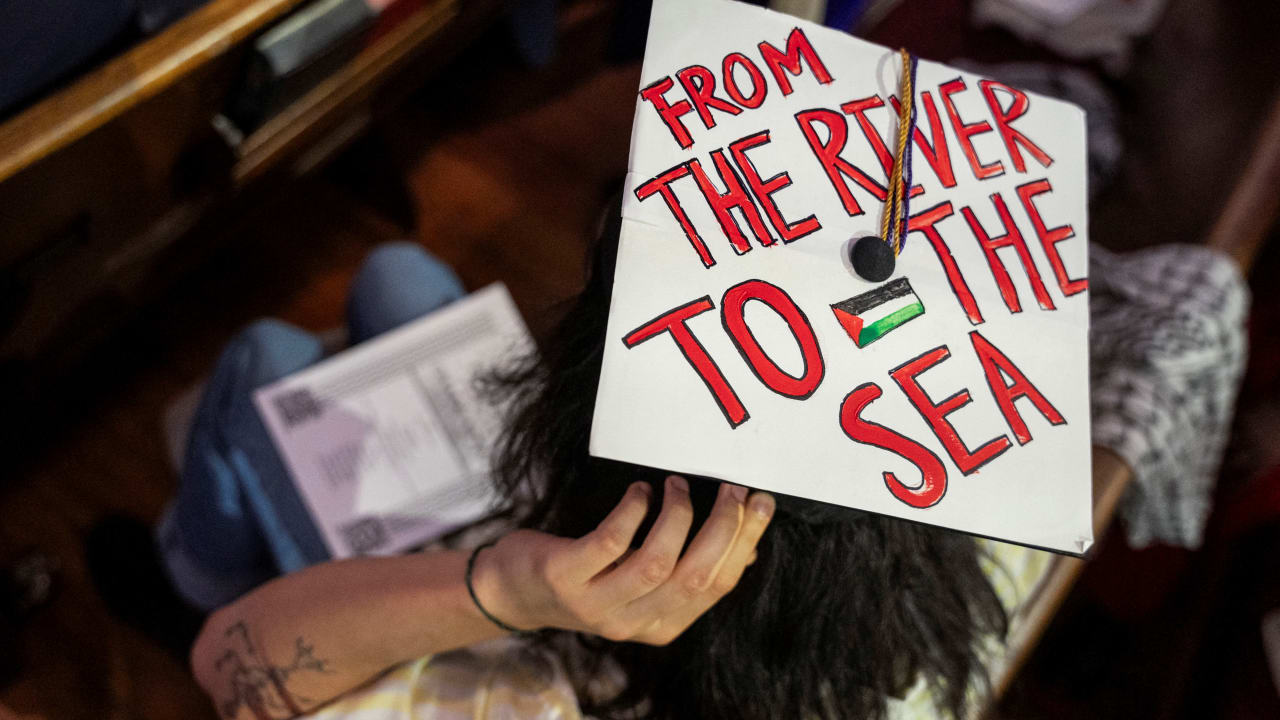
A large contingent of activists pushed past divestment proposals and is argued to have reflected the wider campus sentiment.
Columbia was asked in the proposals to identify invested companies with ties to Israel, to use its role as a shareholder to cease activities that lend to any alleged violations, divest from those that do not, and continue to monitor companies according to the established precedent.
The ACSRI said in its responses that while there may be a broad consensus that human rights abuses were unacceptable, when it came to the application of that underlying issue, there was dissent. The high bar of consensus was deliberate in order to represent the vast and diverse opinions of the student, faculty, and alumni bodies, and the presence of a strong opposition is often used to judge whether a unified view existed.
Hundreds of Columbia students, faculty, and alumni had expressed opposition to boycott and divestment proposals in the past, including to a December 2023 Columbia University Apartheid Divestment (CUAD) proposal.
“The evidence reveals a divided community with wide-ranging views on these issues,” ACSRI said in its statement on the second proposal.
The US foreign aid legal regime that the proposals referred to was potentially misrepresented in the documents, and it was not obvious to ACSRI that the university could make its own determinations about whether statutes of the Foreign Assistance Act and Leahy Laws should be implemented. The university also clarified that it was incorrect of the proposals to state that the institution had endorsed the UN PRI.
Beyond the legal issues, the definitions of what amounted to a company’s contribution to human rights violations were “vague and excessively broad,” according to the committee.
“Taken as is, the proposal would imply no end to the list of companies that could be categorized as violating human rights,” ACSRI said in its first response. “One would have a hard time drawing the line on the boundaries of which industry can be legitimately treated as a violator of human rights. The proposal could potentially encompass much of the stock market, making any investment activity difficult,” it emphasized.
Even if Columbia could identify alleged human rights violators that it was invested in, US regulations would make it difficult to influence the company, and, according to ACSRI, could see Columbia labeled as an “activist” investor with all the attendant consequences. The resources to engage in such activist shareholder action would require significant resources to file such shareholder proposals.
“ACSRI has concluded that this proposal does not meet the broad consensus test, nor the viability test required for consideration of shareholder engagement or divestment,” read the committee’s second response.
The committee had also rejected a similar CUAD proposal last February 29, emphasizing the three divestment criteria that would need to be met: broad university consensus, dispute merits clearly lying on one side, and viability.
CUAD had cited its protests and 2002 and 2018 student government and faculty votes – which ACSRI stated did not represent the unified consensus of the institution since they had only come from one school – were from affiliates with separate endowments, or came from organizations that did not have widespread support.
ASCRI had also addressed appeals regarding past divestment from fossil fuel companies or apartheid in South Africa, noting that no community members had stood in opposition to such divestment efforts.