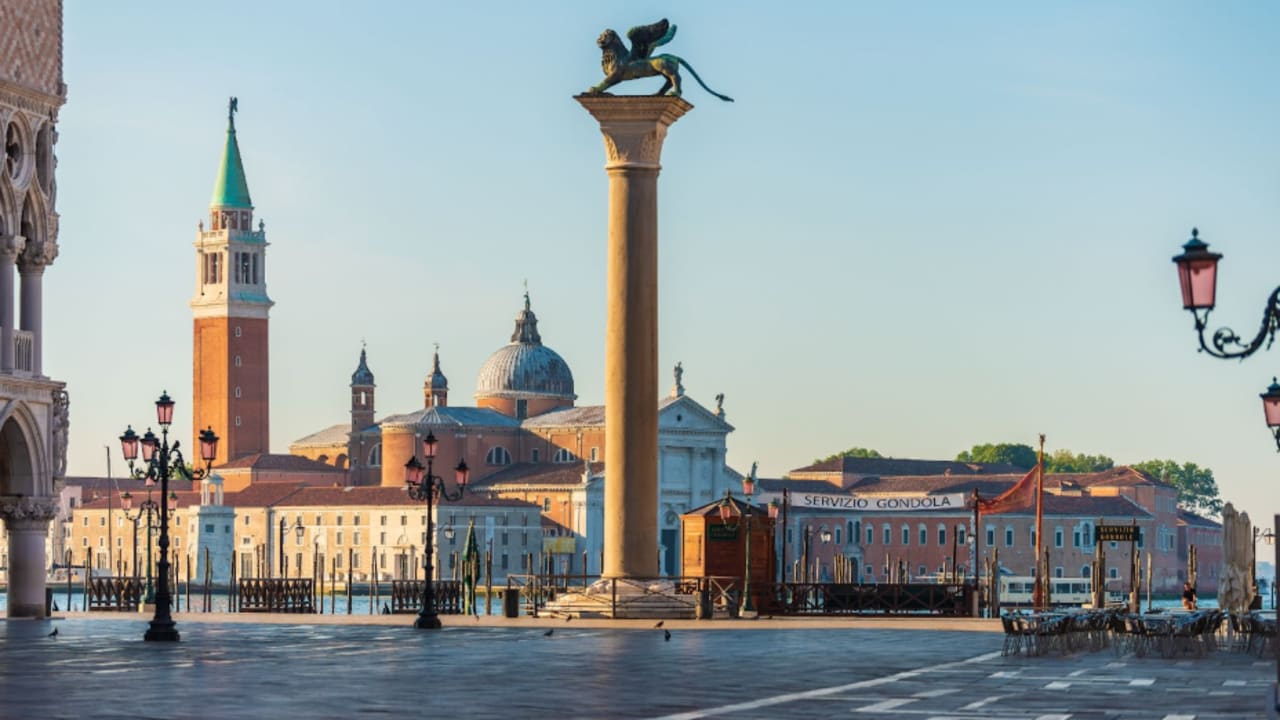
New research in the journal Antiquity revealed that the bronze used in Venice’s Winged Lion originated in the Yangtze River basin in southeastern China, according to Live Science. The finding came from lead isotope analysis that linked the metal to Chinese ore deposits.
Italian researchers analyzed lead isotopes in nine samples taken during a 1990 restoration, using mass spectrometry to compare the statue’s metal with global reference collections. The lead isotope ratios matched deposits along the Lower Yangtze River, and earlier work showed that a Shang dynasty artifact carried the same signal.
The result placed the source farther east than earlier hypotheses that pointed to a 12th‑century Venetian foundry or to Anatolia, northern Syria, Mesopotamia, and ancient Greece, Le Figaro reported. To address the debate, scientists relied on lead isotopes, geochemical tracers that tied metals to their original ore deposits.
The analysis supported a scenario in which the Winged Lion was either older than assumed or at least partly made in China during the Tang Dynasty (618–907 CE) before traveling to Europe. Researchers said the copper reached Europe via the Silk Road. “Venice is a city full of mysteries, but one has been solved: the ‘Lion’ of St. Mark is Chinese and passed through the Silk Road,” said Massimo Vidale of the University of Padua. “We do not know when it arrived in Venice, where it was reworked, who made it, or when it was erected on the column where it is still visible today,” said Vidale.
Stylistic clues aligned with the metallurgical evidence. The figure’s pointed ears, bulbous nose, traces of former horns, mane, and raised wings matched features of zhenmushou, Chinese tomb guardians of the Tang period. Researchers pointed to metallic scars where one or two horns may have been detached, and the ears appear shortened to align the creature with the Lion of St. Mark. The overall style diverges from European lions of the 11th to 14th centuries.
How the object reached Venice remains unclear. One hypothesis proposed that Niccolò and Maffeo Polo encountered a Chinese tomb guardian at the court of the Mongol emperor Kublai Khan and arranged to send it west. The brothers traveled the Silk Road, established trading stations, reached the city now known as Beijing, and spent years at Khan’s court. The statue may then have been disassembled, transported in parts, and reworked by local metallurgists in Venice, possibly under the Polos’ direction. “Just years earlier, the Republic of Venice had adopted the lion as its symbol, and the Polos may have had the somewhat brazen idea of readapting the sculpture into a plausible (when viewed from afar) Winged Lion,” the study said. “Of course, this is just one possible scenario based on the intersection of historical and archaeometallurgical data. Now the word is with historians,” the authors wrote.
The Winged Lion became the official symbol of Venice in the early 1260s, with the creature shown leaning on the water and the Gospel of Saint Mark under its feet. The purple granite column that now supports the statue likely arrived shortly before 1261, possibly as loot from the sack of Constantinople. In the archives, the sculpture appeared only once, in a document dated May 14, 1293, by which time it already needed repair.
Today, the bronze stands atop one of two lagoon‑side columns and attracts millions of visitors each year. It appears across the city on buildings, coins, flags, and the Venice Film Festival’s Golden Lion. The monument survived its removal to Paris by Napoleon after the fall of the Venetian Republic in 1797; it was broken into pieces there and returned to Venice in 1815.
The preparation of this article relied on a news-analysis system.