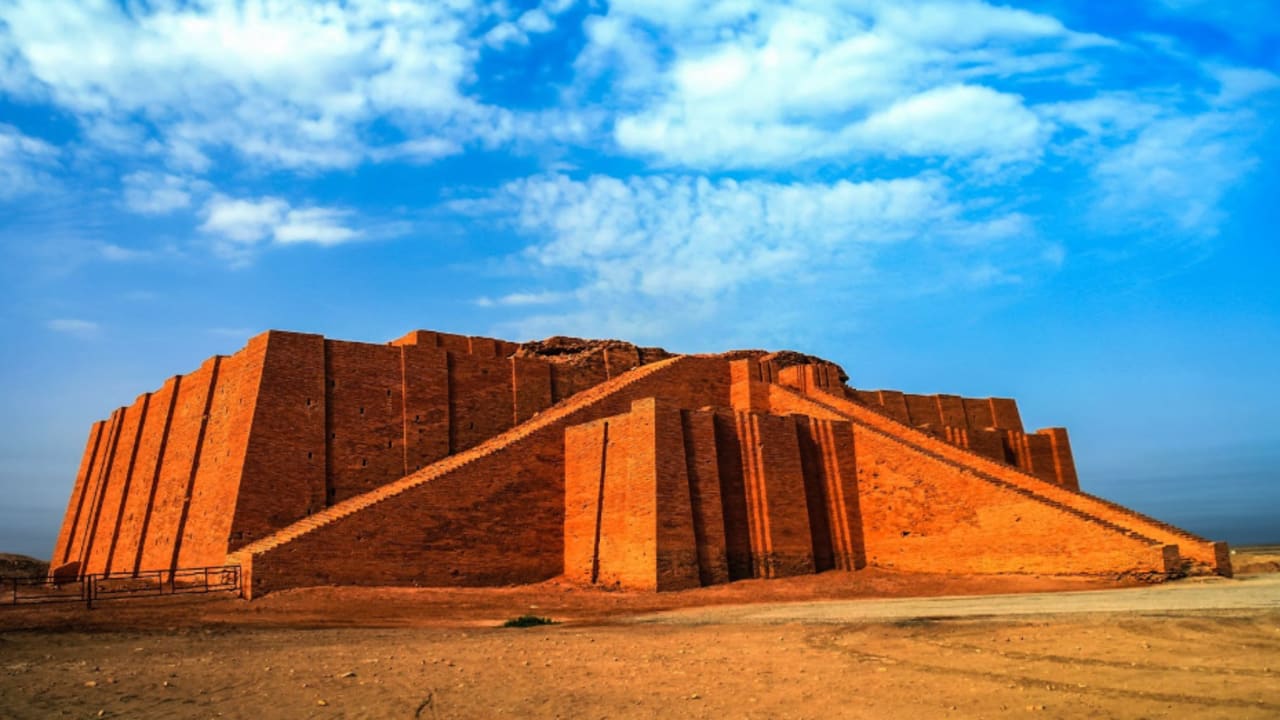
A new study published in PLOS One suggests that the first great cities of Sumer may have been built on tides, not canals. Researchers argue that freshwater tidal flows from the Persian Gulf created a natural irrigation system that sustained agriculture thousands of years before the construction of Mesopotamia’s famous hydraulic networks.
The study, led by Liviu Giosan of Woods Hole Oceanographic Institution and Reed Goodman of Clemson University, reconstructed the environmental history of southern Mesopotamia using high-resolution satellite data, prior geological records, and a new drill core from Lagash (ancient Tell al-Hiba). Their findings indicate that between 7,000 and 6,000 years ago, freshwater tides extended deep into the Mesopotamian plain, reaching as far north as Nippur.
According to the authors, these tides irrigated fields naturally, requiring little human effort to sustain. “The tidal cycle functions naturally to irrigate low-lying terrains beyond the river levee,” the study explains, adding that ebb tides helped drain excess water and flush salts from soils.
This model provides an explanation for the long-debated “early irrigation paradox.” While large-scale canals appear only around 4,500 years ago, the earlier Uruk period (6,000–5,200 years ago) already supported urban populations, monumental architecture, and economic specialization. The researchers suggest that tidal irrigation allowed early settlements such as Eridu, Ur, and Uruk to prosper without elaborate engineering.
The environmental record also shows why this system could not last. As sediment from the Tigris, Euphrates, and rivers of Khuzestan progressively filled the head of the Gulf, tidal influence declined between 6,000 and 5,000 years ago. By the Early Dynastic period (4,900–4,350 years ago), Mesopotamian societies turned to large-scale fluvial irrigation to maintain productivity. This shift, the authors note, coincided with the rise of the city-states of Ur, Kish, Lagash, and Umma, where rulers organized canal digging and fought over water and land.
By highlighting coastal morphodynamics — the interplay of rivers, tides, and delta growth — the researchers argue that environmental change was central to Sumer’s political evolution. “The evolving coastal landscape was a root cause for adopting and enhancing large-scale river irrigation in coastal Sumer,” the study concludes, linking natural processes with the emergence of state institutions.
The findings suggest that tides, often overlooked in Mesopotamian archaeology, may have played a decisive role in the origins of urban civilization.
Written with the help of a news-analysis system.