When painter Barbara Hines was introduced to Natan Ophir, a Ma’aleh Adumim resident, she asked whether there was a local art museum where they could have their first date.
It so happens that Ma’aleh Adumim houses the only museum of fine arts in Judea and Samaria, the Moshe Castel Museum of Art.
On that auspicious date in May 2025, Hines happily discovered two men: one who became her husband a year later, and another whose paintings – like hers – incorporate the very material of the Land of Israel.
'Simply painting this land didn’t feel like enough'
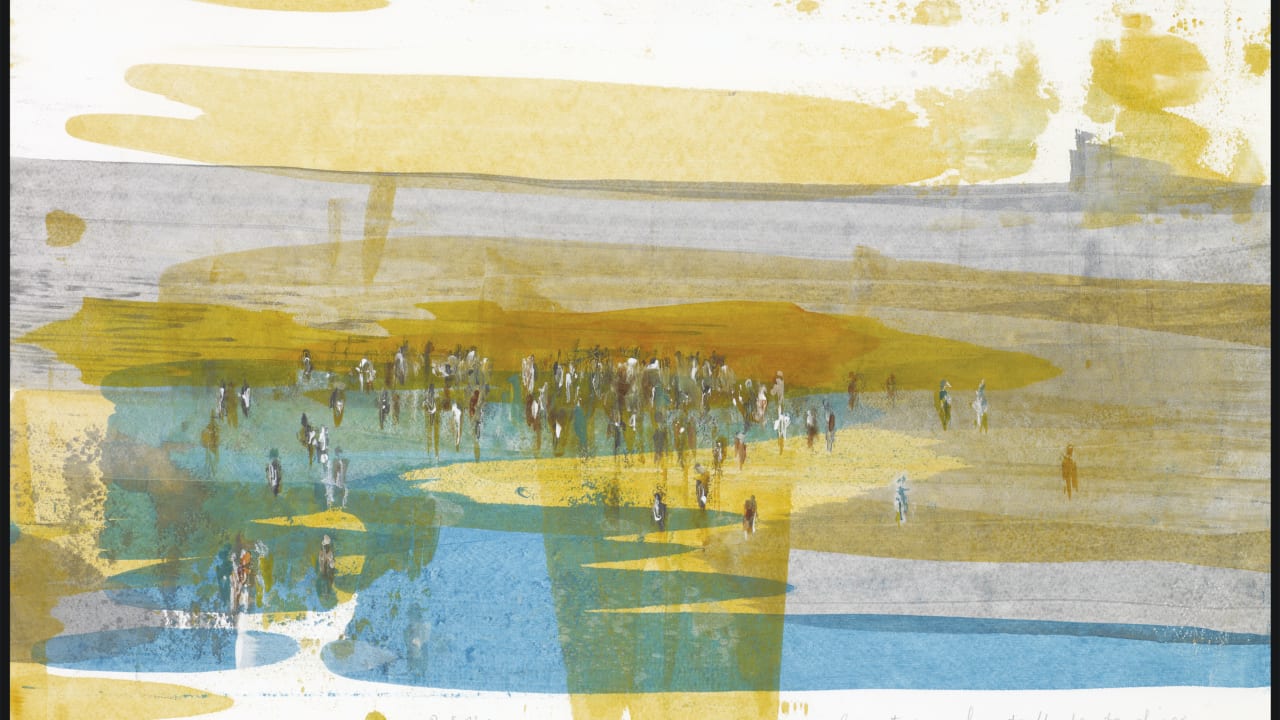
She hadn’t been acquainted with Castel (1909-1991), developer of a trailblazing painterly technique incorporating domestic crushed basalt mixed with sand and glue. Yet in America, she’d already been creating paintings of Jerusalem for 10 years, using pigments mixed with finely powdered soil brought or sent to her from the holy city.
“Simply painting this land didn’t feel like enough. I wanted the Holy Land to become part of my paintings,” she explained.
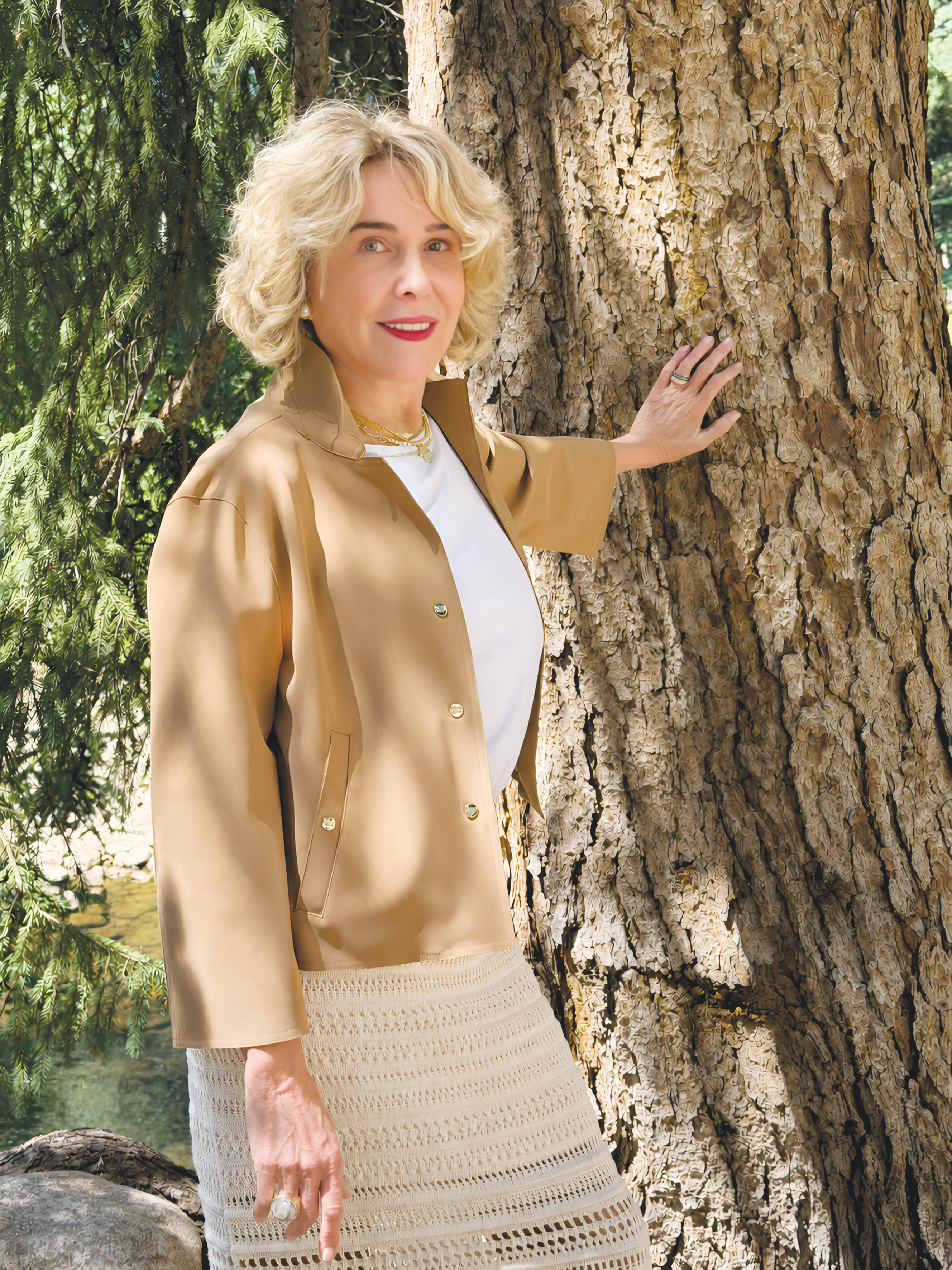
It is only fitting, then, that this newlywed new immigrant’s first solo exhibition in Israel, “Jerusalem in My Soul,” is hanging through January 15 at the Castel Museum in the Jerusalem suburb where she and Ophir are building a home together.
HINES AND Castel came to Ma’aleh Adumim from vastly disparate backgrounds. Whereas Castel was a Sabra, Hines was born in Germany and raised in a Christian home in Australia. She later became a practicing Buddhist.
After graduating from the University of Sydney and studying at the New York School of Interior Design and Pratt Institute, she married Gerald Hines, an international real estate developer. The couple and their children, Serena and Trevor, spent time living in Houston, Aspen, London, and southern France.
“During our years in London, the direction of my life changed,” Hines related. “Trevor was 14 and privately exploring the roots of Christianity. Trevor’s search culminated with his announcement that he wanted to be Jewish!”
Trevor’s parents embraced his surprising announcement.
“I didn’t care that he wanted to change to Judaism; I just wanted my children to have a connection with the divine,” she said.
A bigger surprise was yet to come
Hines made their kitchen kosher and began learning about Shabbat and the Jewish holidays.
But a bigger surprise was yet to come. When Trevor called his maternal grandmother to tell her that he planned to convert, she replied: “Ach, das ist interessant. Meine Mutter und Großmutter waren beide jüdisch” (“Oh, that’s interesting. My mother and grandmother were both Jewish”).
Which meant that Hines and her children were Jewish, too.
“I’d had no idea that my parents had survived World War II in Germany as Jews. When they began a new life in Australia, they chose to hide that part of their identity. They knew what could happen simply because a person was Jewish; they wanted to protect us,” Hines said.
Her husband, an agnostic Christian, fully supported his wife and children’s gradual return to their Jewish heritage, guided by Chabad rabbis in the various places they lived. As her Jewish knowledge grew, her artistic horizons grew, too.
“Until then, I had mostly painted light, color, and landscape – fleeting moments of beauty in nature that caught my eye. But now I was drawn to different subjects. Long before I moved here, I wanted to paint Jerusalem.”
Her first visit was at age 22. After university, she bought a one-way ticket to Germany to explore the country where she and her parents were born. She took a job teaching at a German high school and accompanied a group of students and teachers on a trip to Israel. Already then, she recalled, “I felt a strong connection to the land and its people.”
Hines moved to Florida after her husband died in 2020.
“Then I thought, why am I in Florida? I’d been painting Israel and Jerusalem, and my heart was here. I came to Israel on a lot of trips but never stayed long enough. So I bought an apartment in Jerusalem. My daughter’s husband is Israeli, and his family was very supportive and welcoming to me.”
It was her son-in-law’s family that introduced Hines to Ophir, a rabbi with a PhD in Jewish philosophy from the Hebrew University of Jerusalem. He has a dozen grandchildren in Ma’aleh Adumim and a dozen more in nearby Judean Desert communities.
After their wedding last spring, Hines and Ophir moved into her German Colony apartment. They plan to spend half their time in Ma’aleh Adumim, when their new apartment is finished. The building overlooks the Judean Hills, close to the Castel Museum and the home that Castel’s widow built next door.
Hines signs her canvases “B”H” – which are not only her initials but also an acronym for baruch Hashem (blessed is God).
“My signature becomes a prayer. Using these letters, I give thanks to God for giving me the strength and opportunity to create.
“I feel that putting the soil and the blessing into them [the canvases] will give them a better chance of doing the work they should do, which is to inspire and uplift people.”
Hines noted that she’s now been a practicing Orthodox Jew for 25 years.
“I have my own brand of Orthodoxy; it’s kind of Chabad minus the humrot [stringencies],” she explained.
Along with her own relocation to Israel, her paintings created in several other countries have come home, too.
She even brought to Israel a collection of works she’d hung in the Barbara Hines Building at Aishel House at Texas Medical Center, a hospitality service offered by Houston Chabad for out-of-town hospital patients and their relatives. Not wanting to leave the walls empty, she put framed art-quality copies in place of the originals.
Starting over in a new country doesn’t faze her; in a way, it’s in her blood.
“I’m the daughter not only of Holocaust survivors but of refugees, too, so I have a lot of empathy with people who are starting anew anywhere in the world. I’ve been on the move all my life,” Hines said.
“I always felt like a stranger. The word ‘Barbara’ means ‘barbarian,’ which means a stranger. Now I’m Bracha, and that is a blessing.” ■
Barbara (Bracha) Hines From Florida to Jerusalem, 2026