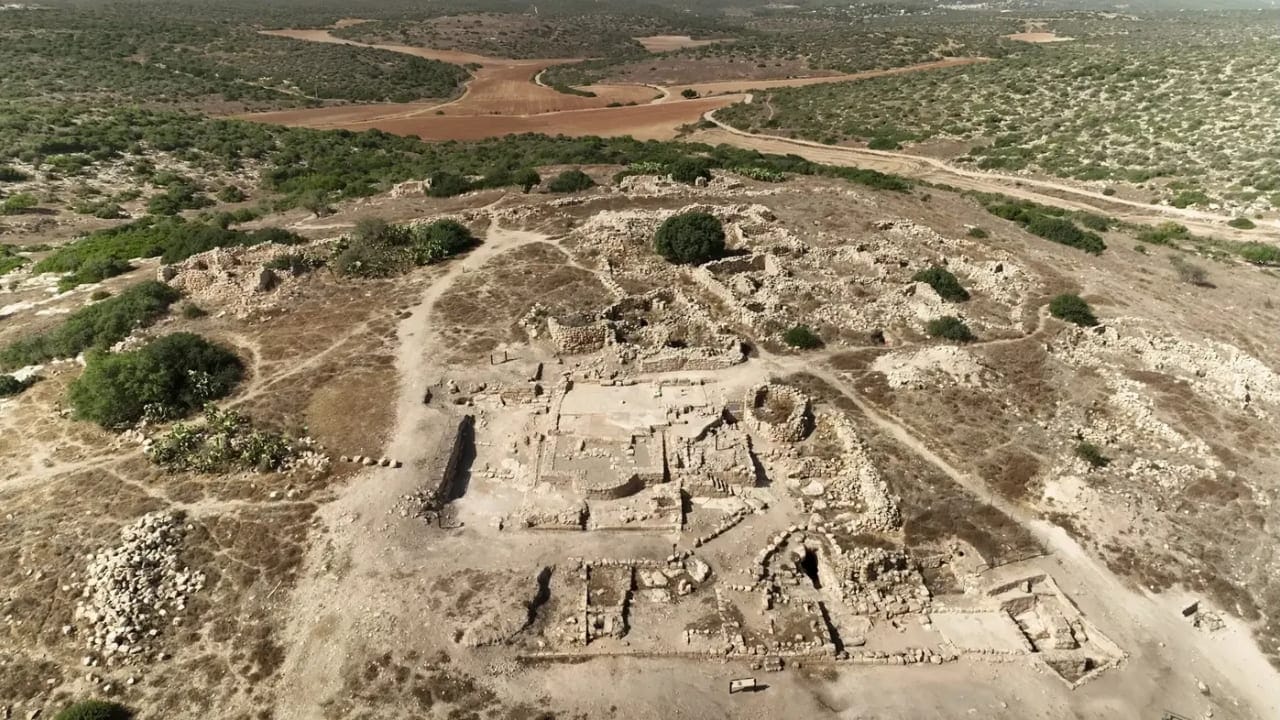
Beneath the hills of the Judean Shephelah hides a history of nearly 2,000 years: Narrow tunnels hewn by Jewish residents during the revolt against the Romans, elaborate burial caves, and a Byzantine church whose floor was covered with colorful mosaics. Now, following conservation and development work by the Keren Kayemeth LeIsrael-Jewish National Fund and the Israel Antiquities Authority, the archaeological complex at Horbat Burgin, located in the Adullam-France Park within the jurisdiction of the Mateh Yehuda Regional Council, has been reinaugurated.
For travelers, this is an opportunity to combine a hike among the woodland hills with a glimpse into what transpired here long before the location became a walking trail. The site itself is not a new discovery; it was excavated and studied in the past, and parts of it were already familiar to visitors. The current innovation lies in the conservation work, the presentation of the remnants, and the accessibility of the complex to the public.
In excavations directed by Dr. Amir Ganor, Alon Klein, and Dr. Peter Gendelman of the Israel Antiquities Authority, a long settlement sequence was uncovered, ranging from the Second Temple period to the Ottoman period. What was at one time a Jewish village later became a focus of residential structures, burial caves, and a Christian monastery, with the signs of all these remaining in the area.
From the rebels' caves to the magnificent church
During the Second Temple period, a large village existed at Horbat Burgin, which researchers have suggested identifying as Kfar Bish, mentioned in the writings of the historian Josephus Flavius.
In the early Roman period, residents hewed intricate hiding systems into the rock, which they used in preparation for the struggle against the Romans. The tunnels are attributed to the period of the Bar Kokhba revolt, during which the settlement was damaged and destroyed.
Subsequently, a pagan population settled at the site, establishing new structures and hewing elaborate underground burial systems. Centuries later, during the Byzantine period, a large church was built at the site with a floor decorated with colorful mosaics, alongside which a monastery complex was established.
Additional remnants found at the site, including winepresses and columbarium installations for raising pigeons, testify to agricultural life in the area and the residents' engagement in wine production.
However, over the years the site was also a focus for antiquities theft.
Dr. Amir Ganor, the excavator of the site and head of the Antiquities Theft Prevention Unit at the Israel Antiquities Authority, recounted that thieves broke into the burial caves and hiding tunnels and damaged ancient structures. According to him, enforcement actions by the Israel Antiquities Authority in cooperation with the KKL-JNF helped halt the damage to the site.
"Only as a result of intensive activity by Israel Antiquities Authority inspectors and KKL-JNF personnel, which included enforcement operations and the capture of robber squads," Ganor said, was it possible to advance the conservation of the place and its opening to travelers.
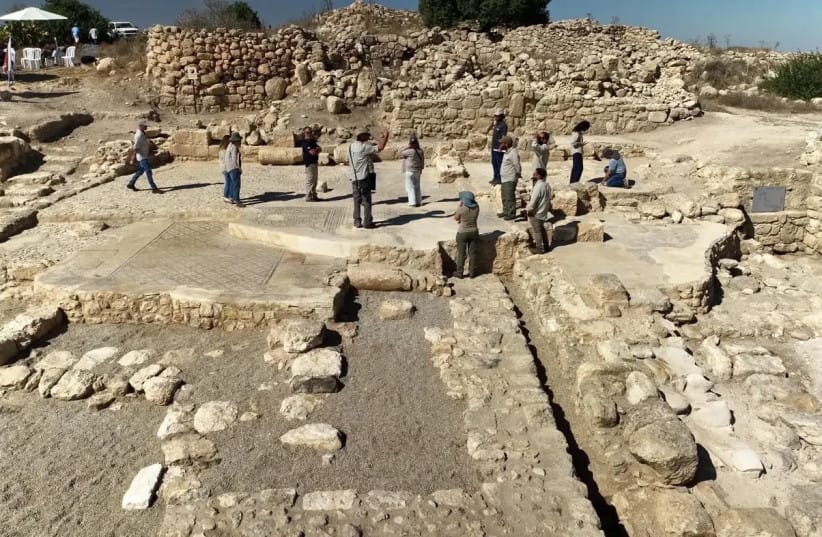
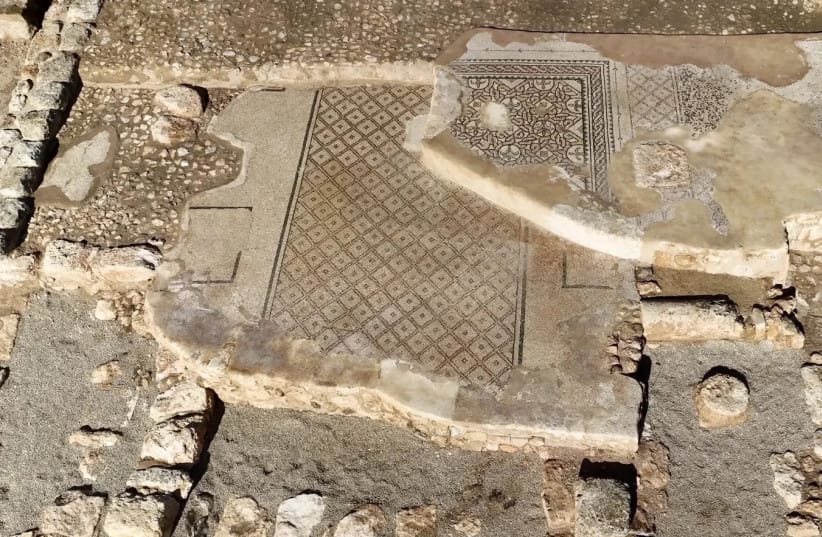
As part of the recent work, the mosaics in the Byzantine church were conserved and its outlines were restored, allowing visitors to understand what the structure looked like in the past.
"The exposure of the fascinating findings in the ground is the beginning of a path, the continuation of which is in the conservation of this heritage for future generations," said Ami Shahar, VP of Built Heritage Conservation at the Israel Antiquities Authority. According to him, the project is intended to make the ancient remnants an accessible cultural asset to the public.
How to explore Horbat Burgin?
Horbat Burgin is located in the Adullam-France Park, which spans approximately 50,000 dunams of hills, Mediterranean woodland, and archaeological sites in the Judean Shephelah.
The hike at the site is a circular trail passing among burial caves, viewpoints, ancient building remnants, winepresses, and the hiding tunnels. One of the central stations is the Byzantine church complex, where remnants of the mosaics and the area conserved during the recent work can be seen.
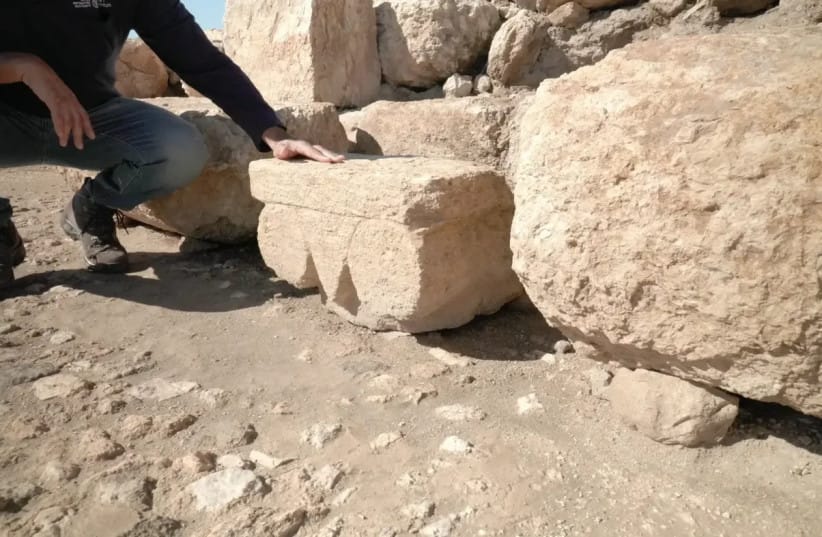
During the trail, visitors can tour the Pillar Cave, the Mourning Cave, and the Bucranium Cave, where a stone relief in the shape of a bull's head has been preserved. From the top of the hill, which rises to a height of 417 meters above sea level, a broad view of the Judean Shephelah and the surrounding mountains unfolds.
According to the KKL-JNF, the walking trail described at the site spans approximately 2.5 kilometers, lasts about two to three hours, and is defined as medium difficulty. Part of the trail passes through caves and tunnels, and therefore it is recommended to be equipped with a flashlight, closed-toe shoes, and clothing suitable for crawling. Entry is permitted only into caves and tunnels whose entry is allowed and signed.
How to get there? From Highway 38, between Beit Shemesh and Beit Guvrin, turn toward Moshav Tzafririm and immediately right onto the entrance road to the Adullam Park, which is marked in green. Continue according to the signage and markings to the parking lot of Horbat Burgin, from which the walking trail begins.
Eyal Ostrinsky, chairman of the KKL-JNF, said at the complex's inauguration ceremony that "our responsibility at the KKL-JNF is not only to preserve nature and the forests, but to protect the historical heritage and make it accessible to the public."
For visitors, the meaning is another reason to stop in the Judean Shephelah: Not only to enjoy the scenery and seasonal blossoming, but also to descend beneath the surface and discover the story of the people who lived here hundreds and thousands of years ago.