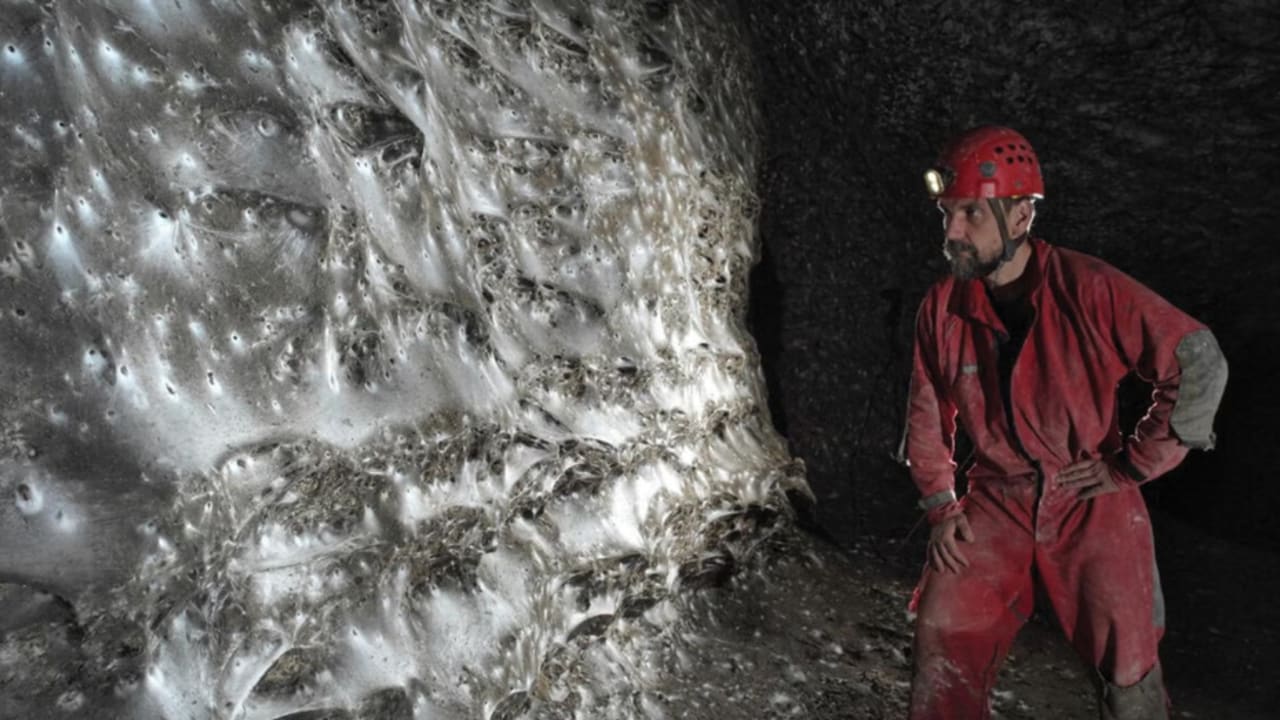
A multinational expedition led by Professor István Urák of Sapientia Hungarian University of Transylvania entered the permanently dark zone of Sulfur Cave, a passage that begins in Greece and stretches beneath Albania, and counted more than 111,000 spiders interlaced into a single web.
Urák called the find “the first evidence of colonial behavior in both species and probably the largest spider web in the world,” according to a report by Vice News. The technical paper appeared in the journal Subterranean Biology and documented a structure covering about 106 square meters, the largest continuous spider construction ever recorded below ground.
Researchers located the silk sheet fifty meters from the entrance, hanging in a narrow, low-ceilinged corridor. Thousands of funnel-shaped retreats formed wherever drifting food was thickest. Random sampling produced an estimate of 69,113 common house spiders (Tegenaria domestica) and 42,000 marsh dwarf sheet-weavers (Prinerigone vagans), along with centipedes, mites, beetles, and scorpions moving through the lattice.
The discovery was striking because T. domestica usually preys on other spiders, including P. vagans, yet the two species shared adjacent tunnels without aggression. DNA profiles indicated both had already begun to diverge from surface relatives, evidence of rapid adaptation to darkness and toxic air. “Some species have remarkable genetic plasticity, which becomes evident only under extreme conditions,” said Urák, according to Vice News.
Sulfur Cave’s food chain depended on chemistry rather than sunlight. Nautilus reported that a sulfur-rich stream released hyrogen sulfide, which chemoautotrophic bacteria turned into biofilms. Those mats fed swarms dof non-biting midges (Tanytarsus albisutus) estimated by the Sun at 2.4 million individuals; the hovering cloud drifted straight across the spiders’ barrier. Vice News noted that every tier of the ecosystem survived only because of the one below it.
What looked like a single curtain of silk was actually layer upon layer of funnels that in places sagged until they tore away from the rock. Sciences et Avenir added that the limestone chamber lay above flood level, reducing the risk of seasonal washouts.
Conservation could prove difficult because the grotto crosses an international boundary. “It is essential to protect this fragile ecological balance, despite challenges that may arise from the cave’s border location between two countries,” said Urák. Greek and Albanian environmental laws do not fully align, a point raised by Infobae.
Cavers from the Czech Speleological Society first noticed the vast web in 2022, but only now has it undergone formal study. “If I were to express all the emotions that overwhelmed me, I would mention admiration, respect, and gratitude,” said Urák when he first stood beneath the living tapestry.
Further expeditions will monitor reproduction, prey flow, and gene exchange. “Often we think we know a species completely, that we understand everything about it, yet unexpected discoveries can still occur,” said Urák, according to SKAI. For those who fear spiders, the idea of 111,000 arachnids collaborating in total darkness may sound nightmarish, yet researchers view the megacolony as a rare window on how life reorganized when light, oxygen, and space ran thin.
Written with the help of a news-analysis system.