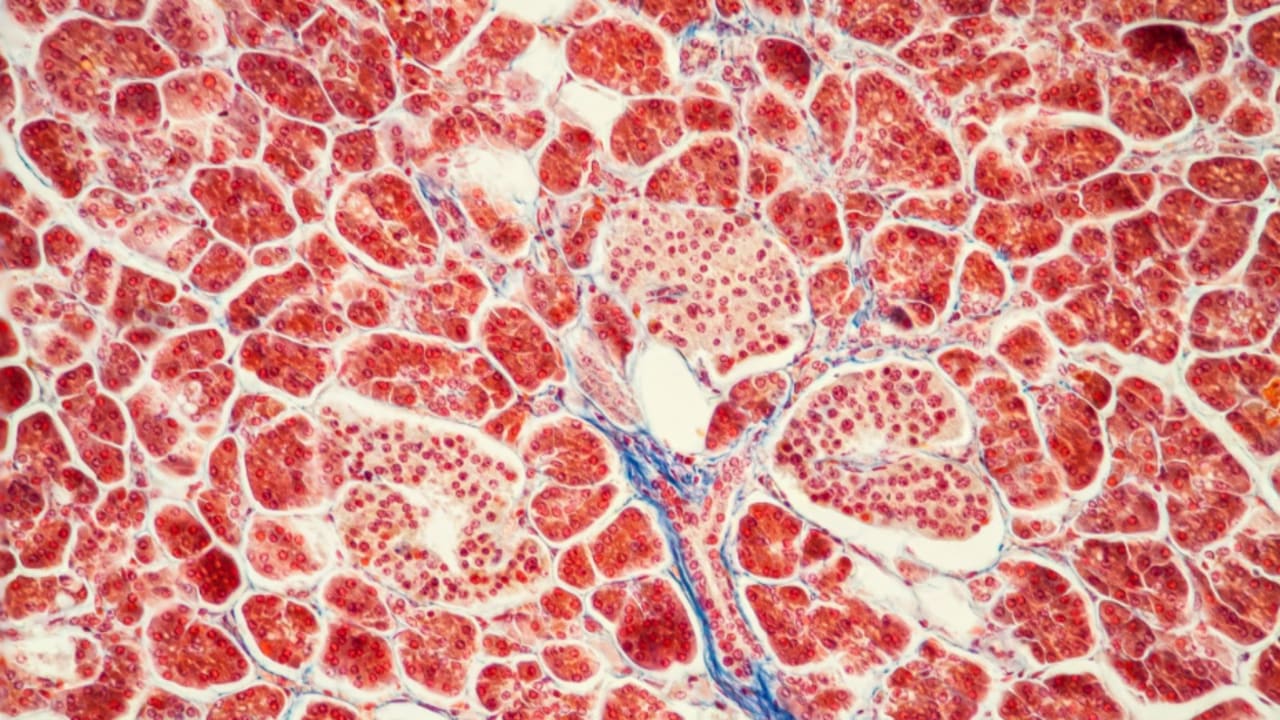
An international team of scientists has made an advancement in diabetes research by successfully 3D printing functional Langerhans islands (human islets) using a novel bioink. In laboratory tests, the 3D-printed human pancreatic islets functioned regularly and maintained a strong insulin response to glucose, retaining their ability to respond to sugar and secrete insulin efficiently, according to a press release published on EurekAlert.
The achievement involved printing Langerhans islands—insulin-producing cell clusters in the pancreas—using a custom bioink made from alginate and decellularized human pancreatic tissue. This study is one of the first to use real human pancreatic islets instead of animal cells in bioprinting, and the results are promising.
“We used a special bioink that mimics the supporting structure of the pancreas, providing the pancreatic islets with the oxygen and nutrients they need to thrive,” said Quentin Perrier, the research coordinator at Wake Forest University School of Medicine. He added, “Our goal was to recreate the natural environment of the pancreas so that the transplanted cells could survive and function better.”
Unlike traditional transplantation, which is done inside the liver and often leads to loss of transplanted cells, the printed islets are designed to be implanted under the skin. The implantation process of the 3D-printed pancreatic islets requires only local anesthesia and a small incision, making it a simple procedure. According to the team, this "less invasive" approach may provide a safer and more comfortable option for patients.
In laboratory tests, the 3D-printed pancreatic islets demonstrated good survival and reacted efficiently to blood glucose levels for 21 days. After 21 days, the printed islets maintained their structure without clumping or collapsing, a common problem in previous attempts at islet printing, and they aggregated without damaging themselves. The porous structure of the 3D-printed pancreatic islets facilitated the passage of oxygen and nutrients, enhancing the flow of these essential elements to the embedded islets.
Experiments showed that over 90% of the cells remained alive after printing. The bioprinted islets released more insulin when it was needed, meaning they can secrete insulin more accurately. This design helped maintain and enhance the health of the cells. The design also supported the formation of blood vessels necessary for the cells' survival after transplantation, which is critical for long-term survival and function.
“This is an important sign that the islets could function well after implantation,” the team noted. The bioprinted islets show real potential for future clinical use, and the study shows encouraging results. The team is currently testing the bioprinted constructs in animal models.
To protect the delicate cells during printing, the team developed a gentler method by reducing the pressure used to 30 kPa and lowering the printing speed to 20 mm per minute. This modification helped reduce mechanical stress and maintain the natural shape of the islets, addressing a technical challenge that has long hindered progress in biological printing. Maintaining the islets' natural shape is key to improving their performance after implantation.
The team is working on using alternative sources of insulin-producing cells, such as islets derived from stem cells or xeno-islets from pigs, to overcome the shortage of human donors. They are also exploring long-term storage options, such as cryopreservation techniques, that could make the therapy widely available.
“We are getting closer to the goal of developing a standard treatment for diabetes that could one day make insulin injections unnecessary,” Perrier added. “While there is still work to be done, this new bioprinting method marks a critical step toward personalised, implantable therapies for diabetes,” he concluded. He also stated, “If clinical trials confirm its effectiveness, it could transform treatment and quality of life for millions of people worldwide.”
Perrier is under the mentorship of Professors Amish Asthana, Alice Tomei, Sang Jin Lee, and Giuseppe Orlando. The research was funded by Breakthrough T1D, formerly JDRF, with Giuseppe Orlando as the principal investigator. The research result is online on the bioRxiv platform, which hosts articles yet to be peer-reviewed.
The preparation of this article relied on a news-analysis system.