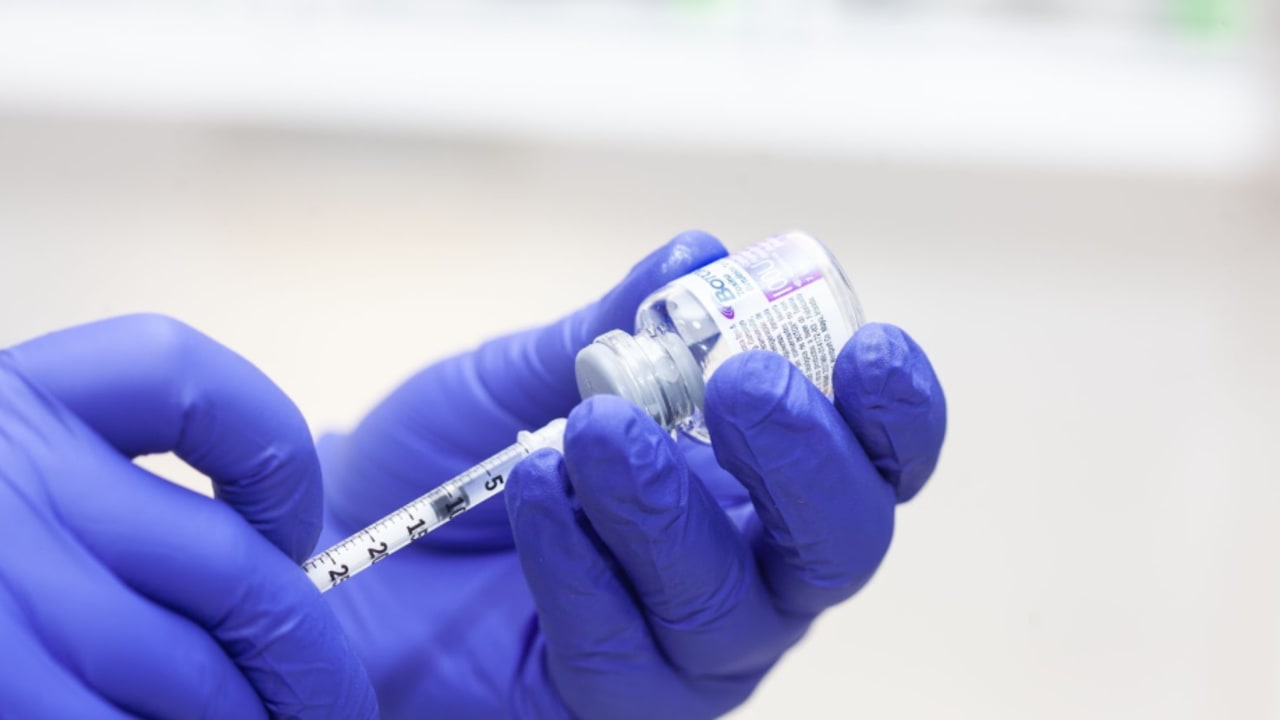
The US Food and Drug Administration (FDA) approved Yeztugo, a long-awaited semi-annual injectable treatment for the prevention of HIV, developed by Gilead Sciences. The approval of Yeztugo marks a milestone that could revolutionize the fight against AIDS.
"This is a historic day in the fight against HIV," said Daniel O'Day, CEO of Gilead Sciences, in a press release announcing the approval. He affirmed that the new drug "could take the epidemic to the history books," according to Mother Jones.
Yeztugo, based on the molecule lenacapavir, offers a more effective and less invasive prevention method, requiring only two injections per year compared to daily pre-exposure prophylaxis (PrEP) options like Truvada and Descovy.
In clinical trials, Yeztugo demonstrated more than 99.9 percent efficacy among participants. The trials showed better results compared to the once-daily PrEP pill Truvada. According to Panamericana TV, in one Phase 3 trial, only two HIV infections were reported among 2,179 participants who received Yeztugo subcutaneous injections twice a year. In a similar trial with cisgender women in sub-Saharan Africa, none of the participants who received lenacapavir contracted HIV.
Despite the promising efficacy, concerns have been raised regarding the affordability of Yeztugo. Gilead has not disclosed the launch price in the United States, but analysts estimate it could be as high as $25,000 per year. "Even high-income countries will not be able to afford the mass use of lenacapavir at prices above $20,000 per year," said Andrew Hill from the University of Liverpool.
Winnie Byanyima, Executive Director of UNAIDS, emphasized the importance of making the treatment accessible. "If this game-changing drug remains unaffordable, it will change nothing," she insisted, urging Gilead to "urgently take the right decision."
To enhance global access, Gilead has established agreements with six drugmakers, granting them a royalty-free license to produce low-cost versions of lenacapavir in 120 low- and middle-income countries, pending regulatory approval. The company announced a separate agreement with the Global Fund to acquire doses of lenacapavir for two million people, acknowledging that production in low- and middle-income countries will take time.
Experts believe that Yeztugo could be the PrEP option that has been long awaited, offering the potential to boost uptake and persistence in HIV prevention. "This is the best opportunity in 44 years of HIV prevention," said Mitchell Warren, Executive Director of the nonprofit organization AVAC, according to Mother Jones.
Gilead Sciences is working closely with insurers, healthcare systems, and other payers to ensure broad insurance coverage for Yeztugo. The company's Advancing Access® Co-Pay Savings Program aims to reduce out-of-pocket costs for eligible commercially insured individuals to as little as zero dollars, according to The Hill.
Lenacapavir acts differently from other medications by blocking the HIV capsid and preventing its reproduction in CD4 cells. This mechanism offers near-perfect protection across broad populations and geographies. However, lenacapavir is currently not approved for HIV prevention outside of the United States, though it is approved for treating HIV in several countries.
Yeztugo's approval comes at a time when new infections persist globally. According to the United Nations, there were roughly 1.3 million new HIV infections worldwide in 2023, as reported by the Washington Examiner. The introduction of an effective, long-acting preventive treatment could impact these numbers.
Despite the optimism, hopes for widespread adoption may be hindered by high costs. Analysts estimate that the launch price in the United States could reach $25,000 per year. Sunlenca, another drug developed by Gilead and based on the same molecule lenacapavir, is already on the market and costs more than $39,000 per year, according to La Croix.
"We discovered that it could be produced in mass and sold for as little as $25 per person per year," added Andrew Hill. This suggests the potential for lower prices if production costs are minimized and generic versions are made available.
Winnie Byanyima urged, "Lower the price, increase production, and make sure the world has a chance to end AIDS," emphasizing that lenacapavir could be the tool needed to control new infections only if it is affordable and available to all who could benefit.
Produced with the assistance of a news-analysis system.