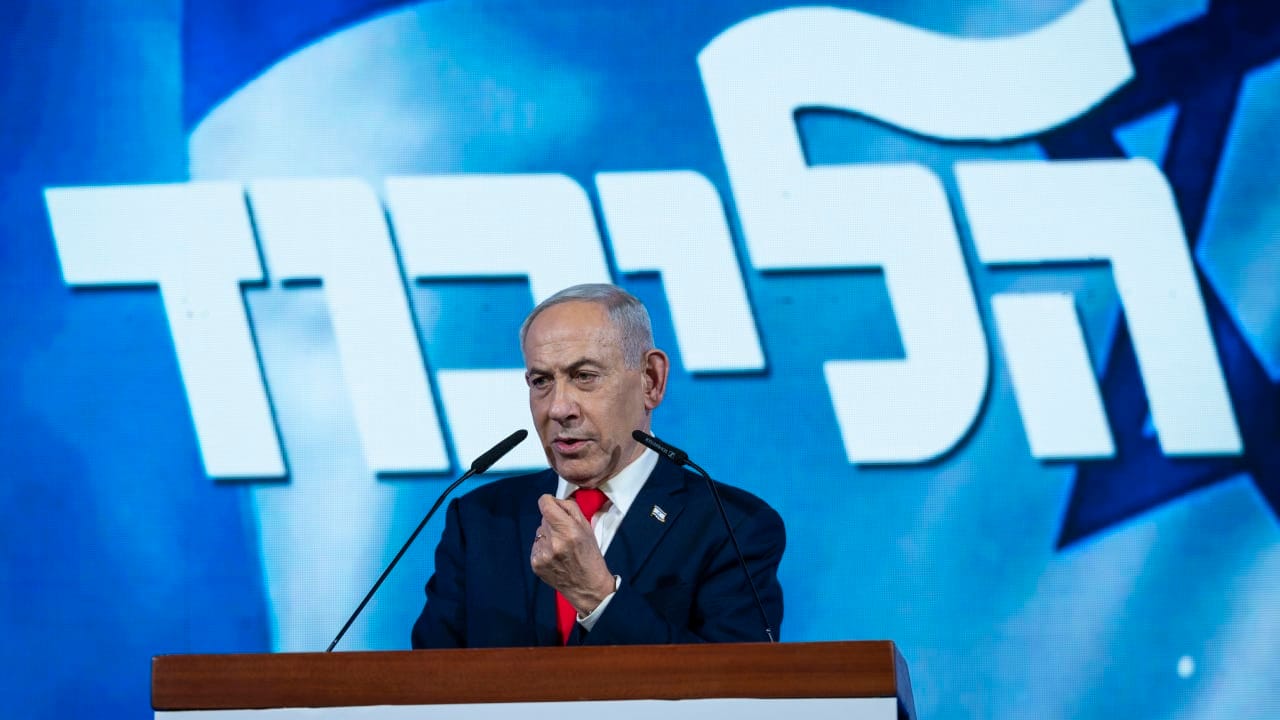
Despite the best spin in the world, Prime Minister Benjamin Netanyahu’s coalition lost badly in the election. It went from 64 in 2022 to 53 in 2026. In US terms, this is a drubbing that not even Netanyahu’s mouthpieces in the Israeli media, from Yinon Magal to Amit Segal, can wash away.
At the same time, Zionist opposition parties did not win either, with a remarkable stability between the last election in 2022 and this one, despite a judicial overhaul that wanted to throw away Israel’s democracy, the October 7 disaster and the failure to investigate it, the corruption, the lies, and the chronic carelessness for Israel’s citizens.
If we add the four seats almost gathered by Meretz in 2022 (short of 20,000 votes), the Benny Gantz, Yair Lapid, and Avigdor Liberman bloc got around 48 seats in 2022, like the Gadi Eisenkot, Naftali Bennett, Liberman, and Yair Golan bloc this year, and some self-reflection is required here.
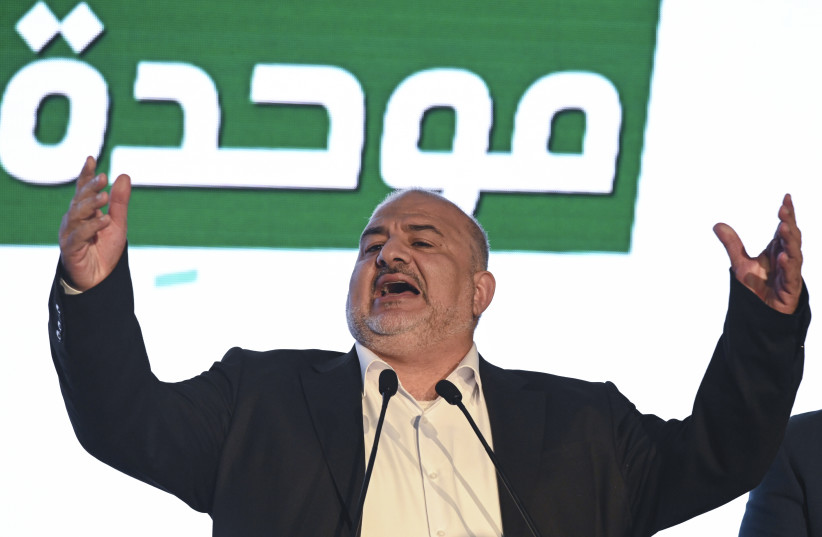
The only true winners are the Arab parties: the ongoing progress for Ra’am from four seats in 2021 to five in 2022 to eight in 2026, and the Joint List’s ability to get 11 seats together against five divided in 2022.
Despite, or precisely because of, this breakthrough, the Israeli political scene is now in gridlock, as the strength of the Arab parties puts them in the driver’s seat, but with nobody in the opposition Zionist political parties (except The Democrats) officially willing to give them the ability to sit behind the wheel with them.
Solutions to the gridlock
In the face of this gridlock, the most “logical” pathway would be for the centrist opposition parties to unite with Likud. This coalition would gather 67 seats, with differences between the parties that are not insurmountable, and in any case, nothing bigger than between the Labor party and Likud when they united in 1984 for one of the most successful governments ever, or between 2001 and 2006.
The problem therefore does not lie in the political platforms, but in the presence of the one man who makes the deal almost impossible: Netanyahu. Even the haredi (ultra-Orthodox) draft could be acceptable to him, as long as it serves his political interests.
As for the commission of inquiry, it would be a bitter pill to swallow for him, as this goes against his refusal to take responsibility, but he could accept it if it guarantees his political survival and later amnesty, since self-preservation is the only true principle he abides by.
Yitzhak Shamir and Shimon Peres were bitter political rivals, but they kept their word, and so did Ariel Sharon later. Netanyahu’s lack of credibility, repeated lies, and betrayals of his “allies” are his own worst enemies today as he needs to create a broad government.
The necessity for Israel to move past Netanyahu
Bennett and Liberman worked closely with Netanyahu, and this proximity makes them reluctant to ever trust him and his judgment again.
As for Eisenkot, he saw, as chief of staff and brief minister in the short-lived unity government after October 7, how he was willing to prioritize political survival over anything, including the interests of the State of Israel.
Netanyahu is therefore the main hurdle, as the Zionist opposition parties know that he’s not a reliable partner. Despite Liberman’s call, the Likud, which is now purged of any competent leader, will not oust him.
As the Zionist opposition leaders understand the absolute necessity for Israel to move past him, there is therefore one last option, which is to unite with the Arab parties, in one way or another.
Ra’am seems to have accepted the conditions laid out by Eisenkot to join forces, including forcefully denouncing Hamas as a terror organization and acknowledging the principles laid out in Israel’s declaration of independence.
With Ra’am now possibly seen as a legitimate coalition partner, the opposition would get 56 seats, vs 53 for Netanyahu’s coalition. The remaining six, as outside support, could come from the Joint List, or some part of it, as Balad seems a step too far.
Is it ideal? No. Would it be betraying some campaign pledges? Yes. But joining Netanyahu would do that too, and the last thing Israel needs is new elections.
Netanyahu will not step aside; his presence as prime minister is a clear and present danger to the country, and his ouster is the top priority, at almost any cost. The path is there, and the way to do that could be to appoint Liberman, the politician most reluctant to cooperate with the Arabs, prime minister in this scenario, the way former president of France Charles de Gaulle, with his undisputed authority, was the one granting Algeria its independence, as the ultimate political twist.
One of Netanyahu’s campaign slogans in 2020 was “Bibi or Tibi.” He may well be right.
Up to the Zionist opposition parties to make his prediction come true, for the good of the State of Israel, with Netanyahu as the unwitting architect of this political partnership, and Liberman as its executioner. If you want it, this is not a dream.
The writer, who was born and raised in France, is the correspondent of French Jewish radio, Radio J, and of the French paper librejournal.fr in the US, where he has been living for 16 years. He also holds US and Israeli citizenship. The opinions expressed are his own.