The strong showing of the Arab parties in last week’s election was one of the only bright lights to emerge from the frustrating stalemate that the results produced.
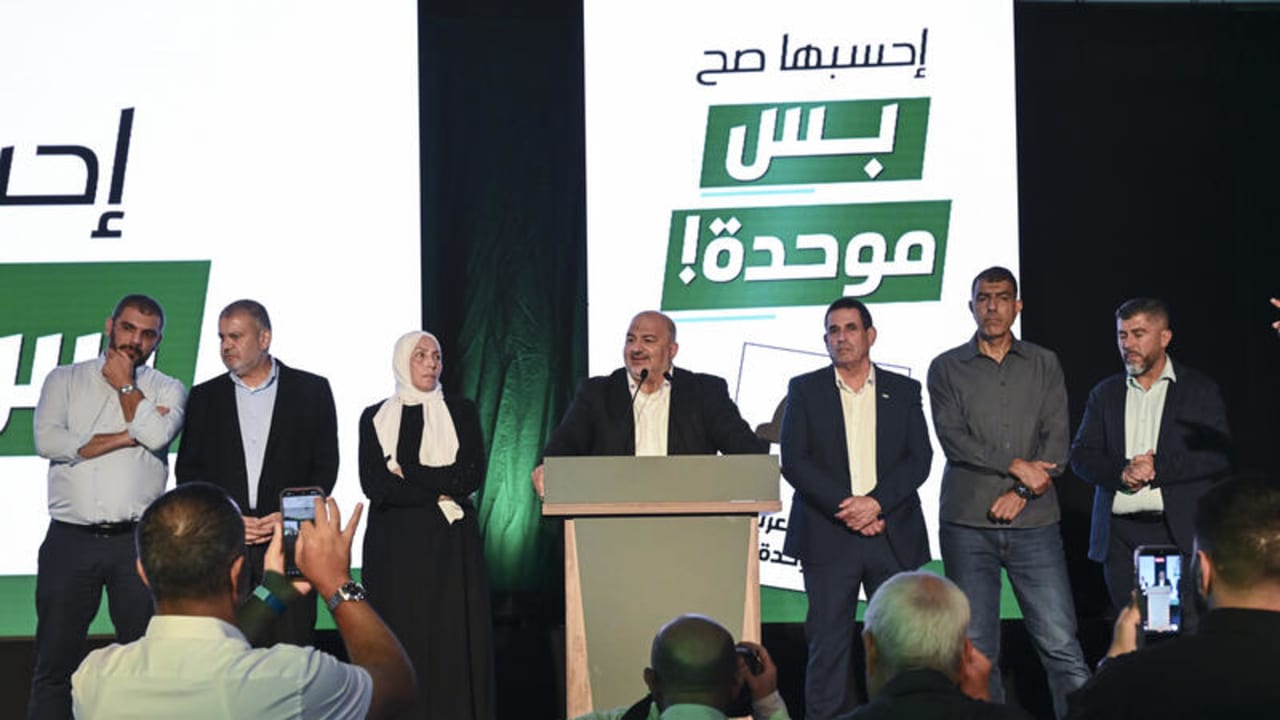
According to the final results, the Joint List received 11 seats and Ra’am, led by Mansour Abbas, got eight, marking a historic record of 19 seats (up from 10 in the current Knesset) going to parties made up of mostly Arab voters.
Even if the investigation into suspected foreign interference in the election finds evidence of bribery to influence voting in the Arab sector, the extent will likely be marginal, and its impact would be unlikely to affect the results.
The Arab parties’ strong showing has thrown the outcome of the election into murky waters, with neither Prime Minister Benjamin Netanyahu’s bloc (with 53) nor the opposition bloc, led by Yashar’s Gadi Eisenkot (with 48), having enough support to form a coalition on their own.
There are only slim options available to break the deadlock and prevent another round of elections – a minority opposition government or a centrist unity government.

Arab parties can not be lumped together as monolith
The movement calling for the opposition parties to push for a minority government with its 48 seats, propped up from the outside by the Arab parties’ 19 seats, is highly problematic. What that push doesn’t acknowledge is that just like all the Jewish parties can’t be lumped together, neither can the Arab ones.
Ra’am, which was already part of a government coalition in 2021 and features a Jewish member, Yoav Segalovitz, in its second slot, argues that Arab citizens can use political participation and coalition negotiations to improve their communities and combat the horrific crime level.
The Joint List – consisting of Balad, Ta’al and Hadash – includes anti-Israel extremists, with the parties themselves focused on Palestinian nationalism and calling for a democratic bi-national state to replace Israel. They should never be part of an Israeli government, on the inside or from the outside.
Even if Golan could convince Eisenkot and, somehow, B’Yahad’s Naftali Bennet and Yisrael Beiteinu’s Avigdor Liberman – who have adamantly stated they would not form a coalition with the Arab parties – to agree to bringing in Ra’am, it would only raise the numbers to 56: clearly a non-starter.
Ra’am’s time may come, but in the current constellation, there’s not a place for that party in the government.
That leaves the specter of a unity government. Intense pressure is going to be placed on Netanyahu, Eisenkot, and B’Yahad’s Bennett and Yair Lapid (with 12 seats) to join forces and form a coalition that can agree on most issues.
It would be a bitter pill to swallow for all involved, albeit one that the country desperately needs to prevent another election.
They would be supported from the outside by Avigdor Liberman’s Yisrael Beteinu (with seven seats), creating a stable 67-seat coalition.
There are plenty of obstacles. Netanyahu may think that another election round would tip in his favor, with a smaller turnout and fewer expatriate votes.
Unity government would force Netanyahu to sever alliances with haredi, far-right parties
A unity government would also mean that Netanyahu would have to sever his alliances with the haredi (ultra-Orthodox) parties and with the far-right parties of Itamar Ben-Gvir and Bezalel Smotrich, whom he last week pledged to keep in a future coalition. He would also have to accept the formation of a state commission of inquiry into October 7.
For their part, Eisenkot and Bennett would have to break campaign promises not to sit with Netanyahu and, for the good of the country, concede that unity is the only way to move forward. Their natural distrust of Netanyahu is warranted, but an arrangement could be worked out that plays to all of the members’ strengths.
Netanyahu, as prime minister, could continue to focus on Israel’s security and the threats emanating from Iran, Hamas, and Hezbollah, and be in charge of foreign policy. There’s not much daylight between any of the parties in regard to that.
Eisenkot and Bennett, in turn, would receive the other vital ministries – Justice, Education, Interior, Internal Security – and begin restoring order to the chaos swirling in the country.
Now is the time for fresh thinking and bold moves. The voters have spoken and given Netanyahu, Eisenkot, and Bennett 60 seats. For the greater good, these leaders must put personalities and egos aside to lead the country into a stable future.