Prologue: The facade of national identity
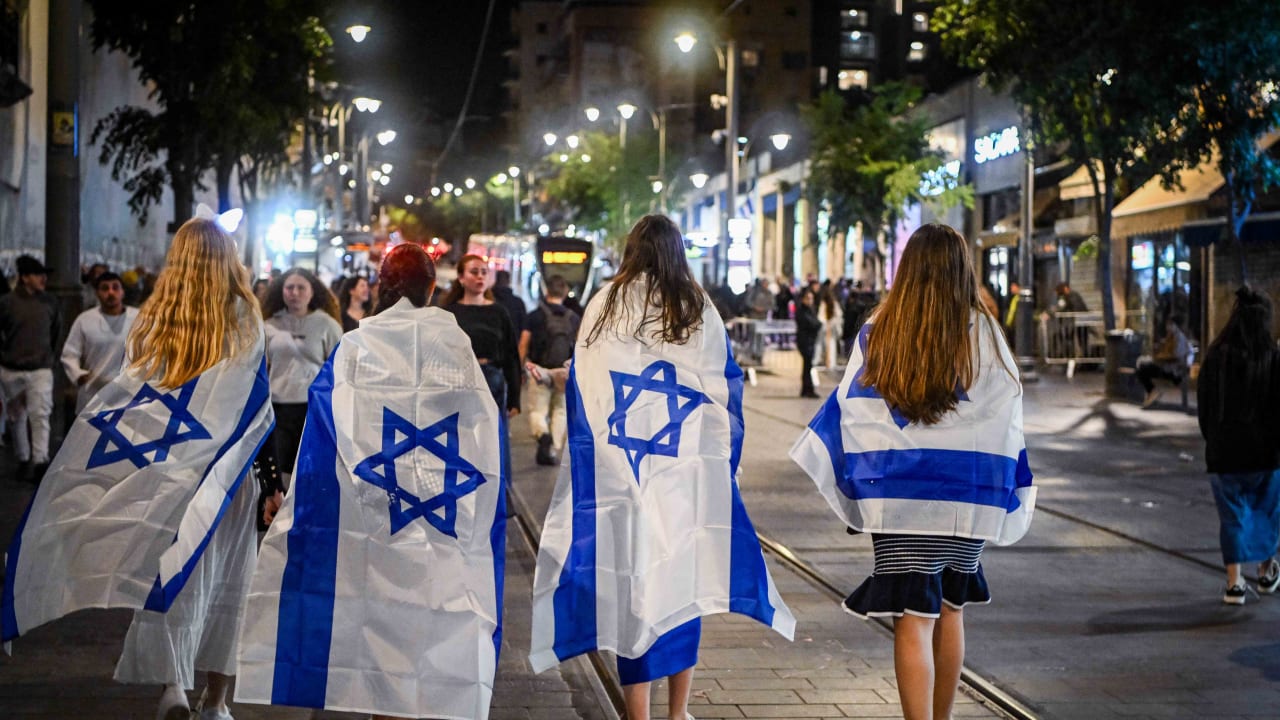
On Israel’s 78th Independence Day, the state once again takes center stage in its own existential drama.
In the streets, amidst the flags and celebrations, we adopt what theater and literary critics call “Suspension of Disbelief.” This is our collective, semi-conscious agreement to momentarily ignore the cracks in our national identity. For a few hours, we overlook the friction in our public discourse to immerse ourselves in the grand narrative of sovereignty.
Yet, beneath this festive scenery, a deep conflict roils within the “subtext” of Israeli society. It is a dramaturgical tension between the nation’s ancient DNA and the state’s functional structure. To truly understand the drama in which we are players, and sometimes captives, we must perform a bold act of defamiliarization (ostranenie).
This is not a call for alienation, but an artistic technique of making the “familiar” feel “strange” to bypass our habitual perceptions. By looking at the Israeli reality through a “Persian Mirror,” etched in the mythical roots of ancient culture, we can observe our tragedy from an aesthetic distance. This perspective helps us identify the lost key to healing our reality.
Act I: The etymology of free men
The Iranian identity is embedded in the name of the country itself, carrying an ancient message of freedom. In ancient Persian and Sanskrit, the term Arya (or Er) signifies “noble free men.” In its mythical essence, it represents an arena intended for a free and noble people.
However, this mythical freedom is not isolated. It is inextricably linked to the concept of Airyaman, which literally means a “member of the community” or “friend of the tribe.” In the Zoroastrian tradition, Airyaman is the divine entity entrusted with friendship and healing. This reveals a revolutionary insight: there is no true freedom (Arya) without healing solidarity (Airyaman).
Here we encounter alienation in its most painful form. When freedom is severed from its communal connection, it devolves into a “distanced loneliness.” Social alienation is the tragic result of a sovereignty that no longer reaches out to the “Other.” While alienation is the ailment, defamiliarization is the theatrical tool that helps us identify and repair this disconnection.
Act II: The paradox of sovereignty and the Israeli bridge
Modern history reveals a recurring paradox. Many nations have co-opted the ideas of sovereignty only to turn them into tools of oppression and alienation. In the name of “national freedom,” they trample individual liberty and drain solidarity of its meaning. This drama mirrors the tension reflected in Israel’s Declaration of Independence.
The Declaration contains a fascinating dialectical tension. On one side stands the Jewish identity – our ancient DNA of sovereignty and freedom. On the other stands the democratic identity – our modern mode of solidarity and mutual dependence.
We must understand that democracy is not just a technical electoral procedure, but that it is also the practical embodiment of healing solidarity. It is the way noble, free people choose to reach out to one another without losing their uniqueness. When one element attempts to erase the other, we lose our tools for social healing and fall into mutual alienation.
Act III: The identity trap and the need for a new script
Viewing our reality through the lens of ostranenie reveals the “Identity Trap.” This is the dangerous tendency to define ourselves through the “enemy” we have constructed. We project our fears onto the “other,” whether an external threat or an internal rival.
In the Israeli tragedy of year 78, we find ourselves in the center of an Agon – a sharp, dramatic struggle where each side is convinced it is the sole hero, even as it destroys the shared setting of our lives.
Faced with conflict, the automatic and alienating response to claim the national struggle is more important than our social connection. However, theater teaches us the opposite: the communal bond of Airyaman is not a bonus for times of peace, but a condition for survival.
Healing begins with an internal refusal to turn our neighbor into an alienated “villain.” It requires acknowledging that the security of one is woven into the freedom of the other.
Act IV: Toward denouement and healing
In classical dramatic structure, after the conflict reaches its peak, there must be a denouement, an untying of knots. In the tragedy we inhabit, the denouement is the unraveling of enmity and fear. True independence is the ability to be sovereign over our spirit in a way that allows us to host the complexity of the other within ourselves.
The ancient Indo-Iranian term for a host is Atithi-Pati, the Lord of Guests. This magnificent concept combines uncompromising authority with infinite generosity.
Israeli democracy must become such a space of hospitality.
Our Jewishness and our democracy are not a contradiction, but necessary complements. Independence is the physical stage, but Airyaman, our mutual responsibility, is the force that breathes life into it. Without this solidarity to conquer alienation, independence remains an empty simulation of power.
Epilogue: Out to the stars
We must transition from “Independence Against” to “Independence With.” At the end of the Divine Comedy, Dante emerges from the depths and writes: “And then we emerged to see the stars again.”
For us, seeing the stars is the true denouement. It is the recognition that our identities are not prisons that breed alienation, but an open invitation to dialogue.
The time has come for the vision of a land of free men to stop being a tragedy of collision and instead, become a story of healing. Independence is the stage, freedom is the soul, and Airyaman is the connection between them.
Only when we learn to host our own complexities can we ensure that the curtain rises for a new act of living, breathing, and healing freedom.
This Independence Day, let us replace passive “Suspension of Disbelief” with an Active Faith – not just in the symbols of the state, but in the person sitting beside us on this shared stage.
The writer, a PhD, is a theater director, an expert on Iranian culture and religion, and is a member of the Bama Tova organization.