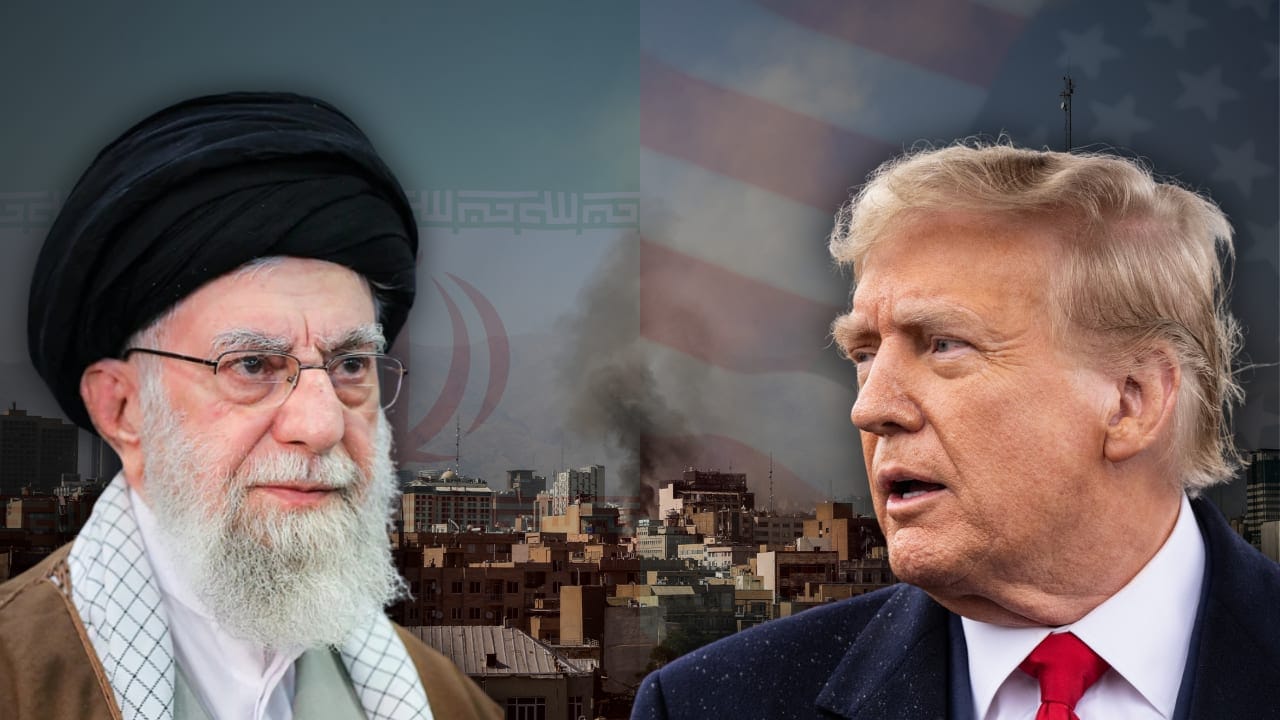
War-crime allegations are floating as many Democrats question US President Donald Trump’s entry into a war with Iran. Shouldn’t the question be how the Iranian regime could push its people, including children, to encircle energy plants as human shields without that being considered a war crime?
For more stories from The Media Line go to themedialine.org
We should not forget the Hamas playbook, which has used children in schools and hospitals as cover for its terror infrastructure.
Nor should we forget that Iran and its proxies have killed around 1,000 Americans over the past four decades, including more than 800 US service members and civilians in major attacks and militia operations.
The juxtaposition of two nations and two ideologies within 24 hours could not be more evident as the clock ticked toward a ceasefire deadline.
Where has the moral barometer gone?

Pakistan, because of its relations with both Washington and Tehran, emerged as the broker of a two-week hiatus in a war that was on the brink of drawing the US into strikes on Iranian energy plants and bridges. The ink on the deal was barely dry as missile barrages against Jerusalem and Tel Aviv continued. Saudi Arabia, the UAE, Kuwait, Bahrain, and Qatar were also intercepting projectiles.
These missiles are often equipped with cluster warheads, which release payloads of smaller bombs. Their use is widely condemned and restricted under international law by many states.
Iranian security forces have reportedly raided hospitals and detained wounded protesters, and medical staff who treated them have faced reprisals. Does this not meet the definition of crimes against humanity or war crimes?
Trump threatens Iran, stands behind Iranian people
President Trump indeed uses strong rhetoric as a negotiation tactic. He isn’t subtle. He said a “whole civilization will die tonight,” in a standoff with the Islamic Republic that saw threats flying from both sides.
President Trump has also, throughout the war, spoken directly to the Iranian people, stating unequivocally that the United States stands behind them.
How these 14 days play out remains to be seen. What peace deal could be on the horizon?
At the same time, will the Iranian people be armed, and will a pathway open to rid their country of a brutal regime that killed more than 30,000 protesters (with the president saying 45,000) during the crackdown that began in late December 2025?
Will Iran allow all ships to pass freely through the Strait of Hormuz, or will they impose tolls on countries they oppose? Will the Iran-backed Houthis refrain from attacking ships in Bab el Mandeb and the Red Sea?
The United States and Israel say Lebanon was not included in this deal, a point disputed by Pakistan; in all likelihood, Israelis will continue running to shelters. Here, too, Iran remains the chief backer of Hezbollah, a terrorist organization that receives more than $1 billion annually from the leading state sponsor of terror to build tunnels and amass major weapons factories.
A country whose leaders commit war crimes against their own people is not to be trusted and should be exiled from civil society.
Let’s not forget for one moment that one nation here believes in civilized democracy, while the other tortures its own people.
Two nations guided by antithetical doctrines cannot coexist. A peace deal that does not take into account the value of life will not succeed.
The value of life must be preserved.
Felice Friedson is president and CEO of The Media Line news agency and founder of the Press and Policy Student Program, the Mideast Press Club, and the Women’s Empowerment Program. She can be reached at ffriedson@themedialine.org.