
There may be some in Israel who mistakenly believe that Saudi Arabia supports a war against Iran, but simply does not dare to say so openly.
Some fantasize that after a war with Iran, we will witness a new Middle East free of regional threats, in which Israel is an integral and accepted part.
Even Prime Minister Benjamin Netanyahu, interviewed on Fox News, said he believes that a war with Iran would pave the way for historic peace with Saudi Arabia.
I do not know whether he believes what he is saying, or whether he is insulting people’s intelligence, but the truth, as always, is far removed from Netanyahu.
From the Saudi perspective, everything currently unfolding in the region is precisely what the Saudi ruling elite sought to avoid.
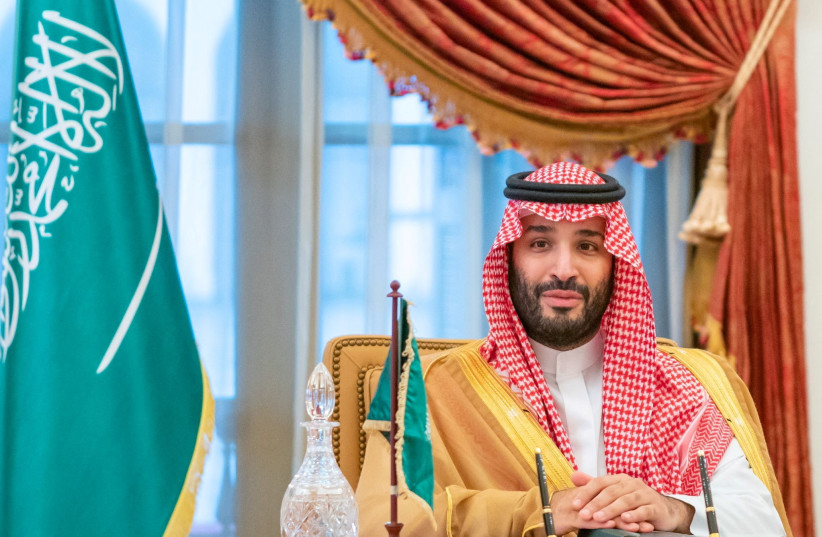
Saudi Arabia, along with all the member states of the Gulf Cooperation Council (GCC) – including countries that signed the Abraham Accords, such as the United Arab Emirates – had been in the midst of a process of rapprochement with Iran.
This was not the result of changing preferences or newfound affinity, but, rather, a strategic decision toward achieving greater security through prosperity and cooperation.
The Gulf states believed that the best way to address their security concerns was through dialogue and a careful process that projected a nonthreatening posture. They invested considerable effort in avoiding the opening of a Pandora’s box of chaos that they knew a war with Iran could unleash.
Let me put it differently: the reason Saudi Arabia and other GCC states do not want this war is that they are on the front line of other states’ war.
Saudi concerns are not limited to the Iranian retaliation against the kingdom’s critical and civilian infrastructure – something that could severely harm the kingdom’s future projects – but also extend to the inevitable chaotic repercussions that such a war would generate.
It is still unclear what the results of this war will be, and how Iran will change afterward. Some of these long-term repercussions may entail having an Iranian failed state just miles away that spills over its insecurity and instability into the Arab Gulf states; or a regime that becomes more militant and more threatening, vowing to reject diplomacy and mediation, treating mediation efforts as “traps,” given that both the 12-Day War and Operation Epic Fury took place as negations on a nuclear deal were happening.
Although the Saudi kingdom has a great deal of grievances with the Iranian regime, Saudi Arabia operates strategically in pursuit of its long-term goals and plans.
The kingdom does not believe in advancing peace through military power. History in general and regional history in particular have demonstrated this repeatedly. Attempts to change regimes by force have ended in prolonged chaos and years of violent instability and terrorism. The failure of this approach has been evident. Iraq is an example of how dangerous regime change can be for the region.
Israel, US take gamle of military action in Iran
Now, the United States and Israel are gambling on a military move that they believe will bring about sweeping changes in Iran, without any guarantee that this time the outcome will be different.
Iran’s response to the joint Israeli-American attack, which included strikes on Gulf states themselves, is very shocking but not that surprising. The Iranian regime had communicated about this sort of response if Iran were attacked by the United States.
Have no doubt, the Saudis and the rest of the GCC states are outraged at this Iranian response. The Saudi statements have called it “cowardly “and “unjustifiable.”
What compounds this outrage is that Saudi Arabia, along with the rest of the GCC states, has not allowed the US to use its airspace or any of the American bases in any attack on Iran.
The Saudi ruling elite will not forget this Iranian response. What it will also not forget is the process that led to this horrendous response, nor the disinformation campaign that claimed that Saudi Arabia was actually “lobbying” for war with Iran. This is understood as trying to plunge Saudi Arabia into a war not its own, a war it was profusely trying to avoid.
Therefore, from the Saudi regional perspective, both the Iranian regime and Netanyahu’s government are perceived as spoilers in the regional stabilization process, actors that generate chaos that only adversely affects Saudi Arabia’s security and long-term goals of prosperity.
After the war, Saudi Arabia will need to reposition itself diplomatically. It will likely adopt a firmer – though calculated – stance toward Iran.
At the same time, it will distance itself even further from Israel. Not only is Israel increasingly perceived as an unstable and unreliable actor, but it continues to generate instability through the Israeli government’s insistence on maintaining the Palestinian occupation and avoiding the implementation of a two-state solution.
As Israel’s occupation expands and the rhetoric from the Israeli government regarding “Greater Israel” intensifies, the prospects for normalization with Saudi Arabia are effectively nonexistent in the foreseeable future – and no outcome of the war with Iran will change that.
The writer is a senior policy fellow at the Mitvim Institute, an expert in Saudi-Israeli relations and Saudi foreign policy, and a senior nonresident fellow with the Gulf International Forum.