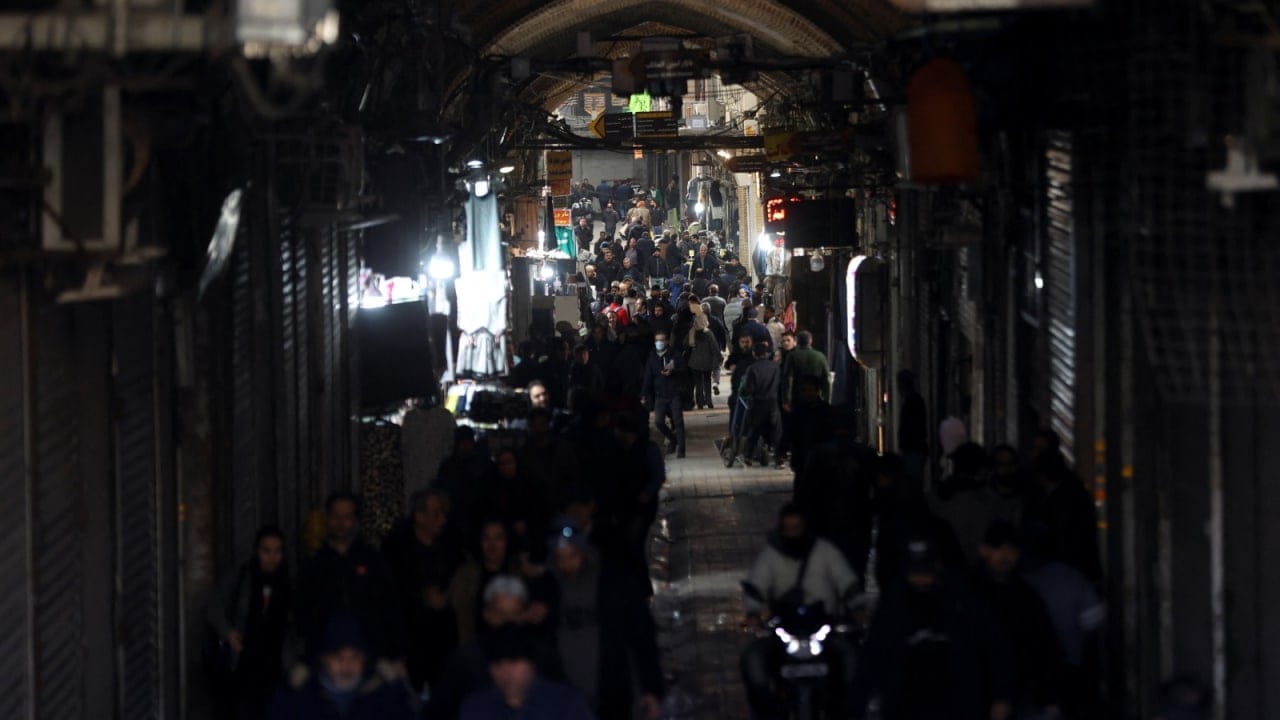
Watching brave Iranians take to the streets and – despite the threat of arrest or even death – march against their tyrannical regime, I was reminded of two very different people.
The first was Barack Obama.
In 2009, Obama was president when the Iranian Green Movement erupted after elections were allegedly stolen by then-President Mahmoud Ahmadinejad. What began as small demonstrations quickly swelled into the largest protests Iran had seen since the 1979 revolution. For a brief moment, the ayatollahs looked vulnerable.
Within months, however, the movement was brutally crushed.
At the time, there was real hope in Israel that this moment could be seized to finally remove the regime that posed the greatest long-term threat to the Jewish state.

One of the most vocal proponents of that view – the second person I thought of this week – was Uri Lubrani, a veteran Israeli defense official who had headed Israel’s mission in Tehran in the mid-1970s and had warned even then of the shah’s impending downfall.
Lubrani maintained close ties with Iranian opposition figures and pushed hard from his post at the Defense Ministry for Israel to pressure Washington to stand unequivocally with the protesters. The logic was simple: authoritarian regimes collapse not only when their people rise, but when they believe the world is behind them.
Obama refused.
While he expressed concern over the violence and urged Tehran to respect the vote and basic freedoms, he stopped short of throwing America’s weight behind the demonstrators.
“It is up to Iranians to make decisions about who Iran’s leaders will be,” Obama said in June 2009, adding that he did not want the United States to become “the issue inside of Iran” or a “handy political football.”
It was a decision he would later regret.
In 2022, after another wave of protests swept Iran, Obama acknowledged that restraint had been a mistake.
“Every time we see a flash, a glimmer of hope, of people longing for freedom,” Obama said, “we have to point it out….we have to express some solidarity.”
That lesson is worth remembering now.
Once again, Iranians have taken to the streets – initially over a collapsing economy, runaway inflation, and failing infrastructure. But as so often happens in Iran, economic despair quickly morphs into something far more dangerous for the regime: a full-throated rejection of its legitimacy.
Women’s rights activists, students, and business owners are marching daily, chanting “death to the dictator” and “woman, life, freedom” – slogans that on any given day are enough to land someone in prison. The courage on display is extraordinary.
Lubrani is no longer alive. He passed away in 2018 at the age of 91. But his legacy lives on inside Israel’s defense establishment, including within the Mossad, where there is a deep understanding that more can – and should – be done to assist the Iranian people.
Yes, such support must be quiet and carefully calibrated so the regime cannot easily dismiss the protests as a foreign conspiracy. But that concern must be secondary. What matters most – for the people of Iran, for Israel, and for the West – is that this regime falls.
Which brings us to Donald Trump.
Trump's rejection of regime change in Iran a mistake
Trump spoke tough on Iran during his meeting with Prime Minister Benjamin Netanyahu at Mar-a-Lago. He warned of military action if Tehran resumes its nuclear weapons program or accelerates ballistic missile production. But when asked about regime change, he was explicit: he would not go there.
That is a mistake.
A clear declaration in support of regime change might sound symbolic, but symbols matter. If the Iranian people know that the most powerful country in the world is unequivocally in their corner, it strengthens resolve and sustains momentum.
Hearing an American president say openly that he wants to see a different regime in Tehran carries real weight.
The concerns are understandable. The West’s record on regime change – especially in Iran and across the Middle East – is troubling. But history does not offer moments like this every week.
What makes this moment different is the broader context. Iran’s economy is in shambles. Inflation is soaring. Water and electricity shortages are widespread. Sanctions are biting. The regime is battered.
More than that, Iran’s military has been dramatically weakened. Joint Israeli-American strikes in June degraded key capabilities, severely damaged the nuclear program, knocked out air defense systems, and destroyed missile stockpiles and launchers. The so-called Iranian axis of resistance is not in decline.
If there was ever a moment to confront the regime, it is now, and it may not come again anytime soon.
Protests erupt in Iran every few years, and they are usually beaten back. “Regime change” may be a frightening phrase in Western capitals, but in Iran, it is exactly what is needed to make the region – and the world – safer.
World leaders must offer every form of support, public and covert. Standing with the Iranian people is not an escalation – it is a responsibility.
The writer is a co-founder of the MEAD policy forum, a senior fellow at JPPI, and a former editor-in-chief of The Jerusalem Post. His newest book is While Israel Slept.