Spoiler: I’m not Russian. Or at least, not the kind of “Russian” you think. My mother and siblings immigrated from Moldova, my grandparents came from Poland and Latvia. I grew up in an Israeli home where only Hebrew was spoken. Seemingly, a “typical” Israeli household.
And yet, at school, I was “the Russian.” Yes, even in a religious girls’ school, at the heart of the national-religious community. In Bnei Akiva, some people called me “Ukrainian,” and surprisingly enough, I was offered to convert to Judaism when I worked in the political arena. I was a child born here, who spoke only Hebrew, an Israeli in every way, and I couldn’t understand why I, of all people, was labeled as different. I couldn’t understand why my “Russian-looking” appearance made me a target of ridicule.
Only later did I understand: before I even knew this identity, it had already been imposed on me from the outside.
In the 1990s, during the great wave of immigration from the former Soviet Union, relatives I never knew existed suddenly appeared in Israel, and with them came the Russian accent that gradually emerged in my late mother’s speech. My mother, who headed a hospital department, was the one who trained the new immigrant nurses and helped them integrate at work in Israel.
Israeli society did not always know how to embrace the immigrants. Instead of opening its arms, it opened its cynical, cutting mouth. People who desperately wanted to become part of us hit a wall of stereotypes: “Russians,” “less Jewish.” And so, alongside a blessed immigration, a quiet pain was formed. A problematic image, a cultural scar.

New Year and Novy God
For years, as a religious child, the civil New Year was not celebrated in our home, because it wasn’t the Jewish New Year and therefore “not ours.” At some stage, perhaps influenced by the immigration wave of the 1990s, we began raising a glass of champagne at midnight, watching a concert on one of the Russian TV channels.
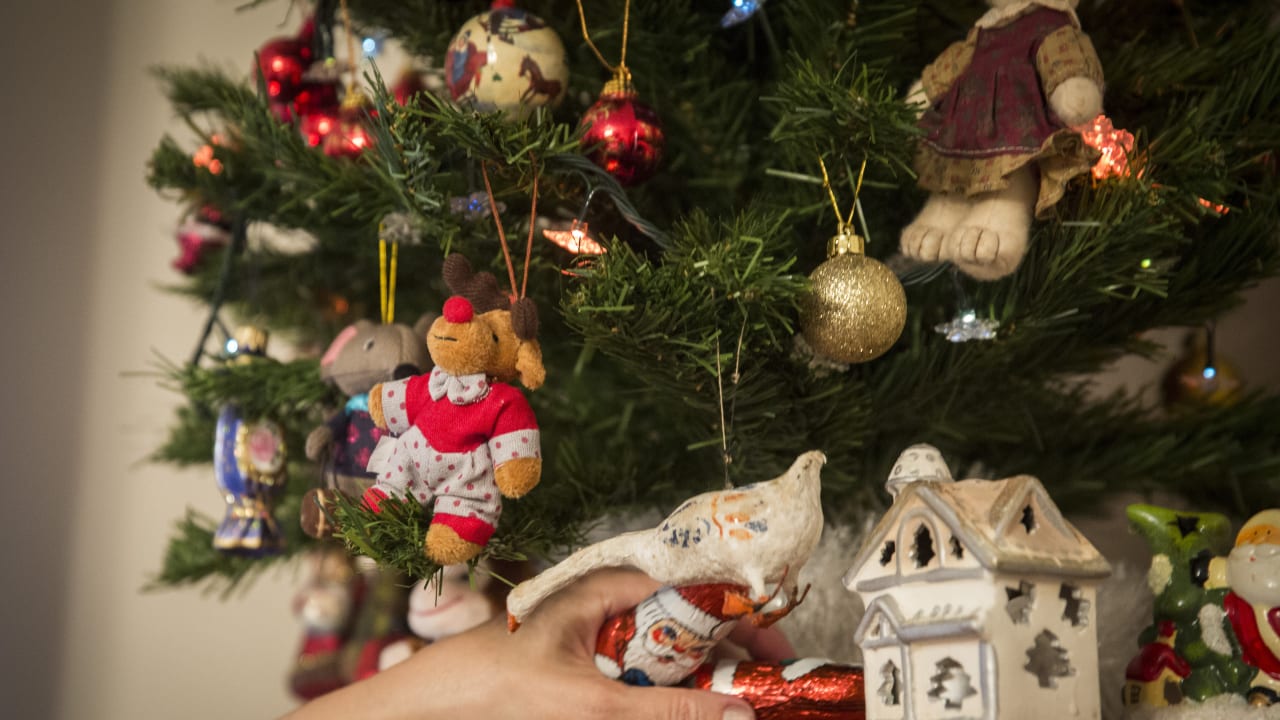
I didn’t talk about it publicly, because in the Israeli public sphere, Christmas trees began popping up, and with them the suspicion that Novy God was sneaking Christian symbols into the Jewish state.
Only when I grew older and researched did I learn that in the former Soviet Union, it was forbidden to celebrate religious holidays. So a civil holiday was created. One that marked the new year, gave people a day off, and mainly allowed for a joyful family gathering in the midst of a harsh reality. Families came together, ate traditional foods, toasted “L’Chaim,” laughed, told stories, and simply were a family.
No missionary intent, no attempt to replace anything Jewish. On the contrary, it was a way to spiritually survive in a regime that tried to erase identities.
And then, after years in which “Russian identity” was stuck on me from the outside, I chose to embrace it from within. My mother taught me to read Russian, I started speaking my broken Russian publicly, and I leaned into being “Soviet-Israeli.”
During the years I was in the Bayit Hayehudi party, I met Yonatan Dubov, who immigrated at the age of one from Moldova, and together we decided to connect worlds. We launched a “religious Novy God” celebration. An initiative meant to say, loud and clear: you can be Israeli, you can be a religious Jew, and you can also respect, embrace, and recognize this tradition as part of the Israeli mosaic. Not as a threat, but as richness; not as danger, but as opportunity. A doorway for Israelis to learn more about their brothers who came from the former Soviet Union, and to appreciate the beauty of the culture and food that arrived with them.
Because ultimately, my story is not just personal. It’s the story of an entire generation. In Israel and in America, a generation that had to justify its existence, prove its identity, and sometimes even erase parts of itself in order to belong.
I am Israeli. Hebrew-speaking. Fully part of this society. And at the same time, I am the daughter of immigrants of strong women who lived through a complex reality and held onto their hearts and their homes even when they were forbidden to speak their identity aloud.
And today, as the discussion around Novy God rises again, I am no longer the child who didn’t understand why they laughed at her. I am the woman who looks back and says: What a shame about the years of embarrassment. What a loss. Israel is supposed to be a place where cultures meet, not disappear. A country that celebrates diversity, not fears it.
Because in the end, a strong nation is not afraid of culture. A strong nation embraces it, gives it space, and becomes richer because of it.
The writer is a strategy and communications adviser, a religious-Jewish woman of Russian background, and a daughter of refuseniks.