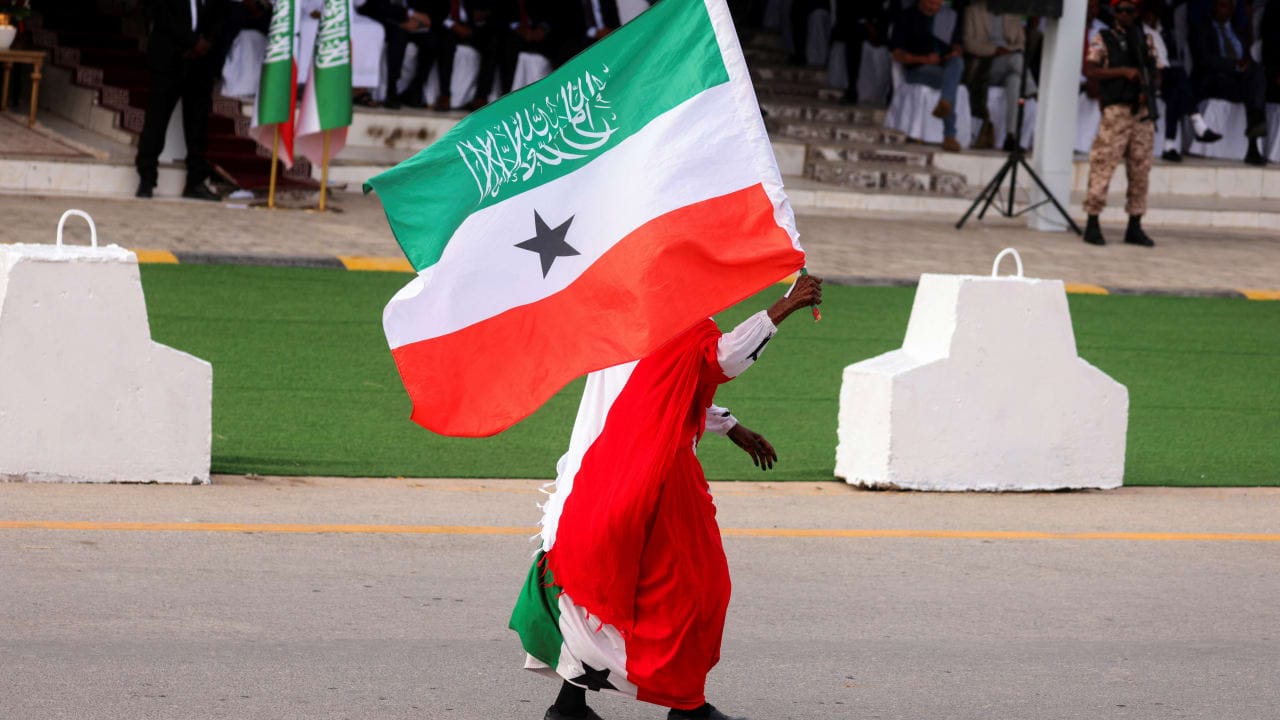
Somaliland went to the polls on November 13, 2024, in the ninth competitive election since its 1991 re-declaration of independence from Somalia via a constitutional referendum followed by municipal elections (in 2002, 2012, and 2021), presidential elections (2003, 2010, and 2017), and parliamentary elections (2005).
Somaliland’s roots lie in the agreements signed between the United Kingdom and clans in the area in the late 19th century, which led to the establishment of the Somaliland Protectorate. On June 26, 1960, the protectorate was formally granted independence and became the State of Somaliland. Five days after gaining independence, it voluntarily united with the Trust Territory of Somalia, the former Italian colony to its east and south, thereby forming the Somali Republic.
The union was problematic from the start. When Somalia’s Siad Barre regime enacted harsh policies against Somaliland’s dominant family, the Isaaq clan, a 10-year Somaliland War of Independence ensued. The bitter conflict resulted in the destruction of 90% of its capital city, Hargeisa, bombed by Siad Barre’s air force and stripped bare by looters.
Somaliland defeated Mogadishu’s forces and declared independence in 1991, regarding itself as the legitimate successor state to British Somaliland.
In the absence of Mogadishu’s acquiescence, Somaliland’s independence is not internationally recognized. Yet it has created one of the most inclusive multiparty democratic systems in Africa. Not only was the 2024 event the fourth presidential election by universal suffrage in Somaliland, but previous elections have resulted in transitions of power between parties.

In the 2024 election, which had an expected turnout of over one million people across 2,000 polling stations, incumbent President Muse Bihi Abdi was defeated by Abdirahman Mohamed Abdullahi “Irro.”
Standout democracy in its region
The former British colony has been a stand-out democratic performer in a region characterized by political upheaval, not least in neighboring Ethiopia and Somaliland’s one-time state partner, Somalia.
Somaliland has proven remarkably adept at managing a very poor economy, with a per capita income of just $630; poverty worsened by the civil war in the late 1980s. With aid flows by 2024 amounting to less than $200 million annually, and livestock and other trade comprising the rest of the bulk of domestic export earnings and GDP, at some $300 million, the country depends on remittance flows from the diaspora, around $900 million annually.
And yet Somalia has similar customs and institutions, the same religion, and both are formed around clans. Profiting from chaos and destruction has, by comparison, become a way of business and life in neighboring Somalia. The flow of international largesse, averaging $2 billion annually for 20 years in the 2000s, has made this an attractively profitable venture. Clan control of the capital, Mogadishu, has, in this regard, equated with the control of the sources and distribution of revenue.
Another explanation of the difference in performance is down to the presence of the Somali National Movement (SNM) in Somaliland, which took charge in 1991 as soon as independence was redeclared, this time not from Britain, as in 1960, but from Somalia.
A nearly month-long conference under the trees in the south-eastern city of Burao in April-May 1991 revoked Somaliland’s voluntary union with the rest of Somalia to form the Republic of Somaliland. A 1993 conference in Boroma extended government beyond the SNM.
Another reason is because of its democratic character. In 2001, Somaliland voters approved a new constitution that established a multiparty democracy, based on three major parties in a deal that is renewed every 10 years. Even though it is a functioning sovereign state with an elected government and its own currency, it is not internationally recognized. The frequent transfers of power between candidates, despite some very tight results, have made Somaliland a stand-out African democracy.
As such, it’s a better fit for Israel than some of the autocracies with which the Netanyahu government has invested, including Rwanda and Uganda.
The lack of international recognition has until now added a premium to costs, especially insurance and banking, while its strongest asset in democracy has added a relatively large burden of some $10 million every year to a budget of just $400 million, of which, in 2024, 43% was used for security, with payroll accounting for much of the remainder. Democracy has, however, ensured relative transparency compared to Somalia, along with accountability.
Neighboring Ethiopia, which always said that, due to its common border, it could never “be the first to recognise Hargeisa, but would be the second,” in 2024 concluded an agreement on a 50-year lease on the Red Sea port of Berbera, run by Dubai Ports.
Israel’s move acknowledges the political, security, and legal realities of the Horn of Africa, whatever the protests of the African Union, which bases this argument on the 1964 Cairo Resolution on the inviolability of African borders.
However, the AU’s own 2005 report on Somaliland found that its recognition was “historically unique and self-justified in African political history.”
Recognition does not create a new border but strengthens an existing one.
Whether recognition leads to better governance in Somaliland, along with a greater flow of foreign aid, is moot.
Until then, the lesson from its path to stability and recognition is well understood by democrats everywhere, including the two-thirds of Africans who routinely state their preference for democracy over other forms of government. Such openness may be expensive, with regular elections and transfers of power, but it’s also cheap at the price.
The writers led election monitoring teams in Somaliland in 2022 and 2024, and are with the Platform for African Democrats.