Back in 1999, when MK Dan Tichon (Likud) was speaker of the Knesset, at the request of the Knesset spokesperson, I wrote and produced a bilingual, Hebrew-Arabic album (in book form) of the Knesset.
The album dealt with various aspects of the Knesset: its history, functioning, data concerning its members and parties, and the artworks adorning its walls and spaces. I tried to keep it as balanced and politically neutral as possible. It was designed to be offered as a gift to important Jewish and Arab visitors to the Knesset.
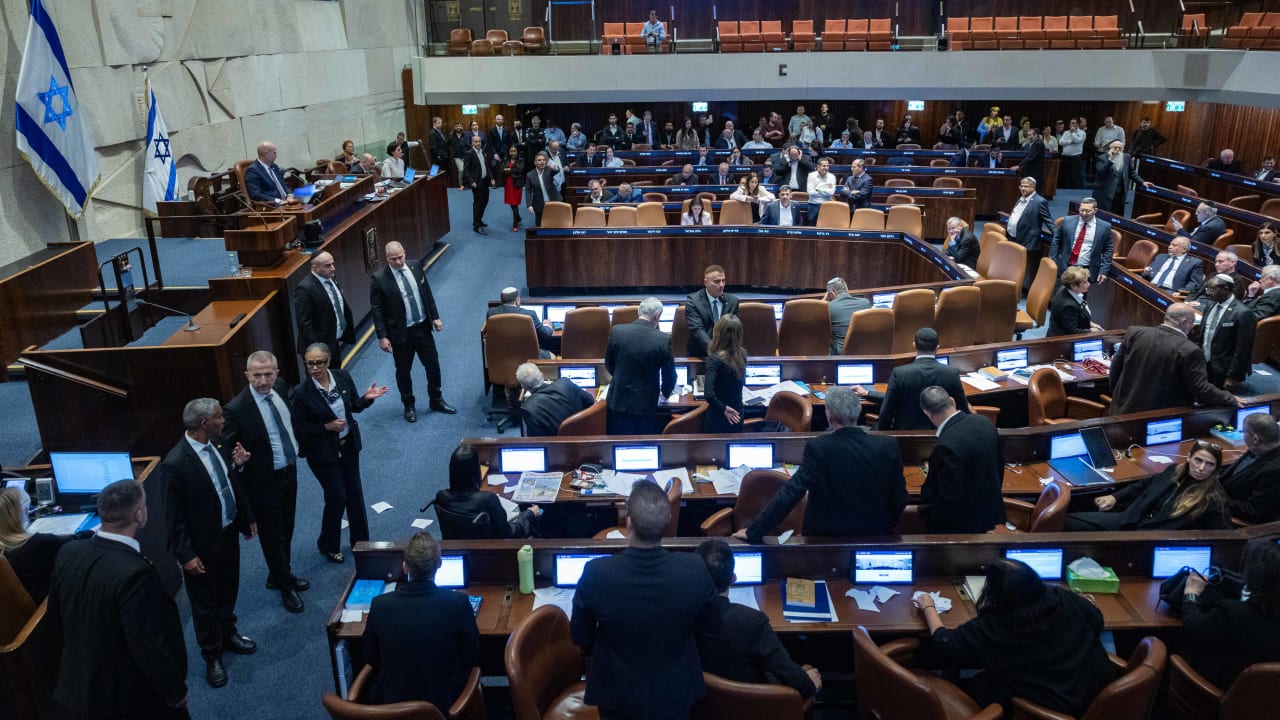
I doubt whether today the Knesset would produce such an album, not just because in the age of the Internet such printed albums are superfluous, but since today the Knesset resembles a chaotic battleground rather than a solid pillar of a democratic reality one can be proud of.
And why would one produce a bilingual album with identical Hebrew and Arabic texts adorning its pages, while at least part of the government does not hide its intention of trying to prevent certain Arab parties from running in the next Knesset elections?

What is the cause of the Knesset's glories and shortcomings?
SINCE ISRAEL is a parliamentary democracy in which the government receives its power to act from its parliamentary majority, most of the Knesset’s glories and shortcomings are a function of the size and stability of the government’s parliamentary majority, and of the government’s goals, policies, and modus operandi.
Another important factor is the human makeup of the Knesset – i.e., the identity of the MKs – which under the Israeli system is exclusively affected by the choices of the leaders of the parties or the results of primaries held within them, rather than by their personal qualities and attractiveness. This is because the MKs are not elected directly, but as predetermined candidates on their parties’ lists.
In the current situation this means that in theory the government can get the Knesset to do anything it wants, because formally it has a handsome majority (68 out of the Knesset’s 120 MKs).
However, the situation is complicated by the fact that some parties in the coalition are inclined to threaten the government’s stability and even existence, by raising demands that are not necessarily in line with the government’s priorities or the wishes of a majority of the population.
Since Prime Minister Benjamin Netanyahu is determined to remain in power at almost any price, this forces him, on occasion, to act in ways that inter alia negatively affect the way the Knesset operates, whether or not he likes the immediate outcome.
A good example of this is the Knesset’s permanent and special committees, which are supposed to act as an effective scrutinizing tool over the government.
From the beginning of the term of the 25th Knesset, the chairmen of two Knesset committees could be considered problematic because of their extreme political positions and their inclination to silence MKs expressing positions opposite to their own: MK Simcha Rothman (Religious Zionist Party) at the head of the Constitution, Law, and Justice Committee, and MK Zvika Fogel (Otzma Yehudit) at the head of the National Security Committee.
However, as the crisis developed within the coalition over the passing of a new law concerning the conscription of haredim to the IDF, and the haredi parties started using brinkmanship tactics to try to get their way by resigning from their ministerial and committee chairmanships, inter alia the Knesset committees suffered.
In the Foreign Affairs and Defense Committee, the competent former Knesset speaker Yuli Edelstein (Likud) was replaced by a gray backbencher from his party, MK Boaz Bismuth, who lacks any foreign affairs and security experience, and has failed to come up with a realistic solution to the dilemma of conscripting more haredim to the IDF, which was the reason he replaced Edelstein.
The replacements to committees previously headed by haredi MKs have also been problematic, especially the replacement of the experienced and pedantic MK Moshe Gafni (United Torah Judaism) in the Finance Committee by MK Hanoch Milwidsky (Likud), who is being investigated by the police on sexual assault, and obstruction of legal proceedings charges.
Also problematic are the appointments of MK Limor Son Har-Melech (Otzma Yehudit) as chairwoman of the Knesset Health Committee, and MK Zvi Sukkot (Religious Zionist Party) as chairman of the Education, Culture, and Sports Committee. Both replaced reasonable Shas committee heads.
Har-Melech wants Israel to leave the World Health Organization, has reservations about inoculations, holds an anti-scientific approach to medicine, and is irreverent to medical experts.
Sukkot is a former hilltop youth, lacking any higher education, with a long history of political and anti-Arab violence, and who, on July 29, 2024, broke into the Sde Teiman military detention camp in protest against the holding in custody of reservists suspected of serious physical abuse of a Hamas prisoner.
Finally, a new temporary Communications Committee was set up under the chairmanship of MK Galit Distal-Atbaryan (Likud), to help the coalition pass a new communications law presented by Communications Minister Shlomo Karhi. The committee was established because MK David Bitan (Likud), the chairman of the Economic Affairs Committee, which was to have dealt with the bill, is known to object to Karhi’s law, which is allegedly designed to destroy the current media structure in Israel and weaken the media outlets that are critical of the government. Since Distal-Atbaryan is not an expert in communications, Karhi has declared that he will attend all the committee’s meetings by her side, in blatant breach of the separation of powers principle.
Another recent negative development in the Knesset is the manipulation of the Knesset Rules of Procedure in order to help the coalition rapidly push through various allegedly antidemocratic reforms on its agenda, and to prevent opposition MKs from effectively fighting against these initiatives.
It is ironic that back in 2012, MK Yariv Levin (today’s justice minister), as chairman of the Knesset House Committee, carried out a highly welcome serious revamping of the Knesset Rules of Procedure, in order to make them more effective in the proper running of the Knesset.
There are many more examples of the current malfunctioning of the Knesset, perhaps the most visible of which is the constant misconduct and unruly behavior of numerous MKs, which are less harshly dealt with when they happen to belong to the coalition.
The deterioration of the Knesset is evidence of the deterioration of Israel’s liberal democratic system as a whole. Hopefully, after the next Knesset elections, this process will be reversed.
The writer has written journalistic and academic articles, as well as several books, on international relations, Zionism, Israeli politics, and parliamentarism. In the years 1994-2010, she worked in the Knesset Library and the Knesset Research and Information Center.