Israel needs to move past the trauma of Hamas’s October 7, 2023, invasion and massacre, and the costly two-year war that followed, before calmer Middle East diplomacy can resume. Would an official state inquiry into the failures that allowed it to happen help?
For more stories from The Media Line go to themedialine.org
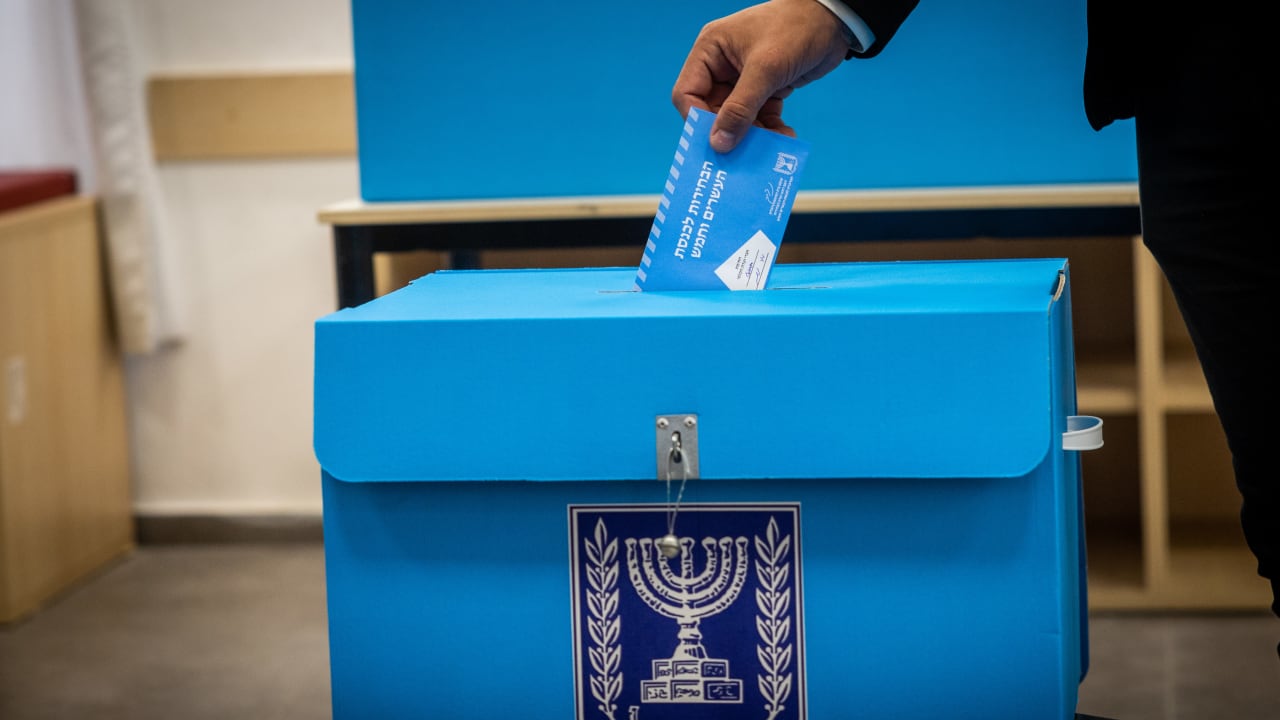
No. In the end, that will be up to Israel’s voters.
Polls show about three-quarters of Israel’s citizens want an official commission of inquiry. Most assume it would force the government to take responsibility for what’s widely described as the worst disaster in Israel’s history, the Hamas invasion in which terrorists murdered more than 1,000 Israelis and dragged 251 hostages, dead and alive, into Gaza’s tunnels, setting off a two-year war.
By contrast, the government’s proposal to investigate itself won’t persuade most Israelis, either. Its predetermined conclusion is that previous governments, the military, and the intelligence agencies were to blame, not this government.
Still, neither inquiry would erase the disaster of mistaken assumptions and criminally negligent planning that opened the door to the Hamas massacre. Any hopes of progress toward a lasting peace in the Middle East, such as an alliance between Israel and leading moderate Arab nations, will have to wait for Israel’s voters to decide their future.

Consider a few common fallacies about a commission of inquiry:
Official state inquiries are rare, used only in extreme circumstances.
The inquiry after the 1973 war, the “other” example of mistaken conceptions, forced a quick replacement of the political leadership.
An official state commission of inquiry would provide indisputable answers and settle arguments about the Gaza war.
State commissions of inquiry have an aura, as if they’re something special. In fact, since the law governing such inquiries was enacted in 1968, there have been 20 of them. Some investigated wars, but others were trivial. One looked into corruption in Israel’s soccer league, another investigated the murder of a pre-state Israeli leader in 1933. And so on.
The most famous example, often held up as a model for today, was the Agranat Commission, which examined the failures that preceded the 1973 war with Egypt and Syria. Headed by Israel Supreme Court Chief Justice Shimon Agranat, few here knew he was a soft-spoken immigrant from Kentucky; it blamed Israeli military intelligence for failing to pick up on Arab plans for a surprise two-front attack on Yom Kippur, 1973.
The commission was established in November 1973, just days after a cease-fire ended the war. It issued an interim report in April 1974. As a result, military intelligence commanders were fired, and the army chief of staff resigned in disgrace.
Yet the Agranat Commission did not address the government’s role. That government was tainted by hubris and overconfidence, promoting the view that the Arabs wouldn’t dare attack Israel after the shellacking they absorbed just six years earlier in the Six-Day War.
Why not? Because investigating the government wasn’t part of the Agranat Commission’s mandate. The government wrote that mandate, and as today, it was not eager to take even part of the blame for the fiasco.
Prime Minister Golda Meir’s government even won an election after the war, on Dec. 31, 1973. She resigned 10 days after the Agranat Commission issued its preliminary report, but her Labor Party remained in power under Yitzhak Rabin.
Even then, the Agranat Commission did not force her to step down. Demonstrations against the government and her own conscience provided the push. But it wasn’t until 1977 that Israeli voters removed Labor from leadership, four years after the Yom Kippur War disaster.
Little remains unknown about the Gaza crisis
Today’s reality is markedly different from 1973. The Agranat Commission revealed facts and decisions that were unknown to the public. In 2025, little remains unknown about the Gaza crisis.
The Israeli army conducted its own investigations, and enterprising reporters in Israeli media have documented the extent of the government’s role, especially its decision to allow a willing channel for billions of Qatari dollars to reach Hamas in Gaza. That money was used to dig a tunnel network longer than the London Underground, stockpile thousands of rockets, and train thousands of Gazans in warfare and terrorism.
Again and again, military and political leaders assured the public that Hamas was just playacting.
They even had a term for it: “Hamas is deterred,” though some Hamas drills, including storming mock Israeli villages, took place within eyesight of the border.
Meanwhile, repeated demonstrations at the Gaza border fence showed its vulnerability. Overreliance on electronic warning devices, easily disabled by Hamas drones, helped create the confusion that led to Israel’s late, weak, and ineffective response to the Hamas invasion.
All that is known. Little actually needs to be discovered by a commission of inquiry.
Plenty of blame exists to go around. The Israeli military has accepted its share: the chief of staff, the commander of military intelligence and his subordinates, and the heads of domestic and foreign intelligence services have all resigned.
Not so the government of Prime Minister Benjamin Netanyahu. If demonstrations led Golda Meir to resign, much larger and louder demonstrations have pushed Netanyahu toward the opposite conclusion, convinced that he must remain steadfast, repelling threats to Israel from outside and inside. He labels his domestic opponents, in the streets, in the parliament, and especially in the media, as traitors, extremists, and “deep state.”
For his part, Netanyahu points to his government’s accomplishments after Oct. 7: eliminating the leaders of Hamas in Gaza and Hezbollah in Lebanon, weakening both terrorist forces considerably, crippling Iran’s military structure and leadership, and, with the help of the US, destroying much of its nuclear development program.
Resolving this will take far more than a commission of inquiry, whatever its makeup. International diplomacy is caught up in Israel’s polarized political reality today. Israel’s voters must decide whether Netanyahu’s achievements have restored his standing, or whether the disaster he helped bring about means it’s time for him and his divisive coalition to step away.
National elections are set for next October, possibly earlier. Until Israel’s voters make up their minds, nothing serious can happen on the long-term front of diplomacy or peace.
Mark Lavie has been covering the Middle East for major news outlets since 1972. His second book, Why Are We Still Afraid?, which follows his five-decade career and comes to a surprising conclusion, is available on Amazon.