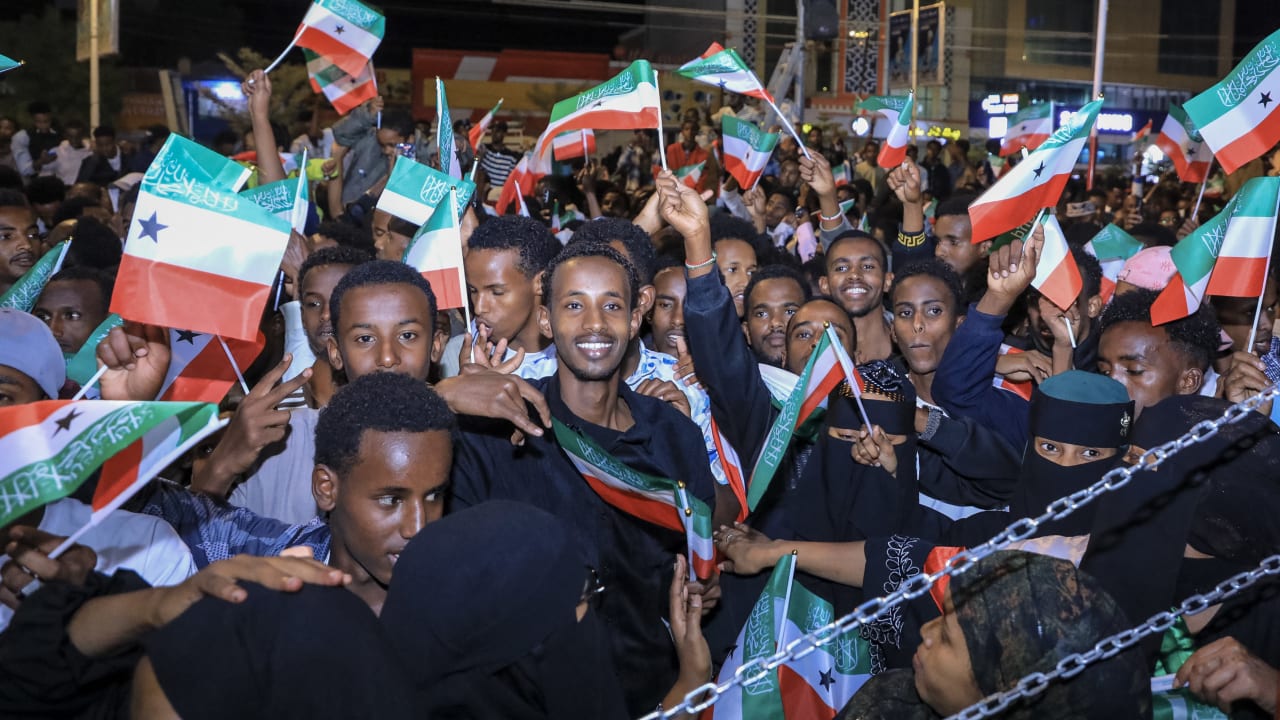
Israel is the first country to formally recognize Somaliland as independent. While Somaliland’s desperation for recognition is understandable, Israel’s rush is puzzling. Any strategic gains for Israel are far outweighed by the risks.
Instead of strengthening Somaliland, it deepens its internal divisions, inflames regional tensions, fails to advance Israel’s security interests against the Houthis, and isolates Israel diplomatically.
In principle, Somaliland deserves international recognition, as its population is generally better off than the rest of Somalia, and colonially imposed states have consistently failed to provide security, employment, and political legitimacy.
However, Israel’s recognition increases Somaliland’s vulnerability and does little to advance Israel’s strategic goals, whether countering the Houthis, limiting Turkish influence in the Horn of Africa, securing the Red Sea, advancing the Abraham Accords, or even facilitating the relocation of Palestinians from Gaza. Instead, the move risks weakening Somaliland while offering Israel limited, if any, strategic benefit.
It is unsurprising that the Mossad is behind this move, reflecting institutional hubris, strategic arrogance, and a shallow understanding of the Horn of Africa. The Mossad failed to anticipate the Houthi threat, and it similarly underestimates the looming threat in Sudan.

The timing offered Israel a convenient opportunity
Prime Minister Netanyahu thanked Foreign Minister Gideon Sa’ar, Mossad Chief David Barnea, and the agency for facilitating Israel’s recognition of Somaliland, expressing hopes for its success. Yet, given Somaliland’s desperation for recognition and the looming Israeli elections, the timing offered Israel a convenient opportunity, even if the strategic payoff remains uncertain.
Although Somaliland has long presented itself as an exception in the Horn of Africa, stable, democratic, and functionally independent for the past three decades, the reality is far more complex. Clan identity plays a central role in politics, land ownership, and representation.
The Isaaq clan controls central and northern urban centers like Hargeisa, Berbera, and Burao. However, the eastern regions and northwestern present remain loyal to Somalia’s federal government, creating contested territories.
In eastern Somaliland, particularly in Sool and Sanaag, the Dhulbahante and other Darod subclans remain loyal to Somalia’s federal government, resulting in contested territories and frequent conflicts. On April 14, the Somali government recognized SSC-Khaatumo as its sixth Federal Member State, reducing Somaliland’s territory to about 45% of the former British Somaliland and significantly weakening its claim to independence.
Israel’s recognition of Somaliland will intensify conflicts in both the eastern and northwestern regions. Federal-aligned clans in Sool and Sanaag are likely to use Israel’s presence to rally against Hargeisa, with Turkey providing political, military, and economic support.
The move also gives Al-Shabab propaganda leverage. The group can exploit strong anti-Israeli sentiment among Somali nationalists and Islamists, particularly within the Isaaq clan, to recruit fighters and gain legitimacy. Anti-Israel sentiment is the easiest way for Islamist militias to gain legitimacy.
Al-Shabab can frame recognition as Zionist interference betrayal to the Palestinians by Somaliland, strengthening ties with the Houthis, Iran, and the Eritrean dictator—who opposes Somalia’s fragmentation and UAE interference, and has already trained deployed 10,000 Somali troops in 2022, many of whom later defected to Al-Shabab. This dynamic further increases Somaliland’s vulnerability.
Strategically, the recognition fails Israel. The idea that recognition would strengthen Israel’s leverage against the Houthis misunderstands the threat. Defeating the Houthis requires a ground campaign by partners with a cohesive national army and the willingness to defeat them—capabilities that Somaliland lacks.
A naval base in Somaliland only brings Israeli airstrikes closer. Past air campaigns by Saudi Arabia and the US, and Israel's targeted killings, and sanctions have all failed. Even in Gaza, Israel required ground operations to deal with Hamas. Israeli presence in Somaliland would not shift the strategic balance against the Houthis.
The recognition does little to extend the Abraham Accords. On August 14, Sen. Ted Cruz urged Donald Trump in an open letter to recognize Somaliland, citing its willingness to strengthen ties with Israel and support the Abraham Accords. However, President Trump declined, stating that the United States had no immediate plans to follow Jerusalem’s lead.
Saudi Arabia, which has conditioned normalization with Israel on a credible pathway to Palestinian statehood, also opposed the move—further underscoring that Israel’s recognition of Somaliland hardly advances the Abraham Accords in any meaningful way.
Somaliland has explicitly denied any discussions or agreements with Israel or the United States regarding the relocation of Palestinians from Gaza. Deporting Palestinians and building a “Riviera” was never Israel’s plan; it was a proposal from Trump, which he has largely abandoned.
Regardless, Somaliland would not volunteer to host such a relocation, as doing so would be suicidal—turning Somaliland into a perceived dumping ground for Palestinians and a primary target politically, diplomatically, and security-wise, while mobilizing Somalis, including the Isaaq clan, as well as Arabs and Muslims worldwide.
Diplomatically, Israel faces backlash. The African Union, Arab League, and Gulf Cooperation Council oppose the move, gaining legitimacy for their anti-Israel stance. Most African countries face the risk of breakaway regions, like Somaliland.
China has officially opposed recognition, and the European Union has reaffirmed its strong support for Somalia’s territorial integrity and stability. While the UAE may view recognition favorably, given its ties to Somaliland, it has remained publicly restrained.
Israel’s recognition of Somaliland serves neither its interests nor Somaliland’s. While Somaliland’s desire for recognition is understandable, the move deepens its internal divisions, heightens regional tensions, and strengthens extremist propaganda. Diplomatically, it isolates Israel and fails to deliver any strategic security benefits in the Red Sea. Overall, the recognition exposes both Somaliland and Israel to significant risks.
Habtom Ghebrezghiabher is a leader of the Aga’azian movement, a popular Tigrinyan national movement in the Eritrean diaspora, based in Israel. He is a doctoral candidate in the Department of Sociology and Anthropology at the Hebrew University of Jerusalem.