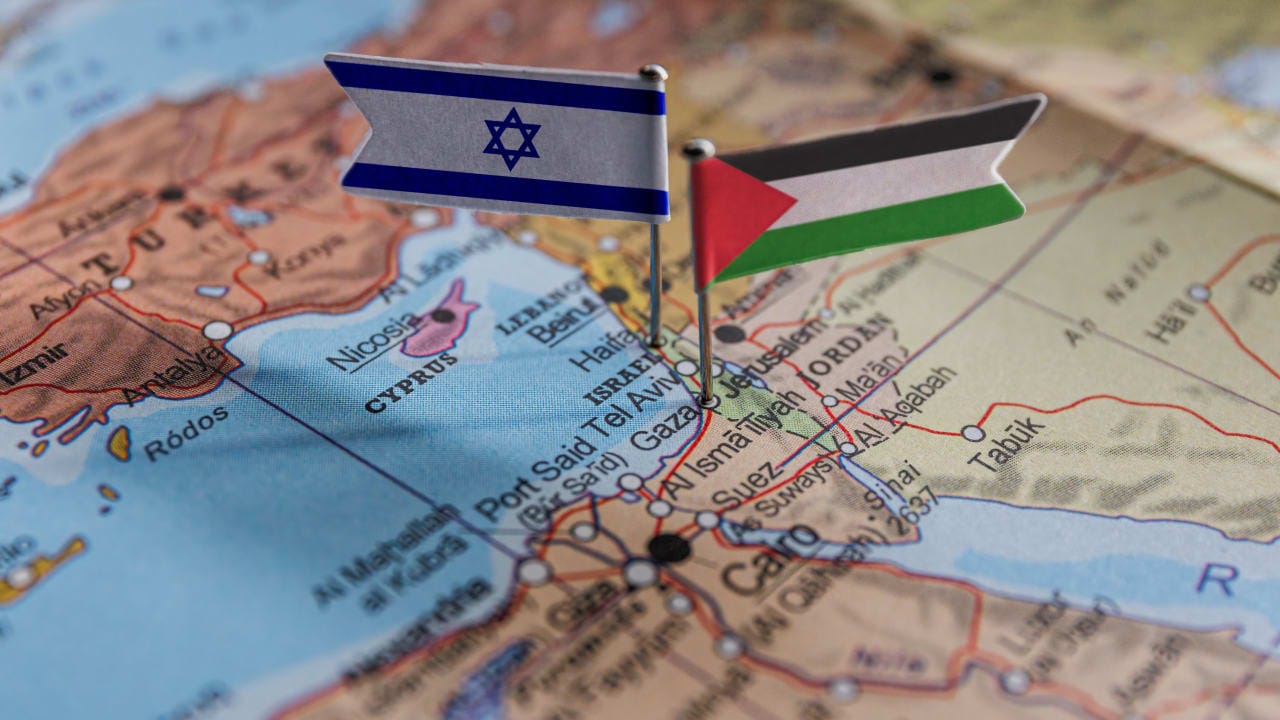
Throughout my life in Israel, over the past 47 years, I have looked for and found Palestinian partners who share my values and my worldview, which means that they believe that Israel and Palestine must find the path to peace. That path to peace must be based on the belief that on the land between the river and the sea there are two peoples who are deeply connected to the same land – historically and religiously.
The shared vision must be that both peoples have a right to have self-determination on the land – that means two states for two peoples. The overriding element for me that determines whether or not the partnership is genuine is in the belief that cooperation across borders is what generates peace, and not high walls and strong fences.
I have always had suspicions that those who foster the separation paradigm (us here and them there) are not able to conceptualize the actualization of peace and don’t really believe in it. Politicians, even on the Left, who emphasize separation between Israel and Palestine, who stress separation not solely as political separation, are afraid to present the conceptualization of peace as a reality in which we Israelis and Palestinians will continue to interact and cooperate – because real peace cannot be anything else.
Most Israelis and Palestinians say: I want peace – but they don’t (meaning the majority of people on the other side). Objectively speaking, both Israelis and Palestinians have ample evidence to make the claim that the other side does not want peace. It is often difficult to find those people, especially leaders, on both sides who demonstrate their true commitment to real peace with the other side. They exist, but they are not dominant and they hardly ever talk about real peace.
At the end of April 2026, the Palestinians are scheduled to conduct local elections in cities, towns, and villages all around Palestine. Within a year from the end of the war, Palestinians are supposed to hold national elections for president and parliament. This will be the first test of its kind to see what Palestinian public opinion has become. The last Palestinian elections were held in 2006.
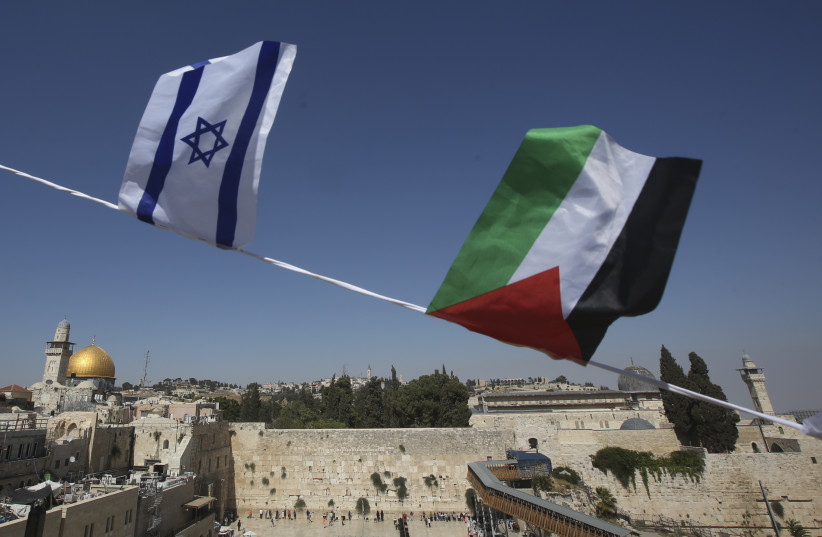
How would Israelis (and Palestinians) react if there was a leading Palestinian political party with the following platform:
The Party is founded on the conviction that the Palestinian people deserve a democratic, just, and modern political system – one that serves citizens rather than factions, safeguards freedoms, and opens a realistic path toward independence, prosperity, and peace.
The Party envisions an independent Palestinian state living side by side with Israel, based on full political, economic, diplomatic, and security cooperation. We believe that sustainable stability and dignity for both peoples can only be achieved through partnership, mutual recognition, and shared responsibility.
Democratic governance and civil freedoms
The Party is committed to building a liberal parliamentary democracy grounded in the separation of powers, the rule of law, and the supremacy of elected institutions. We stand for accountable government, an independent judiciary, and transparent public administration.
The Party defends individual rights and freedoms, including freedom of expression, free and independent media, political pluralism, and the right to peaceful dissent. Public office is a responsibility, not a privilege; opportunity must be based on talent and merit – not loyalty or patronage.
Women and young Palestinians are central to our vision – not as symbols but as equal partners in leadership, representation, and decision-making.
Social justice and development
The Party believes that political freedom must be matched by economic opportunity and social justice. We advocate inclusive economic development, equal access to education and employment, and fair distribution of public resources. A strong Palestinian state must be productive, innovative, and capable of providing dignity and opportunity to all its citizens.
The four pillars of the Palestinian state – The four Ds
The Party believes that a viable and responsible Palestinian state must be established on four essential pillars (the four Ds):
- Demilitarized – ensuring security through professional institutions, the rule of law, and regional cooperation, not militias or armed factions.
- Deradicalized – rejecting extremism, incitement, and violence, and promoting tolerance, civic education, and peaceful political engagement.
- Democratic – governed by elected institutions, accountable leadership, and guaranteed civil rights.
- Developed – economically resilient, integrated into regional and global markets, and capable of delivering prosperity to its people.
Political settlement and two-state framework
The Party supports a negotiated two-state solution based on the 1967 borders, with mutually agreed land swaps of approximately 5%. This framework enables:
Territorial contiguity between Gaza and the West Bank, and the incorporation of approximately 80% of Israeli Jewish settlements into Israel, as part of a final-status agreement.
Jerusalem will be the capital of both states: Palestinian neighborhoods as the capital of the State of Palestine, Jewish neighborhoods as the capital of the State of Israel.
The Old City of Jerusalem shall have no exclusive sovereignty, and will be administered by a special international committee comprising Palestine, Israel, Jordan, Saudi Arabia, and the United States, ensuring freedom of worship, access, and preservation of holy sites.
Refugees and reconciliation
The Party supports a redefinition of the right of return as the right of Palestinian refugees to return to the State of Palestine, alongside: full compensation, and voluntary integration options in the Palestinian state or, in agreed cases, in third countries. This approach seeks justice, dignity, and realism – without perpetuating conflict.
Regional integration and peace
The Palestinian-Israeli partnership envisioned by the Party is part of a broader regional future: full integration of Israel into the Middle East, with comprehensive diplomatic and economic relations with the Arab and Muslim world, alongside a sovereign and democratic Palestinian state.
The Party categorically rejects violence as a political instrument. We believe that dialogue, persuasion, and diplomacy – not coercion or armed struggle – are the only legitimate means to achieve national goals.
Our moderation is not weakness; it is strategic responsibility. Our vision is not abstract; it is practical, balanced, and achievable.
The Party exists to offer Palestinians a credible political alternative – one that restores trust, renews leadership, and opens a real path toward statehood, peace, and shared regional prosperity.
Amazing and true!
What an amazing platform. It is not imaginary. This is, in fact, the political platform of a new Palestinian political party. It will be participating in local and national elections in Palestine during 2026. Announcements regarding its founding and campaign strategy will be presented in the near future.
This Palestinian political party is a challenge to all that we have known until now. It is a challenge to the existing Palestinian political parties that have dominated Palestinian politics for decades. This new political party is the new vision, the new hope for Palestine, but also for Israel. Let’s see Israeli political parties adopting a parallel political platform. When that happens, we will be much more able to envision the possibility of genuine peace.
The writer is the Middle East director of the International Communities Organization and co-head of the Alliance for Two States.