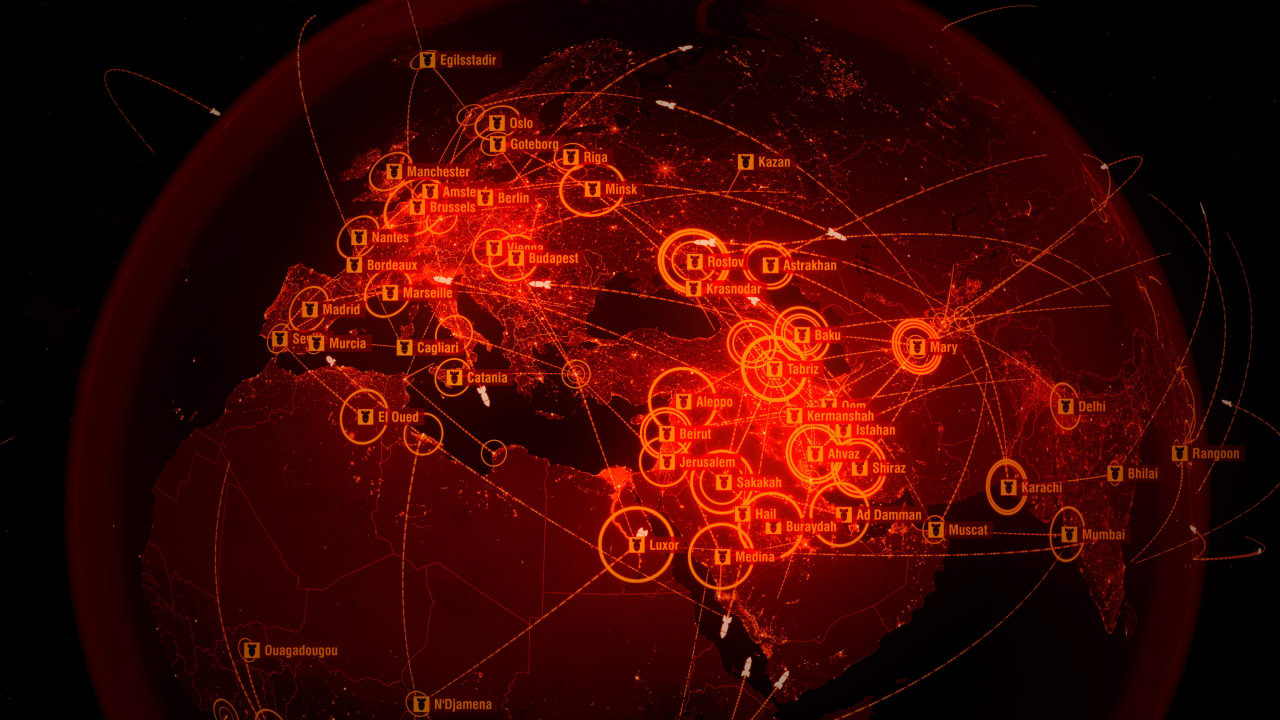
Looking at the world today, several major wars and numerous conflicts are ongoing globally, with prominent large-scale clashes in Ukraine (vs. Russia), Myanmar (civil war), and Sudan (civil war), alongside simmering crises and insurgencies in regions like the Sahel (Mali, Burkina Faso), Ethiopia, Yemen, Afghanistan, and Haiti, driven by political instability, terrorism, and resource scarcity.
In addition, there is persistent conflict in the Congo, as well as drug wars and escalating political violence in Mexico and Ecuador.
Of course, we cannot forget what is going on in our own area, where the ceasefire can hardly be considered an end to war, but rather just a serious reduction in intensity.
In the face of all of this, the United States is pursuing action against Venezuela, having killed over 100 people in small boats they claim are responsible for bringing drugs into America – even though none of them have the capability to reach US shores, nor is it clear what they are actually transporting and to where.
Washington has now further escalated its threats by commandeering two Venezuelan oil tankers in the last 10 days and positioning an armada off the coast of that country, ready to strike at the command of the US president.

In a word, world morals seem to have completely evaporated. As Herman Wouk wrote in his epic work, The Winds of War:
“There is no morality in world history. There are only tides of change borne on violence and death. The victors write the history, pass the judgments, and hang or shoot the losers. In truth, history is an endless chain of hegemony shifts, based on the decay of old political structures and the rise of new ones. Wars are the fever crises of those shifts. Wars are inevitable; there will always be wars; and the one war crime is to lose. That is the reality, and the rest is sentimental nonsense.”
FOR SOME years here in Israel, we were lulled into a false sense of security, believing that paying off Hamas would prevent a full-scale war and keep the wolves at bay. October 7 shattered that illusion, resulting in a war that has now passed the 800-day mark with no real end in sight.
After the attack on Iran in June, it appeared that we had Iran, Hamas, and Hezbollah in Lebanon all on the ropes, yet we were unable to forge a peace treaty with anyone. As a result, we now find ourselves worrying, once again, about an attack from Iran, a resurgence of Hezbollah in the north, and a reconstituted Hamas in the south, along with an unknown future with Syria to our east.
Are we on the brink of World War III?
The possibility seems to be there. The National Security Strategy (NSS) report issued by the White House earlier this month basically abandons Pax Americana in favor of a return to the spheres-of-influence concept, based on the Monroe Doctrine of 1823, which warned Europe that the Western Hemisphere was off-limits to “future colonization.”
The NSS projects that the great powers will each have a section of the world carved out for them to control. For the US, that means North and South America, for Russia, all of Europe, and for China, all of South and East Asia, with Africa either as a separate sphere or part of the Russian or Chinese sphere.
The downside of all of this is that, instead of finding ways to work together, the major powers will be in direct competition with each other to grab as much of the world as they can. Russia has already begun to do that with its invasion of Ukraine, while China, with its Belt and Road Initiative, has made dramatic inroads worldwide as well.
What is Israel to do in a situation like this, where our only solid friend in the world is the US, headed by a mercurial president whose mood changes daily?
FOR STARTERS, we must unite as a people and put our internal differences on the back burner for quieter times. We cannot meet the challenges of today’s world when we are split internally.
Secondly, while I am not advocating that we become Sparta, we do need to be as self-reliant as we can when it comes to our security needs. Our defense industries need to be bolstered so that, if and when our friends desert us, we can still defend ourselves.
Finally, we need to re-energize our regional relationships and foster new ones. Peace and diplomacy with our neighbors will go a long way to ensuring our long-term success should a full-scale world war break out.
Prof. Greg Grandin of Yale University recently wrote: “Today, the Trump administration is sowing the same seeds [of war]. It’s ideal of a world organized around a multifront balance of power – with the United States pushing against China, pushing against Russia, sowing division in Europe, threatening Latin America, with all countries, everywhere, angling for advantage – means there will most likely be more confrontation, more brinkmanship, more war.”
On a related note, NATO’s secretary-general, Mark Rutte, said recently, “We must be prepared for the scale of war our parents and great-grandparents endured.” I hope not, but we need to be prepared.
Wouk summarized the problem when he wrote in Winds of War that: “Peace, if it ever exists, will not be based on the fear of war, but on the love of peace. It will not be the abstaining from an act, but the coming of a state of mind. In this sense the most insignificant writer can serve peace, where the most powerful tribunals can do nothing.” Well said – and let us hope cooler heads will prevail.
The writer, an international business development consultant, is a former national president of the Association of Americans and Canadians in Israel (AACI), a past chairperson of the board of the Pardes Institute of Jewish Studies, and a Board Member of the Israel-America Chamber of Commerce (AMCHAM).