Rivers of ink have already been spilled over October 7, and many more will flow before we fully learn its lessons.
Yet even as we reckon with that horrific day, we must turn our gaze forward – to the physical and social reconstruction of every community affected, specifically to the Bedouin community in the Negev, which was deeply harmed by the events of October 7 and the war with Iran, yet is entirely absent from the reconstruction efforts. Let’s take a moment to understand why and how that happened.
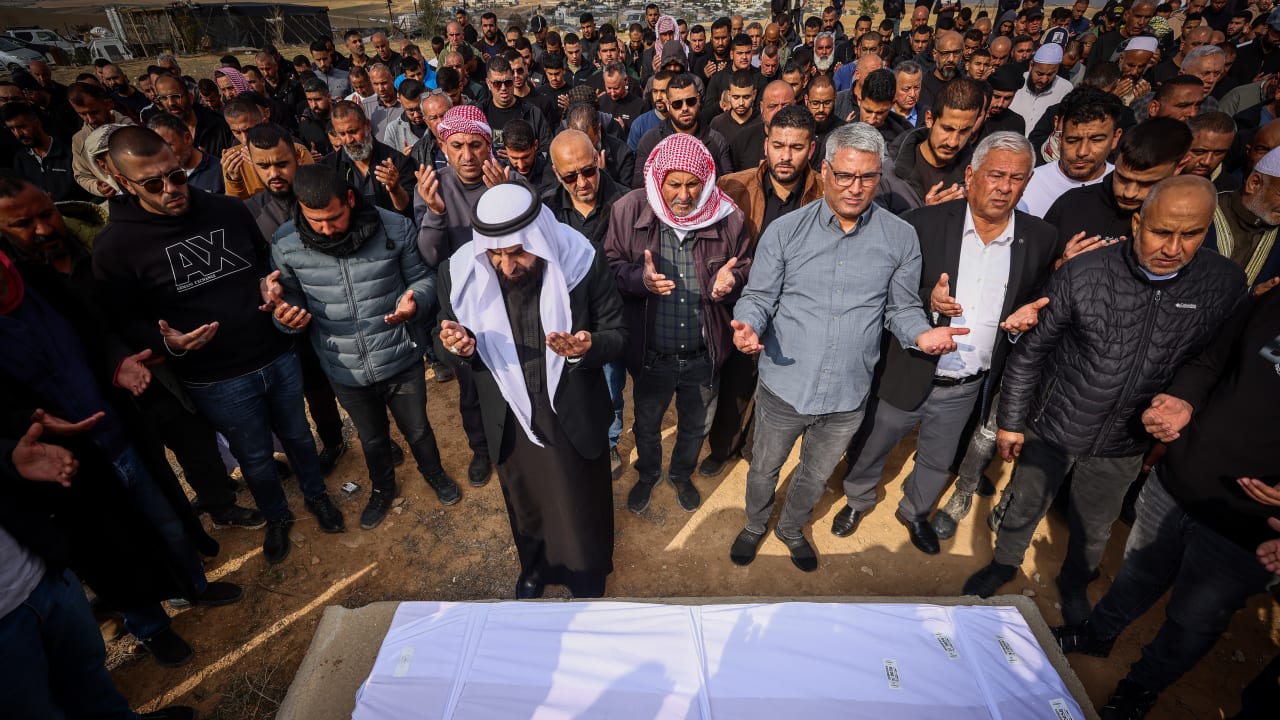
Let’s begin with the scope of the harm: During the war with Hamas, 18 Bedouin civilians were killed: 11 on October 7 itself and seven by rockets that fell in the weeks that followed. Six Bedouin citizens were kidnapped into Gaza on October 7. Some were murdered while attempting to save Jewish lives, including at the Nova music festival. Two returned alive. The bodies of the others were later repatriated to Israel.
Eleven Bedouin soldiers have been killed since the war began on October 7. Some of their names remain unknown to the public, sometimes at the request of families who fear backlash within the Bedouin community. The Resilience Center for the Bedouin Society in the Negev received more than 2,500 calls during the conflict, a similar number to those received by the general civilian resilience centers, such as the Hura civil emergency response center.
Bedouin paying a heavy price
The national school meal program of the Education Ministry provides thousands of hot meals each day to Bedouin children in the Negev. The Bedouin school system was the first to close and the last to reopen due to a lack of bomb shelters, a situation still unresolved.
For many of these children, that school meal is their only hot meal of the day. In the weeks after October 7, civilian-led initiatives across the Negev mobilized to distribute food, responding to acute hunger, especially in the unrecognized villages.
In parallel, thousands of Bedouin worked in hotels, tourism, and other manual labor positions in the Negev and the Dead Sea region. Many of them lost their jobs on October 7 and never returned. In some cases, evacuees in hotels explicitly asked that Arabic not be spoken near them due to trauma. For a small and already marginalized community, this loss of income has dragged the Bedouin even further down the socioeconomic ladder.
During the war with Iran, Iranian missiles were aimed at the Nevatim Airbase in the Negev, as well as other nearby bases and critical infrastructure in the area. Bedouin residents of nearby villages did the simple math: They had to evacuate, and quickly. Entire Bedouin communities, with the help of volunteers and civilian emergency teams, fled to sleep beneath overpasses and next to water tankers, exposed and unprotected.
Some found temporary refuge in underground parking lots at Beersheba shopping centers and in schools. Here, too, the Bedouin community paid a heavy price: Several evacuations to the water infrastructure ended in respiratory distress, with individuals needing hospitalization at Soroka Medical Center. All this has taken place in a small, isolated, mostly segregated community. Now, let us turn to the question of rebuilding.
Reconstruction deepens inequality
The reconstruction process is entrenching, not bridging, the economic gaps between Jews and Arabs in the Negev. Today, NIS 12.64 billion are being invested in Jewish communities in the Negev, while precisely zero shekels are designated for rebuilding Bedouin communities.
Worse still, the government’s Tekuma decision states that approximately NIS 1.2b. are allocated to the Bedouin community, but those funds are not for reconstruction. Rather, they are part of an existing 2022-2026 plan (Government Resolution 1279) for socioeconomic development – funding for education, employment, and economic advancement.
Not only was no new restoration funding provided, but the state is actually redirecting existing development funds away from Bedouin communities under the guise of “reconstruction.” All of this is happening in parallel to a massive NIS 2.9b. budget cut from GR 550, the five-year plan for narrowing gaps in Arab society, and the removal of significant programs for employment and Hebrew-language education in Arab society, which were removed from the law of arrangements.
According to a comprehensive public report on the Negev, the amount spent on reconstructing the Western Negev in the past two years exceeds all government investment ever made in that region since the founding of the state. That’s even before counting the hundreds of millions of dollars from philanthropy. You don’t even need the numbers; you can see it with your own eyes: Sderot, Ofakim, Netivot, and Beersheba are in the midst of an extraordinary wave of social, economic, and community development.
New community centers, schools, sports complexes, and urban revitalization projects are everywhere. This is welcomed; it’s the right thing to do. However, we must also acknowledge who is being left behind.
A missed opportunity
Socioeconomic rankings in Israel are relative, not absolute. Speaking specifically about the Negev, when Jewish municipalities grow stronger, the Bedouin municipalities slip further behind, pushed ever closer to financial collapse and the appointment of external accountants or emergency oversight.
Excluding Rahat from reconstruction efforts, though it’s the largest Bedouin city in the Negev and the largest Arab city in Israel, is a historic mistake. We are missing a critical opportunity to reduce gaps between Jews and Arabs and to foster broad-based regional growth.
The Western Negev must be rehabilitated. Communities that have gone through the unthinkable must receive anything they need to return to normal and more than that. However, we must view the reconstruction of the Gaza border area and of the Negev through the lens of shared community resilience.
That means investing in interdependence: moshavim and kibbutzim, towns and cities, haredim, Arabs, and secular Jews alike. Research has shown that social infrastructure and community preparedness are far more valuable for resilience than physical infrastructure alone. We all saw what happened to the NIS 5b. border barrier; it fell in minutes on October 7. But it was local civilian response teams and the actions of ordinary residents that saved countless lives.
The diversity of the Negev is a blessing, but only if every community is able to thrive together. Let’s ensure that the Bedouin community is not left out of the picture – for the sake of the entire Negev.
The writer is a co-CEO of AJEEC-NISPED, the Arab-Jewish Center for Empowerment, Equality, and Cooperation – Negev Institute for Strategies of Peace and Economic Development.