
The United Nations Security Council's latest decision to officially recognize Moroccan autonomy over Western Sahara has ignited widespread celebrations across Morocco. King Mohammed VI’s declaration that "The Sahara is Moroccan, and Morocco will remain in its Sahara until the end of days" underscores the profound historical, cultural, and emotional ties Morocco holds with its southern provinces.
This landmark recognition, which affirms Morocco’s national sovereignty while granting internal autonomy to the Sahrawi people, marks a pivotal geopolitical turning point with far-reaching international geopolitical implications.
More than a territorial dispute, Western Sahara has come to embody national unity and serves as a vital catalyst for regional development, economic growth, and integration throughout North and West Africa, simultaneously shaping a new regional order and reinforcing Morocco's political, economic, and cultural identity.
International Recognition – Strengthening Geopolitical Status
The recognition of Moroccan sovereignty over Western Sahara signals the start of a sustainable resolution to the decades-long conflict since 1975 with the Polisario Front – the Sahrawi independence movement backed by Algeria and aligned with Iranian interests. This move reflects a growing international consensus reinforcing Morocco’s position.
The United States set the precedent with its recognition in December 2020, followed by Israel in July 2023, alongside public support from leading nations, including Spain, Germany, the United Arab Emirates, Qatar, and Jordan.
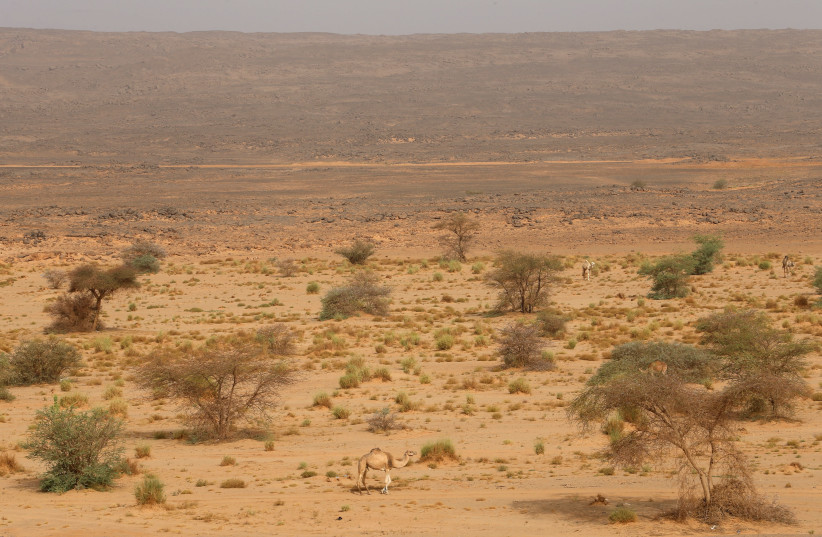
Moreover, the establishment of over 30 consulates in the cities of Dakhla and Laayoune by countries across Africa and Latin America has bolstered Morocco's diplomatic stature and cemented its role as a key stability actor in the region.
All of these developments unfold against the backdrop of Morocco’s geo-strategic location at the intersection of the Atlantic Ocean and the Mediterranean Sea, near the Strait of Gibraltar at the Maghreb’s northwestern edge, bridging Africa, Europe, and the Arab world.
As the world’s leading exporter of raw phosphate and the fourth-largest fertilizer exporter, with 12 million tons shipped in 2023, Morocco is a crucial player in global food security. Its active role in the Abraham Accords, sustained political stability, and robust economic growth - projected at $179.6 billion GDP and a 4.4% growth rate in 2025 - further solidify its geopolitical significance on the global geopolitical stage.
Morocco – the world’s second largest phosphate producer
The growing international recognition of Morocco’s position weakens the influence of Algeria, the Polisario Front, and their Iranian and Islamist backers, while bolstering Morocco’s role as a strategic ally of the US and Israel in North Africa and the Middle East.
This recognition enhances Rabat’s diplomatic clout and underscores its leadership in promoting dialogue and normalization with Israel, notably through the Abraham Accords. Strategically and economically, Morocco and Western Sahara control more than 70% of the world’s phosphate reserves, valued at approximately $15 trillion, including critical minerals such as cobalt, copper, lead, and zinc.
The mining sector accounts for 10% of Morocco’s GDP and nearly 30% of its exports, generating revenues of €5.2 billion in the first seven months of 2025 alone. Morocco, with about 35 million tons of phosphate rock used in lithium-iron battery production, a key component in lithium-ion batteries, is the world’s second-largest producer after China. These vast reserves position Morocco as a strategic linchpin in the global phosphate supply chain, particularly amid rising demand for lithium-ion batteries for electric vehicles (EVs) and energy storage systems.
Global Food Security
Moreover, Morocco plays a critical role in global food security by promoting sustainable agriculture across Africa, expanding the use of renewable energy, and investing heavily in seawater desalination projects. The recognition of its sovereignty over Western Sahara is set to bolster the expansion of its mining and phosphate industries concentrated in the region and the Atlas Mountains, while accelerating international cooperation in energy, agriculture, tourism, technology, and infrastructure.
It is no coincidence that Morocco maintained "industrial calm" during the Gaza conflict, despite widespread public solidarity with Gaza and pro-Palestinian demonstrations. This approach reflects Rabat’s commitment to internal stability and enhancing its international stature.
Meanwhile, Israel, which holds a crucial place in Morocco’s national security perception, is poised to play a pivotal role in Morocco’s procurement deal for 32 American F-35 fighter jets, valued at approximately $17 billion, reported by "Globes."
This agreement is complemented by advanced Israeli arms and technology collaborations, including the provision of air defense and electronic warfare systems, along with the establishment of assembly facilities on Moroccan soil.
Economic Growth and Regional Development Engine
While Morocco’s sovereignty claims receive growing international support, the possibility of renewed tensions with the Polisario Front remains. Such tensions could exacerbate the rivalry between Morocco and Algeria, disrupt the regional balance of power, and intensify strategic competition among global powers, particularly the United States and Israel, as they seek to counter the expanding influence of Russia, China, and Iran across Africa and the Middle East.
Against this backdrop, Rabat’s diplomatic and economic pivot towards Africa and the Atlantic, embodied in King Mohammed VI’s “Atlantic Initiative” launched between 2022 and 2023, places the Moroccan Sahara at the core of Morocco’s national strategy.
The initiative aims to forge a vital link between Atlantic coastal African nations and Latin American countries, transforming the Sahara into a regional trade and logistics hub. Central to this vision is the development of advanced maritime infrastructure, with the port of Dakhla leading the charge by connecting West African markets to Europe via Moroccan trade corridors.
The Sahara region is also expected to drive the establishment of integrated economic and energy corridors, notably the Nigeria-Morocco gas pipeline. This ambitious project plans to connect Nigeria’s gas reserves in the Gulf of Guinea to markets in North Africa and Europe, passing through 13 African countries.
These initiatives, integral to Morocco’s transcontinental connectivity strategy, aim to deepen African integration, enhance regional energy security, establish Morocco as a regional gas hub, and position the kingdom as a key player within global value chains.
Geopolitical Implications
From a broad geopolitical perspective, the international recognition of Morocco’s sovereignty over Western Sahara removes a major political obstacle and opens the door for Israel and Morocco to deepen their cooperation across security, economic, aerial, and logistical domains.
This enhanced military-intelligence partnership, particularly focused on countering Iranian influence, is expected to involve heightened monitoring of Hezbollah and Islamist groups operating in the Sahara and West Africa, reinforcing Israel’s role as a key strategic partner in combating regional terrorism.
Economically, the recognition grants Israel access to Morocco’s extensive phosphate reserves and paves the way for expanded bilateral trade, which reached $236.4 million in 2024, with Moroccan exports comprising roughly 60% ($141.5 million).
Israeli firms specializing in industry, mining, chemicals, fertilizers, and advanced agriculture are well-positioned to contribute to resource development projects and leverage Israel’s expertise in water technologies, fertilizers, and desert agriculture.
Moreover, Israel’s potential involvement in transcontinental initiatives, most notably the Nigeria-Morocco gas pipeline, promises to unlock new markets across Africa, Europe, and Latin America, delivering substantial strategic, economic, and energy dividends.
Yet, alongside these promising prospects, Israel must carefully navigate complex regional sensitivities, particularly among Arab and African states sympathetic to the Polisario Front or maintaining neutral positions.
Achieving success demands a blend of pragmatic diplomacy and assertive foreign policy that frames Israel’s partnership with Morocco and recognition of Western Sahara’s sovereignty not as a source of division but as a foundation of regional stability.
Only through such balanced and strategic engagement can Israel fully harness the political, security, and economic opportunities presented by this historic realignment – paving the way toward a more secure and prosperous regional future.