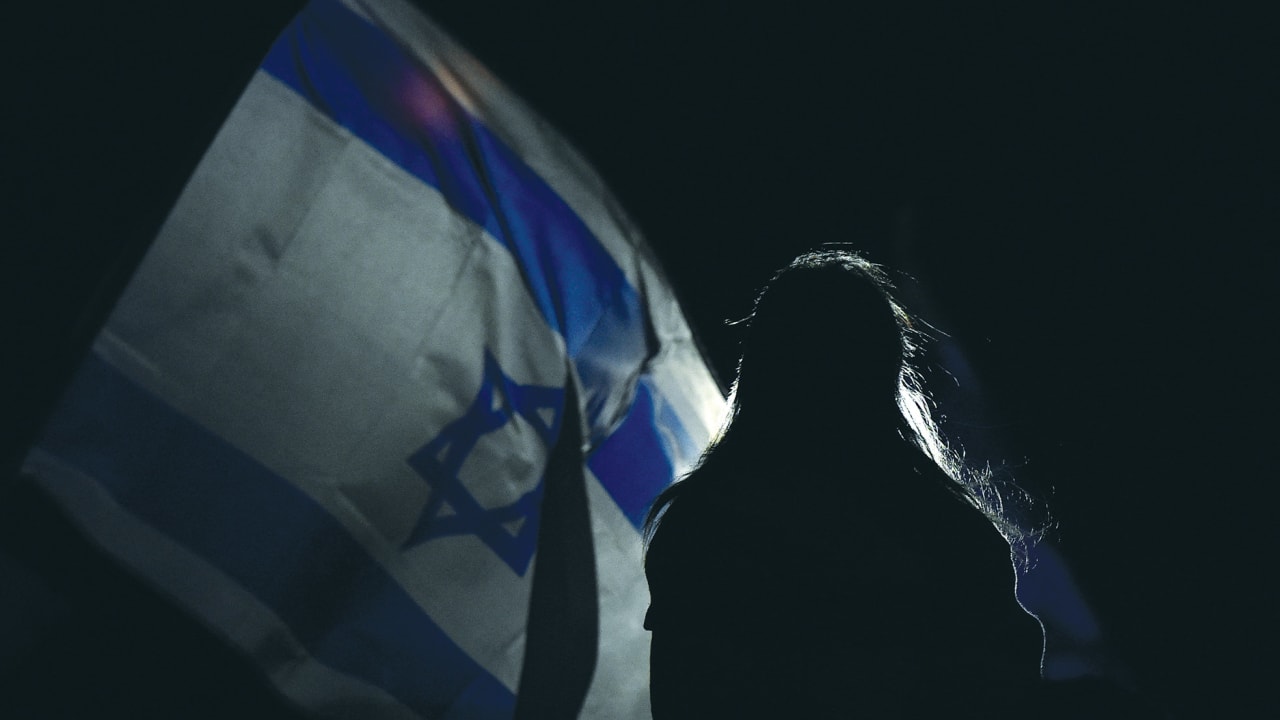
Like many of us, I now refer to life as “The Before,” which was pre-October 7, 2023, and “The After,” which is post-October 7, 2023.
Each year, in The Before, I entered the holidays of Rosh Hashanah, Yom Kippur, Sukkot, Shemini Atzeret, and Simchat Torah with aspirations to observe these sacred days in a way that resulted in purpose, joy, and thankfulness, not exhaustion and relief to get back into a rhythm of routine.
The marathonic 23-day period sprinkled with these holidays (and interim ancillary days of teshuva and the minor pre-Yom Kippur Fast of Gedalia) has potential for transformation and growth, but also can produce feelings of overwhelm and even exhaustion.
Now, in The After, I marvel at the concentration, discipline, focus, and acrobatics I am performing to make it through the holiday season. I am still in the throes of active trauma and grief; perhaps I always will be. But I continue crawling. Some days an inch. Other days, less. But I am moving; sometimes slipping backward, but always moving. Trying. Breathing.
Moving backwards and forwards
I know that it is hard for people to hear from families, whom they love and care about, that are still in vivid, ever-throbbing pain from the agony our people continue absorbing for more than 700 days. But suffering is part of the human condition and part of this enterprise of life. I want to share a piece of what many of we bereaved parents are experiencing.

Each morning, the hands of the clock turn backward. They rewind. And so Jon and I, and countless others, are forever starting over with the trauma of loss combined with an unquenchable thirst. Cherished friends have a daughter who went for a “big trip” to South America.
Father Time marched onward. After six months, then a year away, do you think her parents missed her less? Of course not… they missed her more. Each morning, they started to count the days until they would see her again, hug her again, smell her again, kiss her face and not her photo. They craved her more.
Why would we be any different? Why would any bereaved parents miss their child less as time passes? It makes the hunger more frantic, more extreme. More desperate.
And yet, as we moved toward Shemini Atzeret and Simchat Torah, mostly what I felt was… fascination. I am mesmerized by the ability we humans have of juggling. I have never considered myself a multitasker. Now, I feel I am juggling completely different objects of varying weights and sizes, perhaps a ball of fire, a long razor blade, and a feather. How can it be done?
In holiness. It is how God endowed us. We are blessed with exquisite abilities to experience what seems like impossibly conflicting input and to come out shining.
Coming through this season of introspection and self-reflection – flavored by both Rosh Hashanah and Yom Kippur, followed by the elation of making it to Sukkot (nicknamed the “Time of Our Happiness” holiday), concluding with Shemini Atzeret (the “Stopping on the Eighth Day” holiday), which in Israel coincides with Simchat Torah (the “Joy of Torah” holiday) – the question tugging on the edge of my shirt, like a needy child, asks, “How do we do this now, in The After?”
We do it because we are dexterous, gifted beings. We are dynamic and multifaceted; and we are allowed to be divinely complicated. So I weep, and in the next moment I laugh. I suffer from the void of my beloved son, and I beam with overflowing pride from my radiant daughters. I inhale feeling excruciation, and I exhale feeling blessed. I do it and so I know it can be done.
It is brutal. And it is beautiful. And it is human.
AS WE moved toward to what for some of us will be forever-acceptably confusing days of Shmeni Atzeret and Simchat Torah, upon which thousands will always be saying Yizkor for loved ones killed on that day, I remind myself, confusion is not bad.
We can encounter multiple experiences that seem incongruous at the same time. A harmony of puzzlement and hurt, yes, this perplexing symphony of life; somehow, we learn to listen to it.
At its core, Simchat Torah, as Alexander Steinbach once explained, is “the deathlessness of the Jewish People.” And what is being Jewish if not grappling with how to hold fast to life while also acknowledging and owning our losses and suffering?
So we don’t deny these raw, bumpy and thorny sensations. We feel them. Simultaneously we also mix in joy, rebirth, and celebration. We feel life. We recently read in Parshat Nitzavm, “Choose life.”
Part of this life is that it has an end. But in Judaism, when we come to the end of the Torah, our blueprint for life, it does not end. We immediately turn it back to the very start, and boldly state, instantly, “In the beginning, God created the Heavens and the Earth!”
May we merit this deal to come to complete fruition with all of our treasured hostages home. May our brave soldiers return safely, in the blink of an eye. May we all, all of Klal Yisrael the world over, be blessed with resilience, recovery, healing, comfort, relief and hope. Always, hope.
As we say in L’cha Dodi every Shabbat evening, “Arise…shake yourself off…your light has come: rise…” With love and pain and pride and tears and joy I wish us all a meaningful holiday radiating light. May we shine.
The writer is a Jerusalem resident and the mother of Hersh Goldberg-Polin, who was taken captive by Hamas on October 7, 2023, and killed in Gaza by Hamas terrorists in August 2024.