A couple of conversations I’ve had recently have led me to become increasingly aware of personnel serving in some diplomatic missions at the United Nations who are afraid, perhaps even for their lives, to show open friendship toward Israel.
The most serious manifestation of this threat is felt by staffers representing various Arab and Muslim countries. For the most part, their countries do not have formal ties with the Jewish state, but in some cases, there are binational diplomatic relations.
I started to become aware of the threatening environment last month. Before the annual opening of the UN General Assembly, I was invited to appear via video before aides to various ambassadors at the world body. There were 17 countries represented from a number of continents. While most of these governments maintain diplomatic ties with Israel, a few would be classified as hostile.
Various ambassadorial aides urged me to refrain from mentioning the names of their countries if I reported on the encounter. Once I agreed, the atmosphere in our virtual meeting became far more relaxed.
I was shocked. After several minutes of exchanges on war-related issues, whether there is a potential for a diplomatic horizon, and the political situation, the aides became very interested in me and Judaism.

They were fascinated that I had moved from New York City to Israel. Working at the UN has made them very familiar with the city including its Jewish community, and they asked why I would leave when “Jewish life is so good here,” as one ambassadorial assistant put it.
WE TALKED about the Jewish holiday season; they wished me a Happy New Year. They asked about what we do to mark the holidays – if, for example, these days are marked differently in Israel than elsewhere in the world.
I was blown away by the friendly tone, and I said so to the participants.
Why diplomats are hostile to Israel
“The UN is widely seen as so hostile to Israel,” I told them. “Why can’t the UN be even half as sympathetic to us as you are to me today in this wonderful conversation?”
One aide replied: “If I spoke publicly the way I have spoken to you privately, I would lose my job.” Another aide chimed in: “I would lose my life – seriously.”
Part of me thought that I should not be surprised by such a comment; another part of me disagreed. I wondered to myself: Could it be that if the ambassador, or officials back in the home country, found out that the aide was talking to me, the aide’s job, even the aide’s life, would be in danger? I continue to ponder whether the fear of getting murdered was an exaggerated emotion. Still, it told me something about just how deep the hatred of Israel and Jews is among some officials and the countries which they represent.
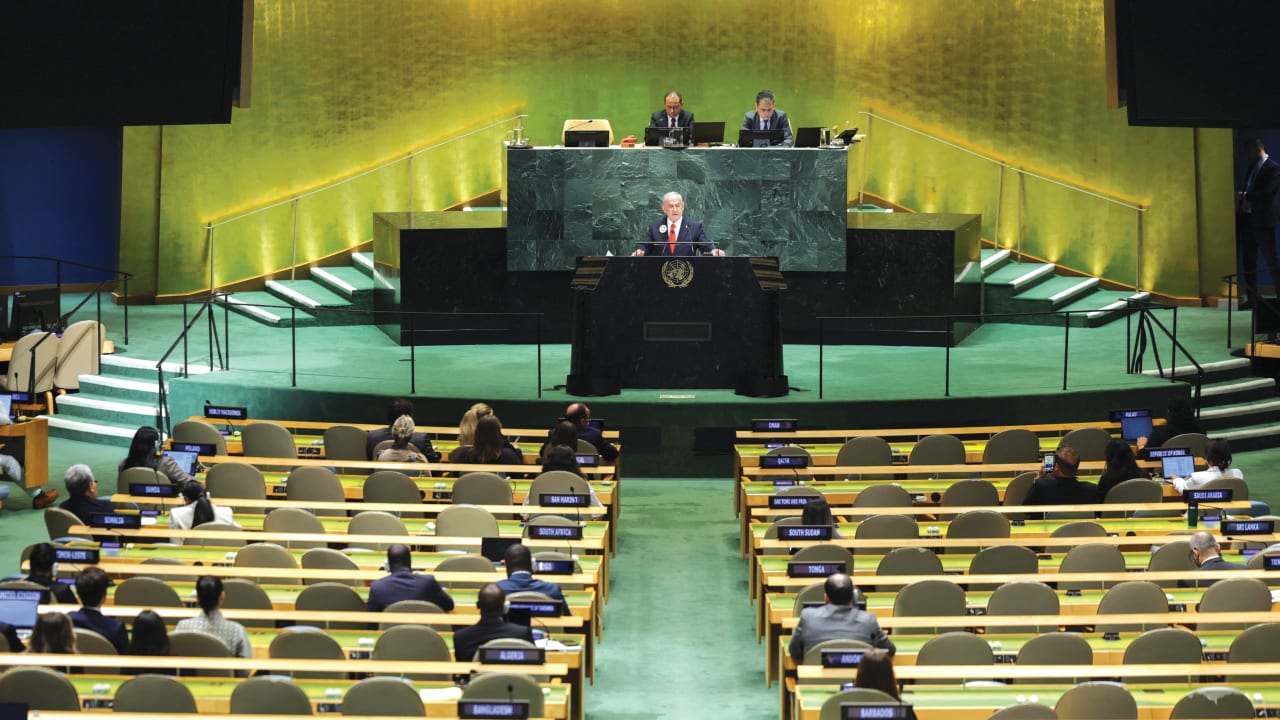
A few days after the General Assembly opened, Prime Minister Benjamin Netanyahu received his opportunity to speak. Many delegates walked out.
There had been talk that the walkout had been staged to the extent that many delegates were brought in by various countries just to have the opportunity to stand up and show their disdain for the prime minister by leaving the assembly hall in protest when he ascended the podium.
The next day, I searched for some good contacts to get to the bottom of it. I succeeded in reaching the UN mission of one of the countries that was not present for the address by Netanyahu.
I asked a representative of that mission if she would have liked to have been present for the speech. She paused, insisted that I refrain from mentioning her country, and then replied: “I would have preferred to have been there, but there was immense pressure on us to stay away.”
I asked: “Pressure from whom?” She replied: “I can’t go as far as to reveal that.”
The representative did disclose that after she and her colleagues walked out when the Israeli prime minister prepared to speak, they went to their video screens to watch his address in their offices. “It would have been silly for us to miss it,” she acknowledged. “It’s one thing to protest to show him what we think of him; it’s quite another to ignore what he had to say.”
She and I spoke for about 10 minutes and discussed various issues raised by Netanyahu. I’m not sure she had ever heard an analysis directly from an Israeli journalist before. She thanked me and said she looked forward to the day when she could visit Israel.
I shared these conversations with some seasoned current and former Israeli diplomats and they all said pretty much the same thing. “It’s part of the diplomatic world that you do one thing publicly, but speak totally differently in private,” as one current official put it. “However, this war has brought about an extreme phenomenon; it’s two-faced diplomacy on steroids.”
SEVERAL ISRAELI sources responded to my account of the fearful ambassadorial aides with a certain amount of trepidation that UN staffers would speak of concern for their job or even life. However, one former Israel diplomat said to me: “No, I’m not surprised. It can be frightening if you’re new to the diplomatic world. If anything,” he said, “I think the situation, despite the war, is improving. More countries, even without official ties with Israel, are still willing to talk to us. Yeah, sure, they don’t want to make it too public, but they’re talking to us.”
In chats I conducted with Israeli, US, and European diplomatic sources, they all stressed that it’s not just relatively junior personnel who are afraid to speak out sympathetically about Israel, and not just in Arab and Muslim countries. All of the diplomats preferred not to get into specifics but noted that within Europe, there are various high-level officials who are “afraid, or at least hesitant, to stick their necks out publicly for us,” as one Israeli official put it.
On a number of occasions, I’ve heard former Israeli officials speak of Rishi Sunak, Britain’s prime minister who lost in the election of July 4, 2024, as a leader “who truly supported Israel and came to our side after October 7, but treaded carefully in terms of how far he went publicly to take up our cause.”
I asked a European official why such a thing is a phenomenon not just in the UK, but perhaps a number of European countries. He replied flatly: “Have you seen our streets? Have you seen the protests?”
I asked him: “Who’s running the show: the government or the protesters?” We were speaking in a phone call – he hung up.
I’D LIKE to end on a positive note. This is a story which I’ve told before but which has now taken a potentially encouraging turn. Back in 1991, at the Madrid Conference, I began exchanging notes with a Lebanese reporter. I was wearing a kippah. An international television crew thought it was an interesting site: a Lebanese reporter sitting with a religious Jew – an Israeli no less.
As the camera light turned on, she ran away in a panic. It didn’t help. I later learned that she had been imprisoned upon returning to Lebanon. Thankfully, she was released, moved to the US, and we’ve been in touch periodically. She tells me now that she is “cautiously optimistic” about the future in Lebanon and is moving back to her home country to try to make a difference.
With a story like that, and an agreement to end the Gaza war, we can only hope that the day will come when we can talk to one another and not fear that we will lose our job, go to prison, or even face a death sentence.
The writer is the op-ed editor of The Jerusalem Post.