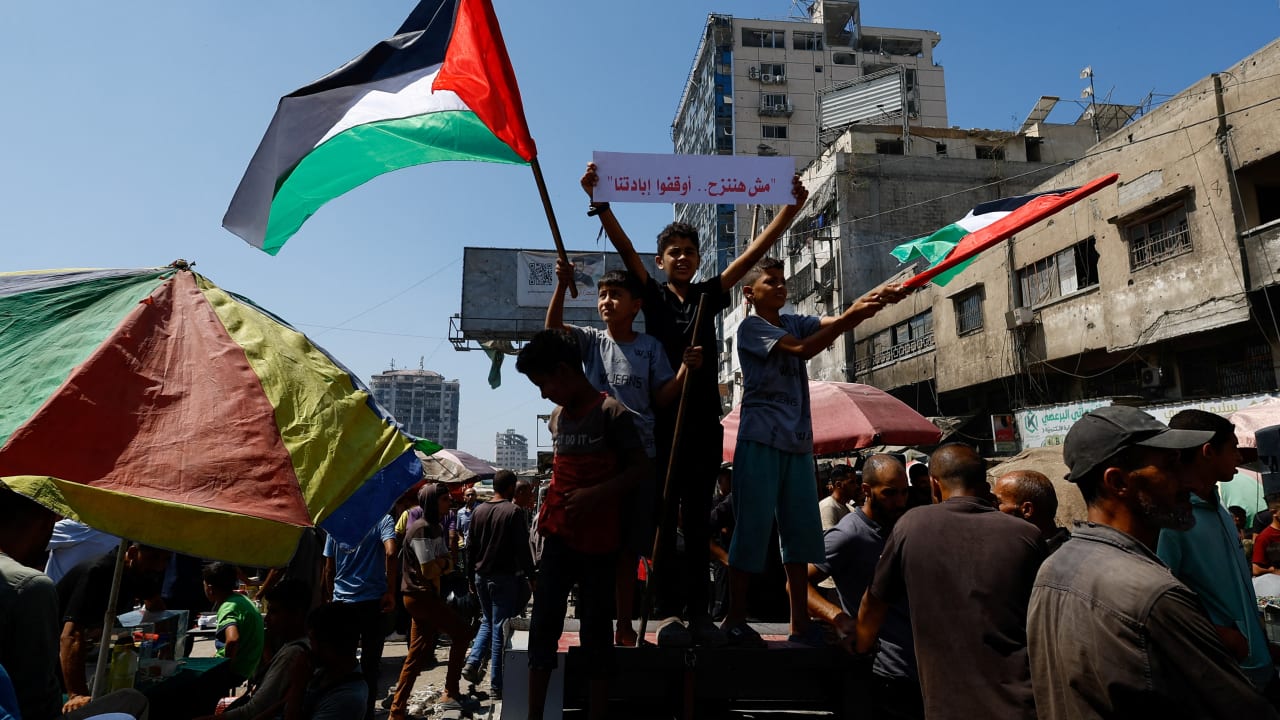
Israel has begun its assault on Gaza City to dismantle Hamas’s last strongholds. Critics accuse the IDF of targeting civilians, but the reality is starkly different: Hamas embeds terrorists, weapons, and command posts within densely populated areas. International law makes Hamas, not Israel, responsible for civilian harm, yet much of the world continues to misjudge the situation.
Soldiers on the front line
What I have witnessed over the years with Israeli troops is this: before any strike, soldiers, commanders, and intelligence officers ask the same question – can this action achieve a legitimate military goal while upholding the moral and legal duty to protect civilians, adhering to proportionality, distinction, and humanitarian law?
Over the past 23 months, I have seen this principle in action firsthand. I have accompanied soldiers at the Netzarim Crossing bisecting Gaza, observed elite drone units operating in Gaza and along the Lebanese border, traveled with Golani Brigade troops and tanks across the Western Galilee and Gaza, met with soldiers throughout Judea and Samaria, and visited humanitarian crossings.
Having covered every Gaza conflict since Hamas seized control in 2007, I can say with confidence that the IDF does not fire indiscriminately.
The moral dilemmas facing Israeli soldiers are complex. I recall a reservist who lost 14 comrades in one attack. He spoke not of revenge, but of duty to protect his people and return to his family. Two reservists I recently met captured this tension vividly: “As reserve soldiers, the last thing we wanted was October 7. We are ordinary people, but we have to fight this war against Hamas.”

Many civilian deaths occur not because of deliberate Israeli targeting, but because Hamas forces residents into combat zones and disguises terrorists as women or other civilians. Responsibility for these deaths rests with the group that created the danger.
According to Hamas’s own statistics, of roughly 60,000 reported deaths, 20,000 were natural or unrelated, 20,000 were Hamas combatants, and the remaining 20,000 were civilians – a 1:1 ratio of civilian to combatant deaths, far better than most armies facing asymmetric terrorism.
Humanitarian efforts and moral restraint
Israel’s moral restraint extends beyond the battlefield. According to Professor Danny Orbach, lead author of the definitive Begin-Sadat Center for Strategic Studies report, “Debunking the Genocide Allegations: A Reexamination of the Israel-Hamas War from October 7, 2023, to June 1, 2025,” Israel is the only country ever accused of genocide while simultaneously supplying food and aid to its enemy in the midst of war.
Despite false claims by the UN Secretary-General that 500 trucks of aid were entering Gaza daily before October 2023, the reality is that the figure was only 73 up to 2022, rising to more than 109 today, and exceeding 600 prior to the second ceasefire. Throughout the war, Israel has continued and continues to deliver humanitarian assistance, as I witnessed firsthand at the main humanitarian crossing in September 2025.
The bottleneck in aid distribution primarily results from active fighting, yet Israel has repeatedly paused military operations to allow aid to reach civilians, demonstrating the IDF’s commitment to protecting life even under attack.
Hamas’s exploitation of civilians
Hamas systematically converts civilian structures – homes, mosques, and even hospitals – into military positions. Yet Israel is accused of crimes against humanity. This misrepresentation is a strategic victory for Iran, Hamas, and Islamist extremism while undermining US national security.
Much international criticism claims Israel “targets civilians,” ignoring the reality that lawful operations inevitably involve casualties when enemies embed themselves among civilians.
Law, responsibility, and misrepresentation
International humanitarian law clarifies responsibility. When Hamas fires rockets from hospitals, stores weapons in schools, or hides leaders among civilians, it commits war crimes. Deliberate use of human shields is explicitly forbidden under the Geneva Convention IV (Art. 28) and Additional Protocol I (Art. 51(7)).
Civilian harm can occur even in lawful operations. When the IDF strikes weapons caches embedded in homes or mosques, tragic deaths may happen despite precautions. Similar situations have occurred in Afghanistan, Iraq, and Yemen. Such casualties are not war crimes if forces act proportionally and take feasible precautions, highlighting the complexity of urban combat against terrorists who exploit civilians.
The laws of armed conflict require distinction, proportionality, and precaution (Additional Protocol I, Arts. 48 and 51(5)(b)). Human shields do not render lawful targets untouchable.
The US Department of Defense Law of War Manual confirms attacks on lawful objectives remain permitted if proportionality is respected, and the Israeli Supreme Court ruled in 2006 that combatants embedded in civilian areas remain legitimate targets when precautions are taken.
Proportionality and the right to self-defense
Military planners carefully weigh civilian risk against the military advantages of stopping rocket attacks, destroying weapons caches, or targeting Hamas leaders. International law allows such actions even when some civilian harm is unavoidable.
Misrepresentation of this has consequences: terrorists exploit global outrage as a shield. By overstating civilian casualties and ignoring Hamas’s deliberate tactics, the media and states end up rewarding the very behavior international law is meant to punish.
On to Gaza City
Israel’s foremost obligation is to protect its citizens and neutralize imminent threats. Allowing Hamas’s use of human shields in Gaza City and the central refugee camps to dictate strategy would hand victory to terrorists and erode the very foundations of the law of war. That law is meant to constrain conduct, protect innocents where possible, and hold accountable those – like Hamas – who exploit civilians.
As Israel advances into Gaza City, the IDF operates within these legal and moral principles, balancing military necessity with precautions to safeguard civilians. To misrepresent these efforts is to distort international law, embolden Hamas, and undermine both Israel’s security and the rules designed to protect civilians in war.
If the world rewards Hamas for hiding behind innocents, it destroys the very protections international law was built to uphold.
The writer is the director of MEPIN, the Middle East Political Information Network, and the senior security editor of The Jerusalem Report. He regularly briefs members of Congress and their foreign policy advisors, as well as the State Department.