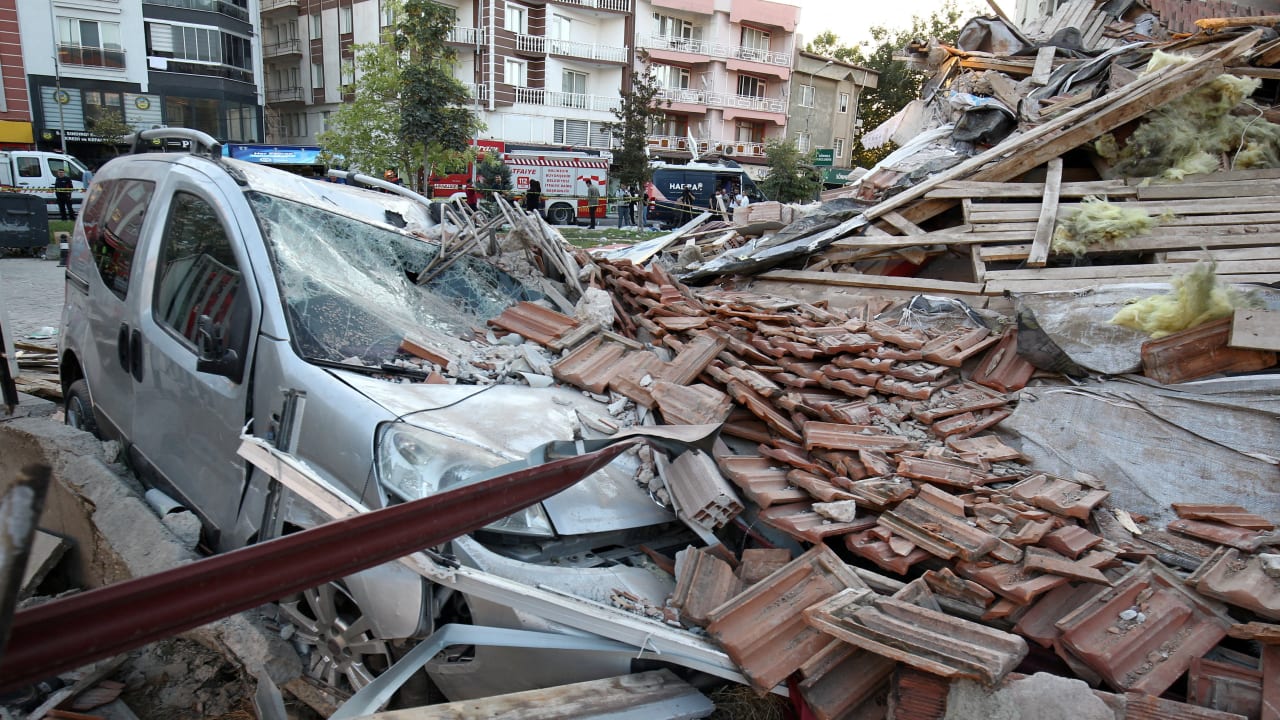
Recent reports of deadly earthquakes in Turkey, Afghanistan, Russia’s Kamchatka region, and even the Mediterranean basin serve as a stark reminder of the threats that preoccupied the Israeli public before the tragic events of October 7.
Israel, situated along the seismically active Syrian-African Rift, is far from immune to such disasters. In fact, experts unanimously agree that a major earthquake in Israel is not a possibility; it is a certainty. The real question is not if it will happen, but when; and, more importantly, whether we are prepared.
The city of Nesher sits directly on the Yagur fault line, an active branch of the Syrian-African Rift, making it one of the most vulnerable urban areas in the country. This seismic risk is compounded by our city’s architectural history: hundreds of buildings were constructed in the 1950s and 1960s, decades before modern earthquake-resistant building standards were introduced. Thousands of residents live in old buildings without fortified foundations or safe rooms that could protect their lives in the event of a quake.
The danger is further amplified by Nesher’s proximity to sensitive infrastructure, such as the petrochemical facilities in the Haifa Bay area. Structural damage in this region could trigger a chain reaction ranging from hazardous material leaks and environmental disasters to potential loss of life due to collapsing buildings. This is an emergency scenario that demands not just awareness, but immediate action.
Urban renewal is critical
This is why I repeat at every opportunity: urban renewal is not a real estate project; it is a national mission. Strengthening buildings, adding safe rooms, enforcing strict safety codes, and adapting our urban space to the geological and threat landscape we face are all critical elements of civilian protection. Even as Israel grapples with pressing security threats, we cannot afford to ignore the silent but certain danger of a devastating earthquake.

In Nesher, we are actively promoting urban renewal initiatives, particularly in older neighborhoods. However, bureaucratic obstacles, heavy regulations, and a lack of financial incentives are slowing down urgent processes whose sole purpose is to save lives.
I therefore appeal to the government, the Construction and Housing Ministry, the Urban Renewal Authority, and all relevant planning bodies: do not wait for the next earthquake to take action. Urban renewal is neither a luxury nor a matter for the free market alone; it is a vital national undertaking.
Our demands of the state are clear: remove the bureaucratic barriers that delay progress, allocate funding to local municipalities for urban infrastructure and public buildings, and establish a framework of incentives that enables true renewal even in the periphery. Under the current economic model, developers are required to deliver profit margins equivalent to five to six new units per existing unit in order to justify projects outside of central Israel, compared to just one to two in the Tel Aviv metropolitan area.
This means that in the periphery, where the risk is often highest, many projects never even begin. Unless the state shifts this equation, it will continue to delay critical preparations for the next disaster.
It is my duty, and the duty of all local leaders, to ensure the safety and well-being of our residents – not just today, but for generations to come. Nesher is a strong, united city with a caring and engaged community, and we must also make sure it is a protected city. When the earth trembles, we must not find ourselves saying, “We didn’t prepare.”
The writer is the mayor of Nesher.