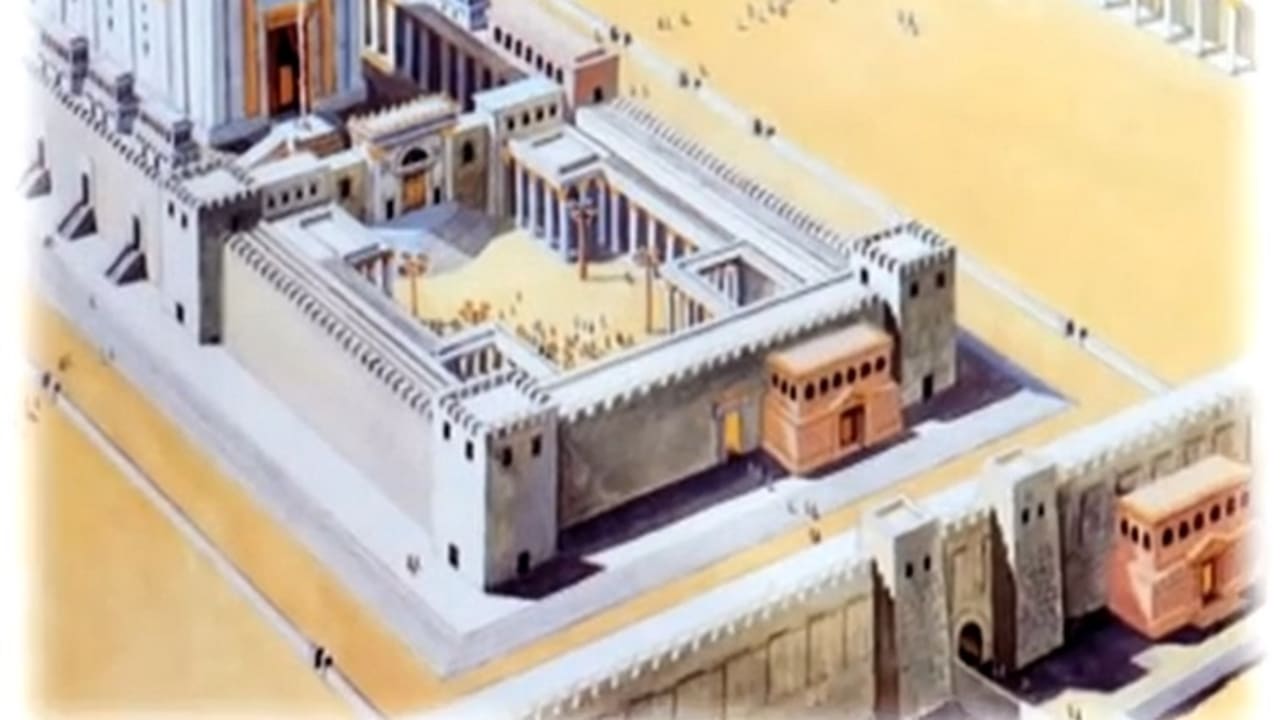
What does it really mean to pray for the rebuilding of the Temple? As Tisha B’Av approaches, this question is especially relevant.
For most people, the Temple is associated with sacrifices and prayer rituals. However, it was so much more.
It was a societal model rooted in social justice, education, compassion, and responsibility, foundations without which even the most sacred rituals ring hollow. This often overlooked role of the Temple is more important than ever today, especially as we navigate these challenging times of war, internal strife, and rising antisemitism.
When the ancient Israelites were exiled to Babylon, they took with them shards of the Temple and used them as foundation stones for their synagogues, which, our sages teach in the Talmud, are to be treated as miniature versions of the Temple.
Remembering the Temple remains a central tenet of Jewish life today. Accordingly, the daily prayer times have their roots in Temple sacrifices; synagogues everywhere face towards Jerusalem; and many of our ritual activities – the kohanim who bless the congregation, the salt we sprinkle on our challah – reflect Temple rituals.
The Temple functioned as a hub of spiritual services and activities that accommodated many different groups, often striving to meet their unique needs while considering the greater good.
This sensitivity was embodied in the Temple’s physical design. For example, there were designated walking patterns on the Temple Mount for those who had recently lost loved ones. This gave them space for reflection and also broadcast their state of mourning to others so they could offer their condolences.
It is significant to note, as the Talmud does in Masechet (Tractate) Sofrim, that the first Temple only experienced two additions after it was built: a reception room for brides and grooms and a separate room for mourners. This allowed Jerusalem residents who came to the Temple on Shabbat to extend a mazal tov to new couples and condolences to those who had lost loved ones.
Other examples of how the Temple served the community include the existence of a lost and found; a special room where people could discreetly deposit funds toward charity, while those in need could collect them with equal privacy; and two different courts to deal with justice and social responsibility. The Temple offered free hospitality to pilgrims, a tradition that continued in the earliest synagogues, as revealed in the first-century CE Jerusalem inscription written by Theodotus, who founded one of the earliest synagogues in the city.
The Temple, while divinely commanded for the Israelites, was also open, to an extent, to others. Many different peoples and nations ascended to the Temple, participated in rituals, and brought sacrifices there, highlighting the role of Judaism as a light to the nations and its commitment to live with and respect others.
The social aspects of the Jewish Temple
IN ADDITION to these human considerations, the laws of the Temple took into account ecological responsibility. For example, the runoff of blood and other liquids from animal sacrifices on the altar went into a dedicated channel, which flowed toward the Kidron Valley and helped fertilize the agriculture there. Ashes from the sacrifices were properly packed and discarded in an ecologically safe manner.
As we reflect on the Temple and express our hopes and prayers that it be rebuilt, we must not forget about these social aspects of the experience. Striving for social justice in both Jewish communities and society as a whole should be an integral part of our endeavor to rebuild the Temple and our future in general.
In Israel today, social justice means treating our most vulnerable with dignity, including finding solutions for agunot – women whose husbands refuse to grant them a divorce – in ways that truly harness Jewish law to help, rather than hinder, the process. It also means ensuring there is proper support for those living in poverty, as well as for the growing number of Israelis struggling with mental health and well-being after more than 21 months of war.
Those serving in reserve duty should not only be compensated financially for their service but also should not need to carry the outsized burden they do. Legal changes need to ensure that the ultra-Orthodox will do their halachic part and serve in the army or other type of National Service.
Injured soldiers and former hostages deserve access to the best medical care, and the families of the fallen and remaining hostages should be prioritized both in their communities and in national assistance and support programs.
Looking beyond the Jewish world is important, too. Just as the Temple had clear mechanisms to include and respect non-Jews, Israeli and Jewish religious leaders need to prioritize interfaith relations, especially at this time of dynamic change and ongoing conflict in the Middle East.
It is crucial to build and improve bridges with Muslim-majority countries and Muslim religious leaders in the spirit of the Abraham Accords and to stand together against terrorism and extremism.
Israel also needs to continue to nurture its relationships with Christian leaders, welcome the support and tourism of Christians from around the world, and not automatically apply suspicions about Evangelization to churches and Christian groups. In addition, Israel can play a significant role in making sure that other minorities are protected, including the Druze, on behalf of whom the army continues to intervene in Syria.
The Temple will not be rebuilt because we visit the mount, often not observing the proper halachic protocols. It will be rebuilt when there are no more agunot, when we uphold the mandate to be a people of kindness, and when we commit fully to social justice and bettering society.
The writer, a rabbi, is president and rosh yeshiva of Ohr Torah Stone.