
In recent days, Israel’s education system has found itself facing yet another tremendous challenge, as if previous ones weren’t enough. The academic year is drawing to a close, and the new security situation forces students, teachers, parents, and policymakers alike to confront complex questions, foremost among them: How should the school year end? What will happen with the matriculation exams that were scheduled to take place during these very days?
Within protected spaces, under the sound of sirens and a general sense of uncertainty, these questions demand immediate answers.
The truth is, the answers are already in our hands. Over the years, Israel’s education system has been forced to adapt to various emergency situations – from COVID-19 to military operations – and it has learned to be flexible, to develop creative solutions, and to operate effectively in a constantly shifting reality.
These experiences have taught us a critical lesson: Education systems must continue functioning, even when routine collapses. One such solution – already proven effective – is the alternative assessment model and internal matriculation exams.
Back in 2013, then-education minister Shai Piron initiated a partial transition from external exams to internal ones. This move was intended to foster trust between the Education Ministry and schools, reduce pressure on students, and allow for more flexible, learner-centered assessment. While the initiative was pedagogically motivated rather than security-driven, it has proven itself especially useful in times of crisis.
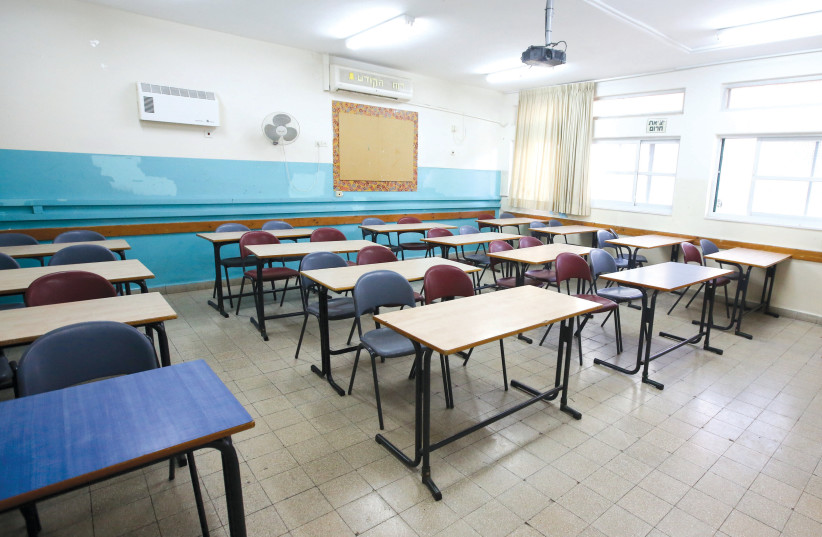
Today, under the constant threat of rocket fire, open bomb shelters, and ongoing uncertainty, this solution is more relevant than ever. A large portion of the matriculation exams should be converted into internal assessments. A limited number of external exams – in core subjects like math and English – can be postponed to a later date, when safe and proper conditions for their administration are restored.
It is unreasonable to expect students – many of whom are finishing 12th grade and preparing to enlist in the IDF – to wait months and sit for exams as if things are normal when the situation is far from it.
Adapting Israel's education amid ongoing conflict
Courageous decisions are needed: ones that decentralize authority to schools and demonstrate systemic flexibility. Schools, in turn, will be required to uphold pedagogical rigor and not misuse the opportunity for undue academic leniency. This is a test for them as well.
Such a move carries a dual benefit: First, it reduces pressure on students already under immense emotional strain; second, it empowers schools and teachers, who know their students best, to assess their knowledge and skills more accurately and fairly. It allows us to maintain high academic standards without compromising the fairness and sensitivity that the current moment requires.
We can take some comfort in the fact that this crisis is occurring at the end of the school year, not at its start or midpoint. Most learning has already taken place. What remains is largely the assessment of knowledge and achievements – a task Israeli schools have proven capable of managing even under the most difficult conditions.
The accumulated experience of the past years – during COVID, in the recent years of instability, and now again – allows for an informed, effective, and compassionate response. All that’s needed now is a single decision: to act, not to wait, not to postpone. Let schools finish the year as they know best: with professionalism, responsibility, and above all, trust.
The writer is head of the Department of Education and of the Primary School Education Program at the Kibbutzim College of Education.