
As tensions in the Middle East soar after Israeli strikes on Iranian military sites and Iran’s retaliatory missile attacks, a provocative new dimension has emerged: Pakistan’s explicit alignment with Tehran.
Recent statements from Iranian officials claim that Pakistan, promising “complete solidarity” with Tehran, has promised nuclear retaliation against Israel if Iran faces a nuclear attack. This pledge, if genuine, marks a dramatic shift in Pakistan’s stance and raises alarms in Israel and Washington about Islamabad’s alignment in the region.
Since last October, Pakistan’s Prime Minister Shehbaz Sharif and the Foreign Ministry have condemned Israeli strikes as grave violations of Iran’s “sovereignty and territorial integrity.” On multiple occasions, Islamabad has urged the Organization of Islamic Cooperation and the UN Security Council to question and contain Israeli actions in Israel, Gaza, and the greater Middle East in general. This solidarity extends far beyond rhetoric.
Last month, Sharif visited Tehran, where he and Iran’s Supreme Leader Ayatollah Ali Khamenei stressed the need for collective action against Israel’s actions in Gaza. Notably, Sharif voiced support for Iran’s peaceful nuclear program – at the risk of antagonizing the US and its Gulf allies.
The most explosive assertion comes from Iran’s Mohsen Rezaei, an IRGC commander and national security council member, who publicly stated that Pakistan would “launch a nuclear strike on Israel if Israel were to use nuclear weapons against Iran,” and noted that Pakistan’s Shaheen-3 missile could reach Tel Aviv. Whether symbolic deterrence or actual policy intention, these statements signify a major escalation.
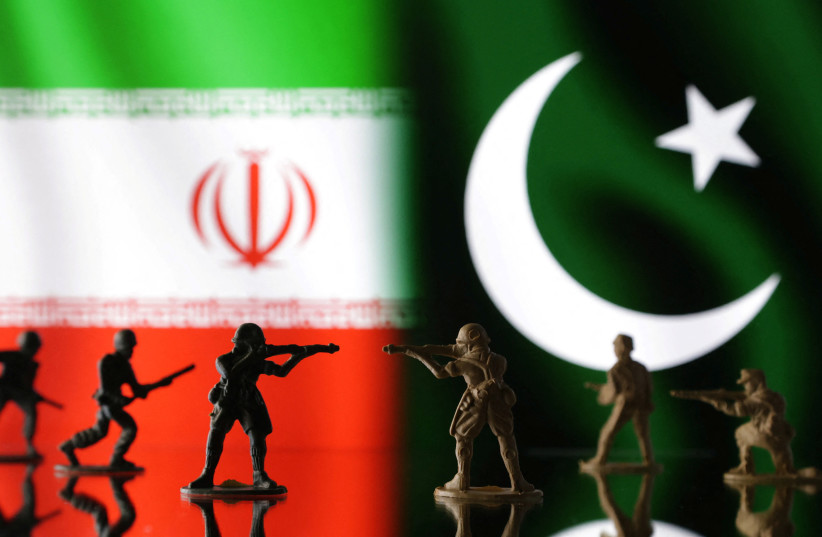
Iranian nuclear rhetoric is not new. Still, attaching Pakistan – a fellow nuclear state – to Iran’s strategic deterrence equation is unprecedented. Should such a promise be taken seriously, it would blur lines between deterrence and offense, arguably emboldening hardline factions in Tehran.
Moreover, Pakistan’s participation in such messaging crosses a threshold, entangling Islamabad in the strategic calculus of a broader nuclear confrontation. Though Pakistan’s Defense Minister Khawaja Muhammad Asif reportedly dismissed the suggestion in a cautious tone, he refrained from issuing a categorical denial. This ambiguity fuels speculation and reflects Islamabad’s attempt to walk a tightrope between strategic signaling and plausible deniability.
Pakistan strengthens ties with Iran
Pakistan's newfound assertiveness with Iran stems from a confluence of moral solidarity, regional repositioning, and domestic strategy. Pakistan remains one of the few Muslim-majority nations refusing to normalize relations with Israel, consistently affirming Palestinian rights. This garners domestic political support and bolsters Pakistan’s identity as a defender of Islamic causes.
Strengthening ties with Iran aligns Islamabad more closely with China and Russia – Pakistan’s strategic partners – creating a counterbalance to US influence in South Asia. Economic ventures like the Iran-Pakistan gas pipeline, long stalled by US pressure, could resume under renewed strategic confidence.
Additionally, with Pakistan grappling with inflation, political instability, and border tensions – some involving Iran – Sharif’s government might calculate that a bold foreign policy helps consolidate nationalist support at home. Turkey’s parallel criticism of Israeli military actions adds regional weight to the Iran-aligned bloc and may have indirectly emboldened Islamabad’s current posture.
Pakistan’s tilt toward Iran may carry significant costs. Washington has warned that countries doing business with Tehran could face secondary sanctions. Any revival of energy cooperation – such as the Iran-Pakistan pipeline – could provoke US financial retaliation at a time when Islamabad’s economy is under pressure.
While the US still considers Pakistan an important counterterrorism partner, the prospect of Islamabad sharing intelligence or military support with Iran – let alone engaging in nuclear coordination – would risk a diplomatic rupture.
Pakistan’s nuclear posture has long been framed as defensive, particularly vis-à-vis India. An overt alignment with Iran undermines this image, inviting scrutiny and weakening its standing in global non-proliferation frameworks. The symbolism of Pakistan being seen as Tehran’s nuclear partner further erodes the limited trust Islamabad has managed to retain in the Western capitals.
This shift also threatens to recalibrate Pakistan’s role in the greater Middle East. A nuclear-linked alignment with Iran complicates Pakistan’s traditional role as a mediator between Sunni and Shi’ite blocs. Jerusalem and New Delhi – both wary of Tehran’s regional ambitions – are watching closely and may adjust their security postures in response.
China, Pakistan’s closest economic ally, may view this stance as useful to its Belt and Road ambitions. However, Beijing also enjoys strong relations with Israel. A deeper Pakistani entanglement with Iran risks dragging Beijing into complex regional tensions it may prefer to avoid.
Pakistan now stands at a critical juncture. One path is deeper alignment with Iran – entailing military cooperation and nuclear coordination – which would almost certainly fracture ties with the US, trigger sanctions, and deepen international isolation. The more likely course is calibrated solidarity: rhetorical and humanitarian support for Iran, paired with strategic ambiguity and indirect coordination through allies like Turkey and China.
This approach allows Islamabad to project ideological consistency while avoiding direct confrontation with Washington. Yet even symbolic nuclear posturing, like the recent claim of Pakistani backing for Iranian reprisal, risks crossing a dangerous Rubicon. This escalatory rhetoric will not go unnoticed in Washington or Jerusalem.
The writer holds a PhD in Middle East affairs from Jawaharlal Nehru University, New Delhi, and is a researcher with Centre for National Security Studies, Bangalore.