Basic Talmudic and biblical principles support the obligation of everyone to participate in a commanded war. Pikuach nefesh (saving a life) takes precedence over all the mitzvot in the Torah (including Shabbat), except if it would involve idolatry, sexual immorality, or murder (Sanh. 74a; Ket. 19a). Actions to save a life should be performed not by gentiles or minors but by gedolei Yisrael (“great ones of Israel and their sages”) (Yoma 84b; Rambam Hilchot Shabbat 2:3). Dina d’malchuta dina (“the law of the land is the law”) requires Jews to obey the statutes of a legally constituted government, such as Israeli law mandating conscription into the IDF. “Do not stand idly by the blood of your brother” (Lev. 19:16) and “Love your neighbor as yourself” (Lev. 19:18) imply sharing in the military burden of protecting Israel and all of its citizens.
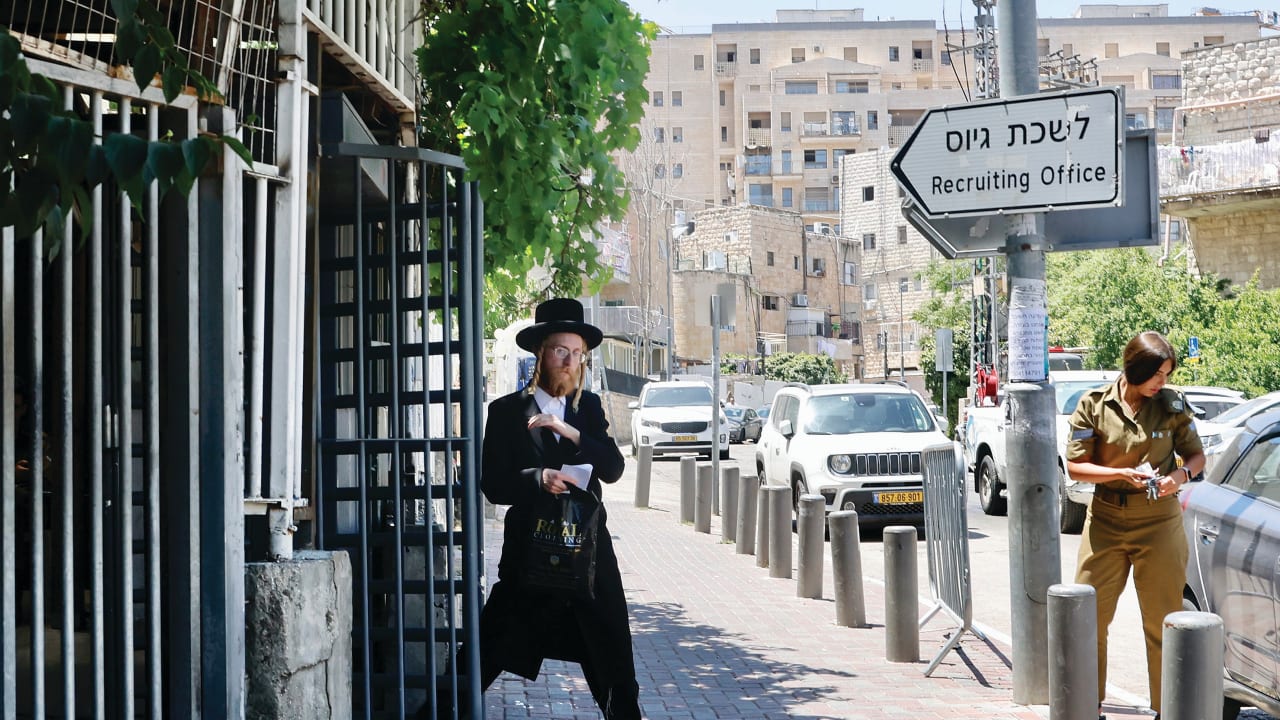
Exempting haredi yeshiva students from military service has aroused intense anger among many Israelis, who reject the apparent double standard favoring the ultra-Orthodox. This may cause some secular Israelis to distance themselves from traditional Judaism, in effect desecrating the name of God (Hillul ha-Shem).
Those against drafting haredi yeshiva students view them as spiritual elite, similar to the biblical landless Levites. Rather than part of the general census in the wilderness of those able to bear arms (Num. 1:2-45), the Levites had a separate census (Num. 3:1-51). Rambam wrote that “they do not wage war like the rest of Israel” (Hilchot Shemitah ve-Yoveil 13:12-13), though the Talmud never states that the Levites did not serve in the army. Indeed, Benayahu ben Yehoyada, a kohen who ordinarily would avoid contact with dead bodies, was one of King David’s Mighty Warriors (2 Sam. 20:23; 1 Chron. 27:5) and became the head of Solomon’s army (1 Kings 2:35).
An important concept in Jewish tradition is that, like the biblical Levites, major Torah scholars were supported by the community. In return, Torah study protected not only the individual scholars but also the entire Jewish people. However, history contradicts this belief by citing the many renowned Torah scholars who were murdered by enemies of the Jews throughout the ages by the Romans, Crusaders, Chmelnitzki pogroms, and the Holocaust. It supports the activist roles of Moses, Joshua, King David, and the Maccabees and the axiom that God protects those who protect themselves.
Removing haredi students from their yeshivot would disrupt the intensive learning during their younger years, forcing them to pause in their quest to reach the required intellectual and spiritual heights. But there is no consideration that army service also delays the training of others vital to the national welfare. The strongest argument against drafting haredi students into the IDF is the fear of a perceived unspoken governmental motivation to secularize them and alienate them from religion and Torah study. This may have been true in the early years of the state, when many envisioned the role of the IDF as creating a melting pot of Jews from numerous cultural backgrounds. But in recent years, the military has made strides in accommodating the needs of the ultra-Orthodox, such as in the Netzach Yehudah Battalion. Perhaps the fear that haredi yeshiva students might not remain religious after serving in the military is not the fault of the army, but rather is related to the ultra-Orthodox education system.■
Ronald Eisenberg, MD, JD, is professor of radiology at Harvard Medical School and has a doctoral degree in Jewish Studies.