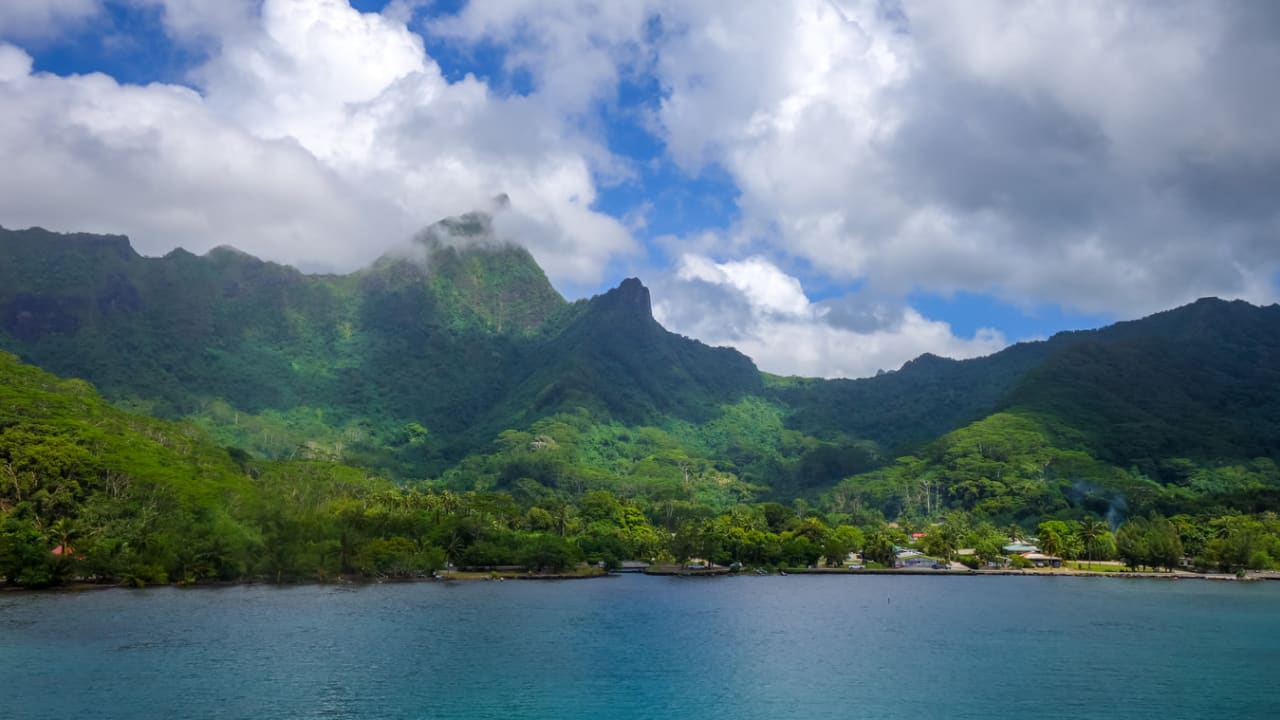
Chris and Mika Brown, a pair of adventurers from the UK, embarked in 2024 on a daring journey to "Point Nemo"—the most remote spot from any landmass on Earth, also known as the "Oceanic Pole of Inaccessibility." The point, located in the middle of the South Pacific Ocean, is more than 2,600 km away from Pitcairn Island, Easter Island, and Maher Island in Antarctica. It is so isolated that, for most of the year, the closest humans to it are the astronauts aboard the International Space Station. When the two swam to the exact coordinates of Point Nemo, they likely became the first people to ever do so.
Point Nemo, named in homage to Captain Nemo from Jules Verne's 20,000 Leagues Under the Sea, is considered the most isolated place in the oceans. Its extreme remoteness has made it the “spacecraft graveyard”: Since the 1970s, more than 260 satellites and spacecraft—among them the Mir space station—have been deorbited there. The International Space Station is also expected to crash there once its mission ends.
The journey to Point Nemo took about eight days. It was carried out aboard the research vessel Hanse Explorer, which sailed from the port of Puerto Montt in Chile, along with an experienced crew. The conditions were harsh—seven-meter-high waves, seasickness, and rough sailing. But Chris and Mika did not give up. When they arrived at the site, they descended from the ship into an inflatable boat and swam at a depth of four kilometers in the open sea, at a point considered one of the least accessible places in the world.
“I expected black water, or dark green like in the Atlantic Ocean,” Chris said. “But the water was glowing blue, almost neon. It was stunning. Beautiful.”
This Is What Their Journey Looked Like
And the Swim at Point Nemo
And Then Came the Surprise
Then came an unexpected visitor from the skies: A flock of seabirds, twenty to thirty in number, including several albatrosses. One of them even approached within just a meter of the divers. “It almost felt like an attack,” said Chris. “It looked especially threatening.” The bird only retreated when the crew's boat drew near.
Contrary to what scientists had believed—that the area is biologically sparse and shouldn’t contain fish or marine life—it turns out the region is not completely barren, and its geographical isolation does not prevent nature from surprising.
Chris Brown, who has made it his mission to visit the most remote places on Earth—whether in the middle of oceans or in the farthest reaches of land—summed up the journey: “It was hard, but worth every second.”