These digital-AI-Zoom-social media days, there don’t appear to be many spots or cultures on Mother Earth we can’t access or view. We might, for example, just drop in to YouTube for a documentary about this or that. But, at least in my, albeit limited, experience, I frequently find the offerings shallow. You get a tidbit or two of something you hadn’t previously encountered, but that often doesn’t delve too deeply into the whys and wherefores of the subject matter.
However, one could hardly accuse the organizers of the annual Anthropological Film Festival of falling short in that regard.
The 14th edition takes place on November 18 to 20 under the aegis of the Sociology and Anthropology Department of the Hebrew University of Jerusalem (HU) and the Jerusalem Cinematheque. The lineup includes films from countries around the world, such as the US, China, France, India, the UK, Mexico, Brazil, Poland, Qatar, and Austria.
These are, for the most part, unblinkered accounts of pressing issues, taking in social and political injustice, poverty, discrimination, and migration. This is not light entertainment. We get to know the protagonists, their trials and tribulations, and their loves and joys, from close up. The documentaries come across as having been crafted by professional, committed filmmakers who care about the problems in question and want to impart them as honestly and empathetically as they possibly could.
The repertoire of 14 movies, in a nutshell, paints a sober, touching, and even-handed picture of ways of life which most of us in the Western world find hard to imagine, let alone even contemplate addressing.

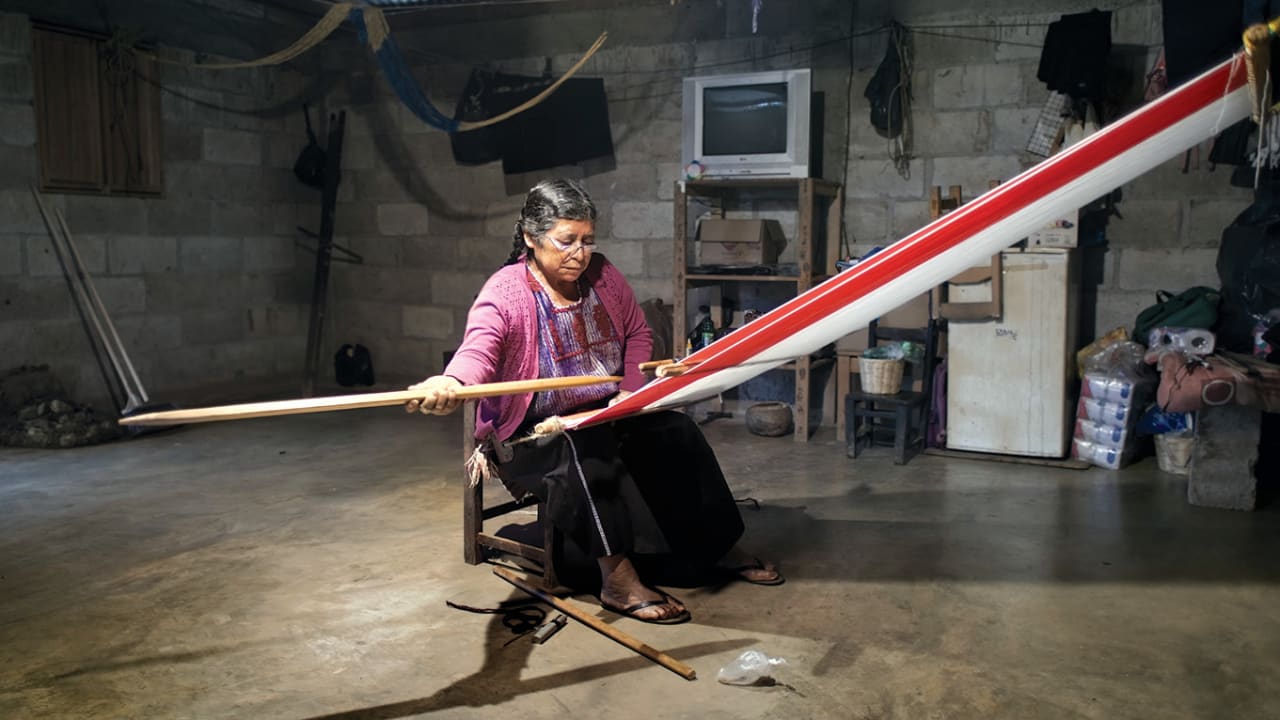
TAKE, FOR example, I Died, which comes our way from Chiapas, the southernmost state of Mexico. It is a tale of hardship and existential challenges requiring a strong will and a big heart to meet and (amazingly) even come out of thriving.
The heroes of the storyline are almost exclusively women who have all endured their share of physical and emotional abuse and have been consigned to the nether regions of the societal and familial pecking order. And that even before they put their noses to the grindstone and actually get down to the not inconsiderable task of working the land and eking out a livelihood for themselves and their dependents.
As per the annual format, each screening will be preceded by a lecture from a specialist in the relevant field or followed by a discussion with academics who will shed some light on the gist of the film and its thematic purview.
The I Died slot (November 19 at 4 p.m.) will feature a talk by Tal Nitsan, whose manifold work schedule includes serving as academic coordinator of the Sophie Davis Forum on Gender, Conflict Resolution, and Peace, within the remit of HU’s Davis Institute for International Relations. Nitsan, as the Forum blurb states, “is a feminist scholar critically examining sociocultural, global, and local perspectives of the intersections between gender, violence, and social change.”
Her doctoral work has involved several visits to Guatemala, just across the border from Chiapas, making her well acquainted with the region and the social and cultural mores of the locale.
As the film festival is, by definition, not just about offering the public a good time or, possibly, some enticing escapism, I asked Nitsan what she thought we could take away from watching I Died.
“Like any good ethnographic film, it is embedded in the social and local fabric,” she said. It is, she posited, a multi-stratified portrayal. “The heroines of the film are women, but there is also the land and the labor they invest in it. And there is the community. They are all central to the whole story.“
Nitsan observed that I Died is a stock tale of the aches and pains of the downtrodden.
“The women are in a relatively advanced situation. They are more liberated. You can tell they received significant education because they are not monolingual.” The latter refers to the women’s command of Spanish, in addition to their native Tzotzil tongue, a Mayan language spoken in the highlands of Chiapas.
That, apparently, is a game changer. “It is of great importance for these women,” Nitzan said. “We see that,in such rural regions, monolingual women are greatly hampered by their lack of language skills.”
The Tzotzil folk who occupy the central spot in I Died may be more fortunate than their less linguistically equipped sisters, but that does not mean they have it easy, by any stretch of the imagination.
The title of the film references a hard-earned epiphany of one of the main characters. “I died, but I am still alive,” she says about her survival of great distress against almost insurmountable foes. There is nary a trace of self-pity when she touches on her previous passage of life when she was subjected to violence by various male members of her family, including her father.
We slipped into ecological spheres as Nitsan dug into the documentary’s layered subtext. “What I like about the film is that in addition to the women, there is a powerful presence of the land, the work, and the community,” she reiterated.
It is also an arrestingly aesthetic work, as the camera follows the women across undulating tracts of land with densely packed trees and patchwork fields. “The scenery is very meaningful. But these are not landscapes per se. We don’t look at canyons for their beauty.” It is, she said, a more pragmatic viewpoint. “We look at these places as agricultural land and how they are farmed. The land is one of the heroines of the film.”
Politics, naturally, insinuates itself into the personal narrative. “There are many questions relating to ownership of land and who can cultivate it,” Nitsan said. That should sound more than a little familiar to anyone living in this part of the world.
One woman in the film talks about how her brothers didn’t allow her to work some of their father’s land, and she had to shell out hard-earned cash to gain access to it. In that particular case, things eventually begin to move in a more desirable direction, albeit by default. “Her father taught her how to work, as he didn’t have a son,” Nitsan explained.
For the Tzotzil women, getting down and dirty with Mother Nature is more than just about making a living. “The land is a source of life. But the women work very hard. They also engage in traditional forms of weaving. They also work in areas that provide them with cash, such as embroidery. I presume they sell what they make to tourists. They don’t actually mention that.”
WE ARE also enlightened about the positive side of regional politics, courtesy of the Zapatista – aka the Zapatista Army of National Liberation (EZLN) – a political militant organization that earned itself plenty of negative press in the 1990s when it rebelled against the negative impacts of economic policies on indigenous communities, notably the North American Free Trade Agreement (NAFTA). The movement’s championing of social justice and other reforms had a positive knock-on effect for the rural women of Chiapas and helped them achieve a greater degree of social equality.
Nitsan nipped into the stratigraphy of the global struggle for gender equality. “Sarah Grimké, who was a 19th-century American abolitionist and suffragette, said: ‘I ask no favor for my sex. All I ask of our brethren is that they take their feet off our necks.’” That, Nitsan noted, comes across in I Died.
“For me, the film resonates with that quote,” she said. “These women work hard. Their life reality is very difficult. But, in one way, what they are saying is ‘Just leave us alone. Do us a favor and just let us live our tough lives,’ and that these lives are worth living.” The unavoidable import of that is a powerful message we would do well to consider.
Nitsan invoked the spirit of yesteryear Zionist pioneering. “These women are not looking for an easy life, a life of luxury. They are women who want to work and to be worthy of their lives. The social critique here is kept in check.”
That reminds me of friends of mine who ran a goat farm near Beit Shemesh and, like the Tzotzil womenfolk, were not looking for any favors from the state. They just wanted to be left on their own to get on with their lives and, in so doing, prevent forest fires from breaking out. Eventually, however, vested political interests and constant harassment from the powers that be drove them from the farm they’d nurtured for almost 25 years – and, in fact, from the country. Clearly, there is a lesson or two to be gleaned from I Died.
Other must-watch films at the Anthropological Film Festival
THERE ARE more compelling stories across the Anthropological Film Festival roster, such as Mrs. Hu’s Garden, which spins an inspiring tale of an indomitable woman well past her full bloom of youth. She dispenses goodwill to all and sundry and does her best to survive in the face of the encroaching urban development which threatens to engulf her hard-earned way of life.
Indian-French co-production I Poppy also portrays a David vs Goliath scenario; and there are some optimistic hope-inducing vibes in Elementary by French director-actress-screenwriter Claire Simon. Elementary follows the lives of children of immigrants to France as they take their first steps in the formal education system, helped by open-minded and open-hearted teachers and other benevolent adults around them.
The darker side of a Brazilian town, and corruption in officialdom, is starkly and colorfully depicted in La 42. And abuse, albeit in a very different societal milieu, is addressed in the Spanish-British co-production Unbound.
All in all, there is plenty to see and mull over in the Anthropological Film Festival.
For tickets and more information: jer-cin.org.il/en/lobby/14th-anthropological-film-festival