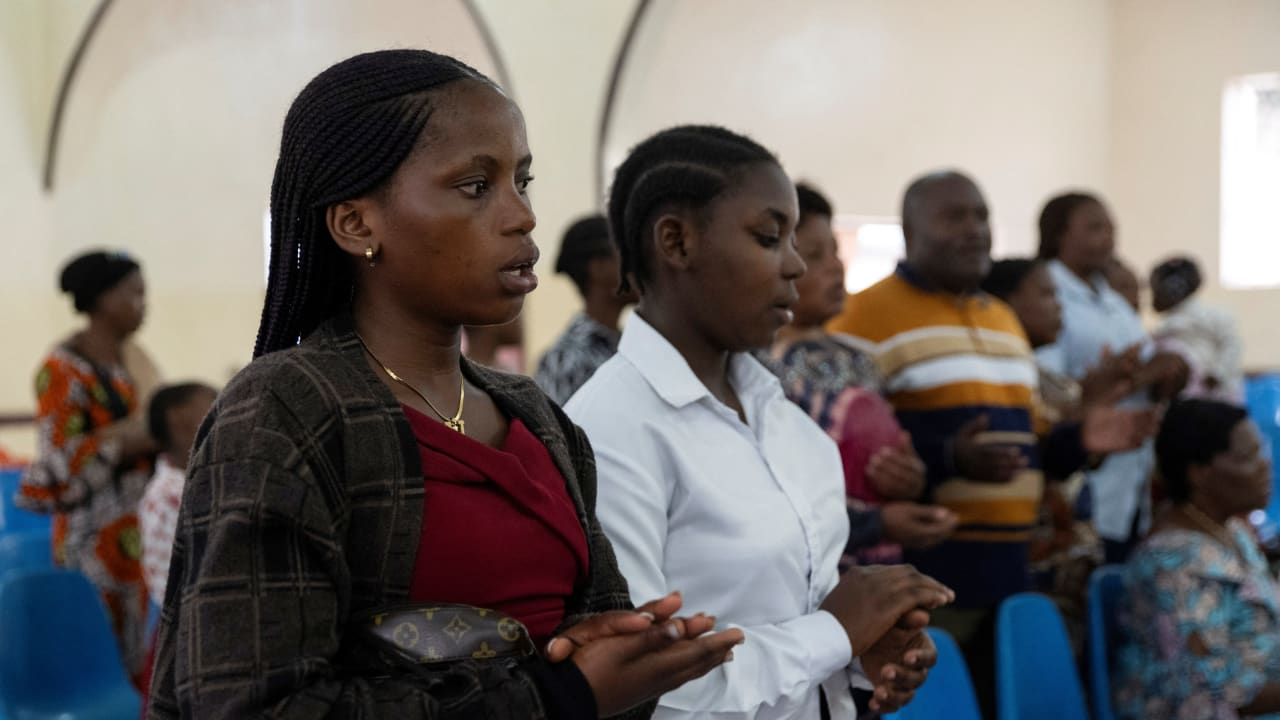
A massacre of Christians in the Democratic Republic of the Congo has shone a spotlight on extremist groups operating across central Africa. This type of massacre is not new. Extremist groups, some of them linked to the Islamic State or ISIS, have been operating across parts of Africa for many years.
However, with the defeat of ISIS and its affiliates in Iraq and Syria between 2017 and 2019, the focus of these groups has largely shifted to other parts of Africa. This includes a swath of the Sahel region, stretching across an area that divides North Africa from Central Africa, as well as areas further south, such as Mozambique.
The massacre is beginning to raise alarms in the Middle East, as extremist groups operating in Africa could lead to radicalization returning to the Middle East. A series of recent articles at the UAE-based Al-Ain media have made this clear.
An article on Tuesday focused on Muslim Brotherhood infiltration in Sudan, while an article on Wednesday focused on the role of ISIS in the Democratic Republic of the Congo.
The August 2020 article says that “deep in the forests of the Democratic Republic of the Congo and on the border with Uganda, the influence of the Allied Democratic Forces, one of Africa’s most dangerous terrorist organizations, is growing.”

ISIS-affiliates kill over 40 people including children at church
Human Rights Watch and other organizations had already reported this massacre. The HRW noted: “The ADF armed group killed more than 40 people, including several children, with guns and machetes during a nighttime church gathering on July 26-27, 2025, in eastern Democratic Republic of Congo. Several other children were abducted and remain missing.”
It added, “The Ugandan-led ADF pledged allegiance to the Islamic State (ISIS) in 2019, but current ties between the two armed groups are unclear. ISIS claimed responsibility for the attack in Komanda, Ituri province, on its Telegram channel, saying 45 people were killed. The massacre heightens concerns about the ability of Congo’s national army, stationed nearby, and the United Nations peacekeeping force to protect civilians.”
THE BBC noted that “more than 40 people were killed in an attack by an Islamic State affiliate in northeastern Democratic Republic of Congo, the UN and Congo’s military said.”
“Most of them were worshipers taking part in a night vigil at a church in the town of Komanda when they were attacked by ADF fighters. Nine of those killed were children,” the UN peacekeeping mission said. Nearby shops and businesses were looted and set on fire.
“The ADF emerged in Uganda in the 1990s, accusing the government there of persecuting Muslims, but is now based over the border in DR Congo, where it regularly attacks civilians of all religions, as well as in Uganda,” the BBC continued.
The UAE’s Al-Ain believes this terror group is growing, and it is the “bloody arm of ISIS in the Central African Republic,” according to the French magazine Le Point. It adds that the group “represents an existential threat to the fragile states of the Great Lakes region.”
The Al-Ain article then asks, “Where did this movement come from? How did it transform from a local opposition into a transnational terrorist group? And what is the truth behind its project to establish a ‘caliphate’ in the heart of the African continent?”
The article says that the ADF has preyed on the weakness of various states in the region. “Under the leadership of Moussa Sika Paluku [Musa Seka Baluku] since 2015, the group has increasingly turned to extremism and terrorism and declared its allegiance to ISIS in 2019.” It further notes that poor coordination between various forces in Uganda and the Congo enabled these extremists to thrive and that the terror group has targeted Muslims and Christians.
“The group not only relies on external support but has also built a strong internal economic network by exploiting gold mines and forests, imposing taxes on farmers and traders, collecting road rights of way, and operating small shops and pharmacies that serve as logistical cover. These resources make it relatively independent and difficult to eradicate,” Al-Ain notes.
What matters now is that the ADF is searching for a ‘caliphate,’ the way ISIS did in Iraq and Syria. This would come through weakening governments in Uganda and Congo and preying on border states such as North Kivu, the article claims.
“The ADF is no longer just a local insurgency; it has become a transnational terrorist group that thrives on the weakness of states and the collapse of their institutions. Because it combines terrorist ideology with organized criminal practices, it now represents a double threat: a bloody ‘caliphate’ project on the one hand and an armed “mafia state” on the other.”
The overall point that the Al-Ain piece is attempting to make is that the world should stop ignoring threats in central Africa, as it has done over the last few decades. In fact, the US has sought to pull back from a focus on Africa, leaving the playing field to China, Russia, and Turkey.
Various groups and states are entering this power vacuum. The reason UAE media is now focusing on the threat is to raise alarms among its friends, such as in the UK and the US.