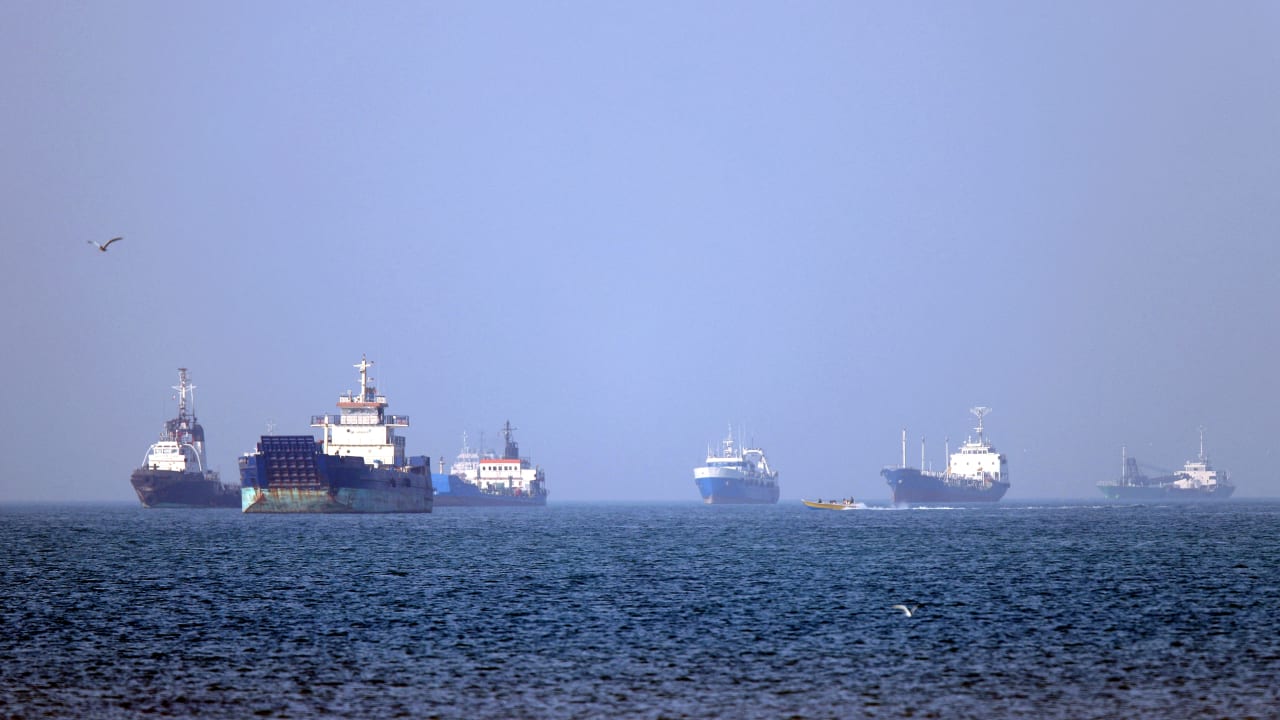
A war on Iran, which began on February 28 with US and Israeli airstrikes, has quickly become ensnared in mission creep, as it has shifted to mostly be about the Strait of Hormuz.
The goals of the war, which included issues such as the Iranian nuclear program and its ballistic missiles, have had to focus on dealing with Iran’s closure of the Strait of Hormuz. But now, US President Donald Trump has paused “Project Freedom,” the recently announced initiative intended to enable the movement of ships through the strait.
“President Donald Trump said on Tuesday evening that he is pausing the US effort to guide stranded vessels out of the Strait of Hormuz to allow time for a deal to end the Iran war, but that the American forces’ blockade of Iranian ports would remain in place,” Saudi Arabia-based newspaper Arab News reported Wednesday. Clearly, countries around the Persian Gulf are watching closely.
The UN warned this week about the “unprecedented” crisis facing the 20,000 crew members of ships stuck in the Persian Gulf. These ships are basically sitting at anchor, and the crews don’t have the rights they deserve to disembark or obtain basic necessities.
They are some of the many victims of this conflict and the unintended consequences it has unleashed.
“Trump announced the decision in a social-media post, saying the effort – which started on Monday in the vital waterway for global energy – would pause for a short period to see whether an agreement with Tehran on ending the war in the Middle East could be finalized,” Arab News reported.

It now appears that Pakistan is hopeful it can mediate a deal between the US and Iran. This has apparently caused the White House to climb down from what would have been a complex effort to open the strait and enable ships to go through. Nevertheless, the US says its blockade of Iran remains in force.
As the US and Iran apparently continue talks, the UN is also debating a new resolution that would call on Iran to open the strait and also enable a humanitarian corridor so that some essential items can get through.
“It is the latest diplomatic effort by the US and its Gulf allies after a watered-down resolution aimed at opening the strait was vetoed by China and Russia hours before Washington and Tehran announced a temporary ceasefire in early April,” Arab News reported.
War a setback for US
Therefore, this indicates that even at the UN, the US is facing a potential uphill battle to get what it wants. So far, the Iran war has been a setback in this respect for the US. Washington has been arguing with its European and NATO allies.
The Gulf states have also been left wondering what comes next. The UAE, for instance, was attacked by Iran this week, but it is wary of responding.
Most of the Gulf states have not wanted to get drawn even further into a war that they were not consulted about.
The UAE had to deal with new drone and missile attacks on Tuesday, a day after other attacks. As such, the UAE understands that it may be facing new escalating attacks alone.
This may bring it closer to Israel in terms of ties, but there is not easy solution to the Iranian drone and missile threat. Iran feels emboldened.
The pausing of the US plan to try to enable movement of ships through the strait illustrates just how complex a task this has become. While the Iranian nuclear program was once seen as the major sticking point and issue, there are now many files to deal with.
This may work in Tehran’s favor, because it can negotiate about Hormuz and kick the can down the road regarding the nuclear file.
Iran’s goal is to expand the number of issues to be discussed and also try to link them to each other. In early April, for instance, Tehran wanted a ceasefire in Lebanon linked to the one with the US.
Iran appears to have gotten a lot of what it wanted. It remains to be seen whether Tehran can continue to have its demands met in the new round of Pakistan-backed negotiations.