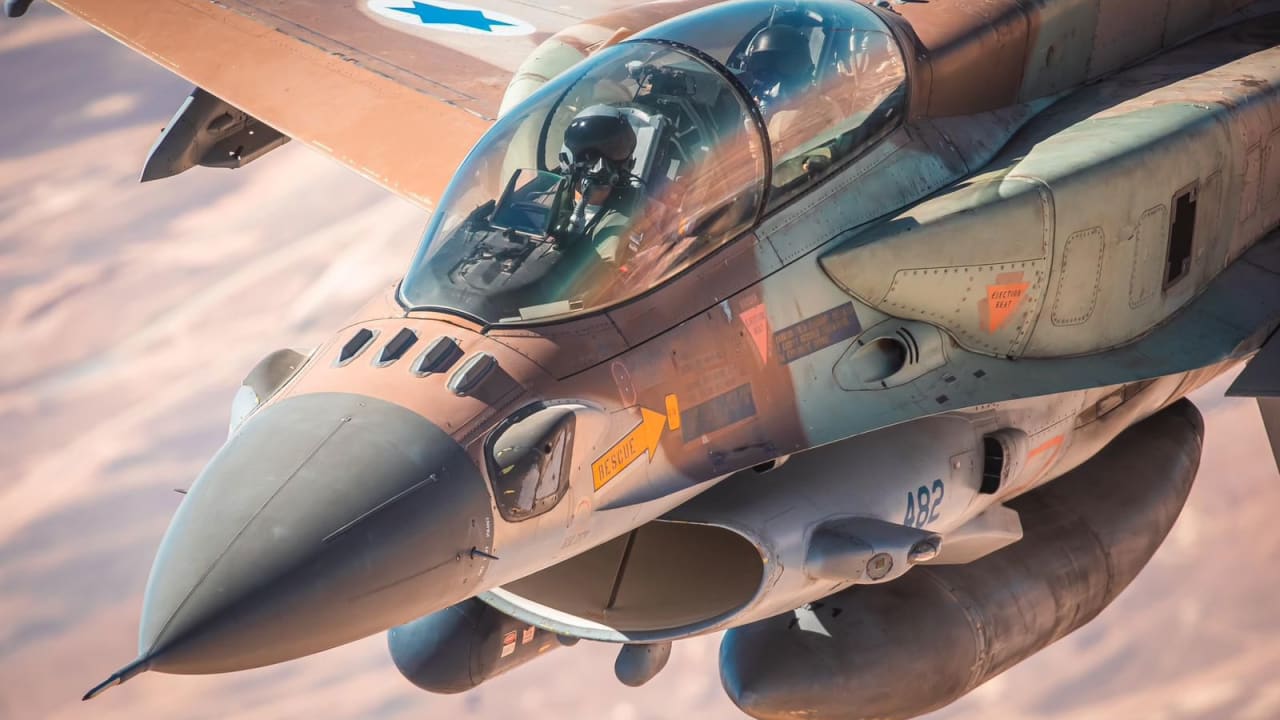
Former Israel Air Force commander Maj.-Gen. (res.) Eitan Ben Eliyahu said that Israel must either approve a full-scale war with Iran, including a ground invasion, or renew economic pressure and negotiations. He spoke on 103FM on Thursday, saying the June campaign, known as Operation Rising Lion, delayed Iran’s nuclear program for years but did not eliminate it.
“Maybe the weakness in our strike is that we did not eliminate the nuclear program, but we did delay it for many years,” Ben Eliyahu said, referring to Israel’s recent operations against Iran. He cautioned that the Islamic Republic is studying the conflict closely and adapting.
“Either you decide on total war with Iran, including a ground invasion and a long period of home-front strain and multi-front escalation, or you choose economic pressure alongside attempts to return to negotiations,” he said. According to Ben Eliyahu, these are the two realistic paths now facing Israel.
He added that Iran learned key lessons from Israel’s strikes, including increasing the number and accuracy of missiles, repositioning launch arrays farther east and south, deepening dispersion, and improving surprise. Although he said Iran has fallen further behind after Israel’s campaign, he stressed that Tehran is already working to correct vulnerabilities.
Israel’s June 2025 campaign, dubbed Operation Rising Lion, included repeated strikes on nuclear facilities around Isfahan and broader damage to nuclear and missile-production infrastructure, according to the IDF and international monitors.

On Lebanon: The agreement and its limits
Turning to Lebanon, Ben Eliyahu said the situation is more sensitive but argued that the United States will not give up on the signed agreement and that Israel is operating within its terms. “As long as Hezbollah does not disarm and evacuate the southern part of Lebanon, we are justified in acting as part of the agreement,” he said.
“If we operate more broadly, we will collapse the agreement with our own hands,” he warned.
Addressing the strike on Hezbollah’s military chief of staff, he said the action served as deterrence, threat, and punishment, and as pressure on the Lebanese government to curb Hezbollah’s force build-up. “The central issue is Iran,” he emphasized.