
Many of the recent drone and missile attacks by Yemen's Iran-backed Houthi terrorists on Saudi Arabia are based on targeting intelligence provided by the Islamic regime, The Wall Street Journal reported on Saturday.
The report cited a former Israeli official, Danny Citrinowicz, who described the intelligence connection between Iran and the Houthis as "very, very strong on the operational level."
“Iran has a major interest in the Houthis’ success," said Citrinowicz, who previously served as head of the Iran branch for Israeli defense intelligence. "It harms Saudi Arabia; it raises the oil prices. Therefore, there is a shared strategic interest that isn’t based on a client-patron relationship, but rather on strategic cooperation."
The report comes as the Houthis have intensified attacks against Saudi Arabia, striking the country's presidential palace complex on Thursday, killing five, and in a separate attack striking Riyadh's King Khalid International Airport, killing 17 and injuring over 300.
The Iranian interest in the Houthis' attacks on the Saudis was also highlighted by New York-based security think tank the Soufan Center, which told the WSJ that the strikes are "helping Iran project power."
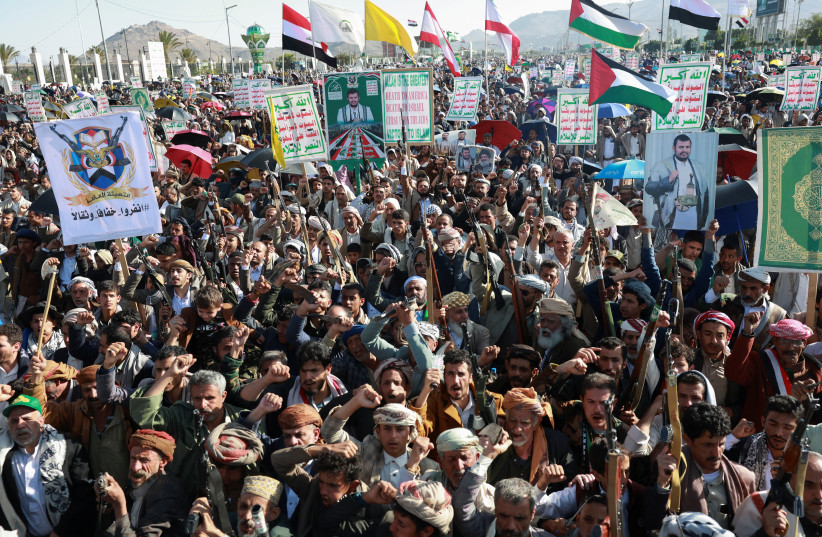
Iranian officials deny being involved with Yemen's Houthis
Iranian officials have previously denied involvement with the Houthis, with the report citing Iran's Foreign Ministry spokesman Esmail Baghaei as saying in September that the Houthis are “entirely independent actors who make their decisions based on their own interests.”
Despite Baghaei's claim, members of Iran's Islamic Revolutionary Guard Corps (IRGC) have commended the recent Houthi strikes on Saudi Arabia and the Saudi-led coalition in the region.
Adam Baron, a Yemen expert and fellow with Washington-based policy institute New America, told the WSJ that the recent Houthi military gains were "undeniably" based on external Iranian assistance.
“The support the Houthis received from Iran and other Axis actors undeniably paved the way for the rapid-fire gains they’ve made over the past few months,” he said.
Idan Kweller and Asher Smith contributed to this report.