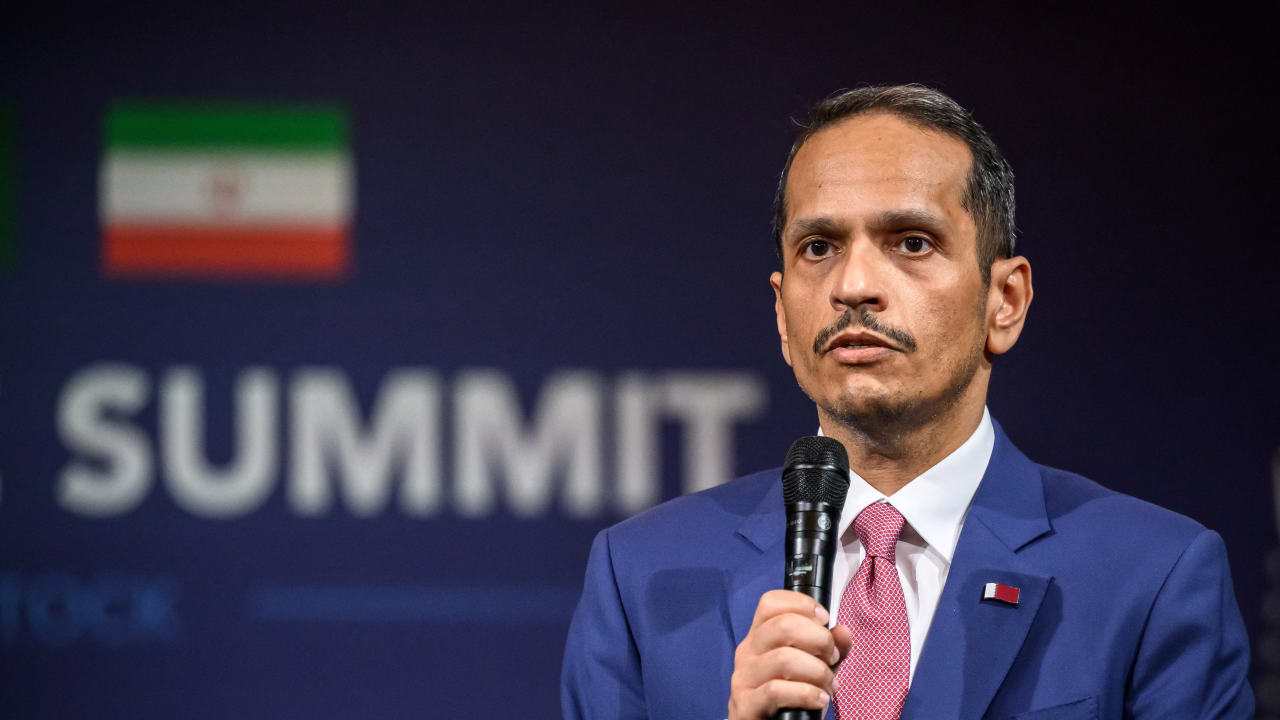
Qatari Prime Minister Sheikh Mohammed bin Abdulrahman Al Thani sharply criticized Prime Minister Benjamin Netanyahu in an interview with British broadcaster Piers Morgan, rejecting allegations about Qatar's influence in the United States and its financial support for Gaza. He also offered details of Doha's mediation efforts between Washington and Tehran.
Asked directly whether he considered Netanyahu a war criminal, Al Thani replied: "Well, of course, what's been committed in Gaza is war crimes. And whoever is responsible for this is a war criminal."
When Morgan pressed him on whether that included Netanyahu, Al Thani answered yes.
He also explicitly condemned the October 7 attacks, saying: "There is no question that October 7th was a massacre and should be condemned. And whoever is responsible for this should be held accountable."
The exchange followed a question about Netanyahu's speech at the United Nations General Assembly, in which the Israeli prime minister accused Qatar of attempting to influence American public opinion by directing billions of dollars toward US universities.

Al Thani rejected the allegations, accusing Netanyahu of trying to "gaslight the public."
He argued that Netanyahu blamed Qatar whenever celebrities, journalists, influencers or students criticized Israel's conduct in Gaza, rather than examining the actions of his own government.
The Qatari prime minister maintained that his country's spending on American universities was primarily intended to support their campuses in Qatar, not influence curricula or students. He said approximately 95% of the expenditure went toward those campuses.
"Who's interfering and meddling with the United States politics? Is it Qatar or Israel?" he asked, pointing to Netanyahu's criticism of New York City's mayor, influencers and students.
Al Thani also alleged that the Israeli government had organized a campaign against Qatar intended to undermine its role as a mediator. He presented the allegations as his account in the interview.
Qatar PM claims that Gaza aid was coordinated with Israel
Al Thani addressed one of the central Israeli criticisms of Qatar: its longstanding relationship with Hamas and the funds transferred to the Gaza Strip.
He said Qatar's engagement with Hamas, including hosting the group's political office in Doha, originated at the request of the United States and was coordinated with Washington.
He rejected claims that Qatari assistance intended for Gaza had funded Hamas's military wing.
According to Al Thani, the monthly assistance program amounted to $30 million and operated through a mechanism coordinated with Israel, the United States and the United Nations.
He said $15 million was used to purchase fuel from Israel to operate Gaza's electricity generators. Another $10 million provided $100 to 100,000 families, while $5 million covered civil servant salaries.
Al Thani maintained that the lists of recipients were reviewed and approved by Israeli security agencies and that the payment mechanism was also subject to oversight.
He further claimed that, approximately one week before October 7, Qatar told Israeli officials it would not continue additional rounds of assistance without clarity about Gaza's longer-term future.
The Qatari prime minister also described negotiations immediately after the October 7 attacks.
He said Qatari officials held a difficult meeting with Hamas leaders and then approached Israel with a proposal to release civilian hostages in exchange for a temporary ceasefire window.
According to Al Thani, Israeli officials declined to engage with the proposal, responding that Hamas should release the captives without receiving anything in return.
He did not receive an Israeli response during the interview.
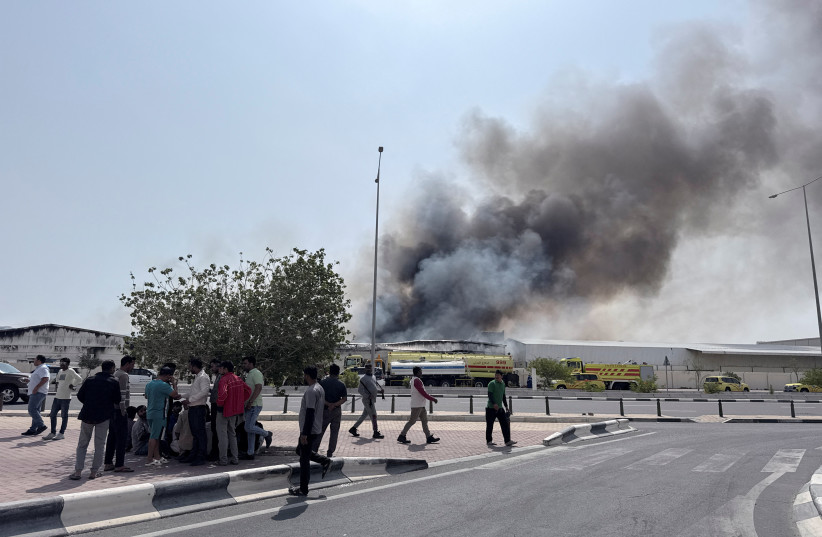
Al Thani reveals he was briefly warned before Iran war began
Turning to the war with Iran, Al Thani revealed that Qatar received only a brief warning before the military campaign began.
He said he had been asleep at his home in Doha when he was awakened and told that an operation was imminent.
Asked who had informed him, he replied: "From the US administration. I got a call from the White House."
The call came between a few minutes and half an hour before the campaign began, he said.
Al Thani explained that Qatar had sought a diplomatic agreement between the United States and Iran before the war and had warned that a military confrontation would affect not only the Middle East but also the global economy.
He described the US-Qatar relationship as a fundamental strategic partnership deeply connected to his country's security and economy, stressing that Doha had no intention of jeopardizing it.
At the same time, he emphasized the geographical reality of Qatar's relationship with Tehran.
"Iran has been our neighbor and will remain our neighbor forever," he said. "We are not going anywhere. They are not going anywhere."
Al Thani also condemned Israel's earlier strike in Qatar, describing it as unacceptable and accusing Netanyahu of crossing a line. He said the attack occurred while Doha was attempting to advance a proposal from US President Donald Trump.
He likewise condemned Iran's attack on Qatar, saying his country had sought to prevent the conflict in the first place.
Qatar's message to Trump: Give diplomacy room to work
Morgan asked whether mediation would be easier if Trump toned down his social media statements.
Al Thani avoided directly criticizing the president, but said: "It will be easier, much easier for us if there is no media at all about this until we get to a solution."
He argued that public statements, leaks and social media reports had repeatedly complicated negotiations.
"Closed-door diplomacy is the most effective way that we see in order to get some progress," he said.
One of the interview's most striking exchanges concerned Iran's new supreme leader.
Al Thani said Qatar had not communicated with him directly and that, to his knowledge, no other foreign governments had either.
Asked whether he believed the supreme leader was alive, he answered: "I don't know."
He said Doha was conducting its contacts through Iran's president, foreign minister and National Security Council. According to Al Thani, those channels had proved effective and were understood to represent the Iranian system.
He added that Iranian officials had told Qatar their messages were verified by the supreme leader.
Qatar's suggestions for a peace deal with Iran
Al Thani outlined three issues that Qatar believes should form the basis of an agreement to end the conflict.
The first is a resolution of Iran's nuclear program that satisfies Washington and the International Atomic Energy Agency, while allowing Iran to pursue peaceful nuclear energy and obtain sanctions relief.
The second is restoring the Strait of Hormuz to its prewar status. Al Thani acknowledged that Iran held a different view on the issue and said any arrangement should be consistent with international law and regional agreements.
The third is rebuilding security arrangements between Iran and the Gulf states, based on principles including noninterference and nonaggression.
Despite the difficulties in the negotiations, Al Thani adopted a more positive tone toward Trump personally.
He said the president had been receptive in conversations with Qatar's leadership and willing to give diplomacy a chance when a genuine opportunity emerged.
"I hope that this time our efforts work," he said. "I think that it's timely. It's timely for us. It's timely for the region. It's timely for America and the world."