
Questions are mounting over whether PA President Mahmoud Abbas will again postpone Palestinian Legislative Council (PLC) elections or whether the long-delayed vote will finally take place, bringing an end to the council’s 16-year-old expired mandate, according to expert analysts and reports in Arab diaspora media.
Yoni Ben-Menachem, a senior researcher at the Jerusalem Center for Security and Foreign Affairs, wrote earlier this week that senior Fatah officials were under the impression that Abbas would be likely to postpone the election again over concerns that Mohammed Dahlan’s camp would be handed significant political control.
Officials told Ben-Menachem that Hussein al-Sheikh, deputy chairman of the Palestinian Authority, was pushing Abbas to postpone and use the justification that the Central Elections Commission cannot hold elections in the Gaza Strip or in east Jerusalem.
Despite this apparent justification for postponing the elections, European officials have begun pushing to see some type of mission to see the election carried through.
French Foreign Minister Jean-Noel Barrot is reportedly going to ask the European Union to send a mission to monitor Palestinian elections scheduled for November, according to The National news site.
Abbas vowed last year to finally carry out elections as part of a deal with France and 10 other countries to recognize a Palestinian state.
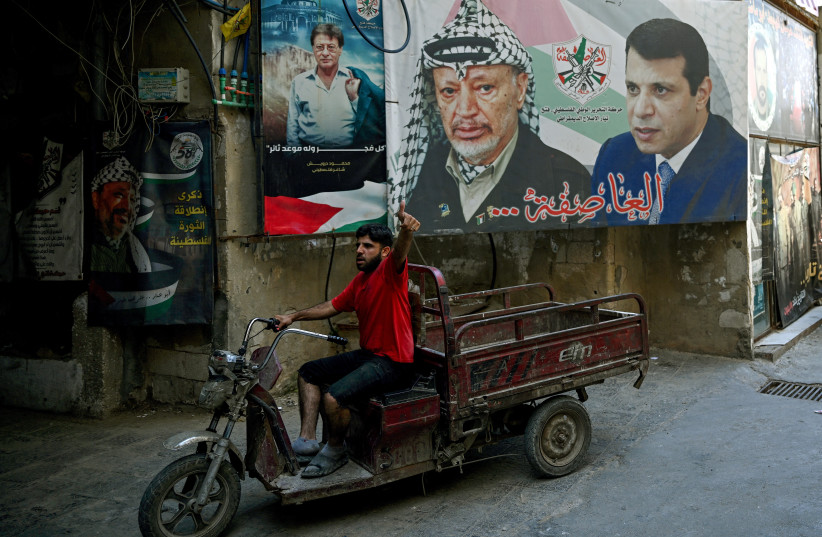
Dahlan attended talks with Hamas in Cairo last month, and The Jerusalem Post confirmed earlier this week that he was seeking to unify Palestinian factions, including Hamas.
Ben-Menachem noted that this development could provide Hamas and its allies with the opportunity to seize significant political power or even for a Dahlan-Hamas camp to create a new center of power outside of Abbas’s control.
Menachem: PLC elections could allow for PA leadership referendum
He added that the PLC elections could allow for a referendum on the PA and its leadership, which have frequently polled as unpopular with the Palestinian public and are widely regarded as corrupt.
Abbas could also use the time during the postponement to make internal arrangements within his divided faction before Palestinians ever have the opportunity to vote.
Senior PA officials told Ben-Menachem that internal reconciliation within Fatah is the real test.
Fatah officials meet to mend party rift
Fatah officials Sheikh and Jibril Rajoub, who have repeatedly butted heads, held a meeting last weekend as part of efforts to mend their rift, according to Arab media reports. These efforts are reportedly being pushed along by a number of Arab states, who fear that a weakened PA would threaten the political framework needed to address a post-war period.
Adding to the pressure to carry out the election as planned, Ben-Menachem noted that the ongoing PA legitimacy crisis would make any postponement appear as if Fatah were afraid of the elections’ verdict.
Prof. Kobi Michael, a senior researcher at the Institute for National Security Studies (INSS), told the Post that he thought Abbas had “a good reason” to want to postpone, given the recent developments with Dahlan and Hamas.
“Fatah is very unpopular among the Palestinian constituency, and Hamas is too, but a third political force might be much more popular,” he reasoned.
“Abu Mazen [Abbas] understands that losing the general election means losing the presidential election and he will prefer not to take the risk.“
The presidential election is set to take place next year, with polling frequently showing Abbas to be the least favorable candidate.
“I have good reason to believe that if the national party is established and decides to participate in the election, Israel will find a way to help Abu Mazen postpone the election because it poses a real and substantial threat and risk of legitimizing Hamas as a political actor,” Michael continued.
“It would weaken the PA and enable Hamas to hold both ends of the rope: to continue to lead the armed resistance against Israel and at the very same time to become a legitimate influential political actor.”