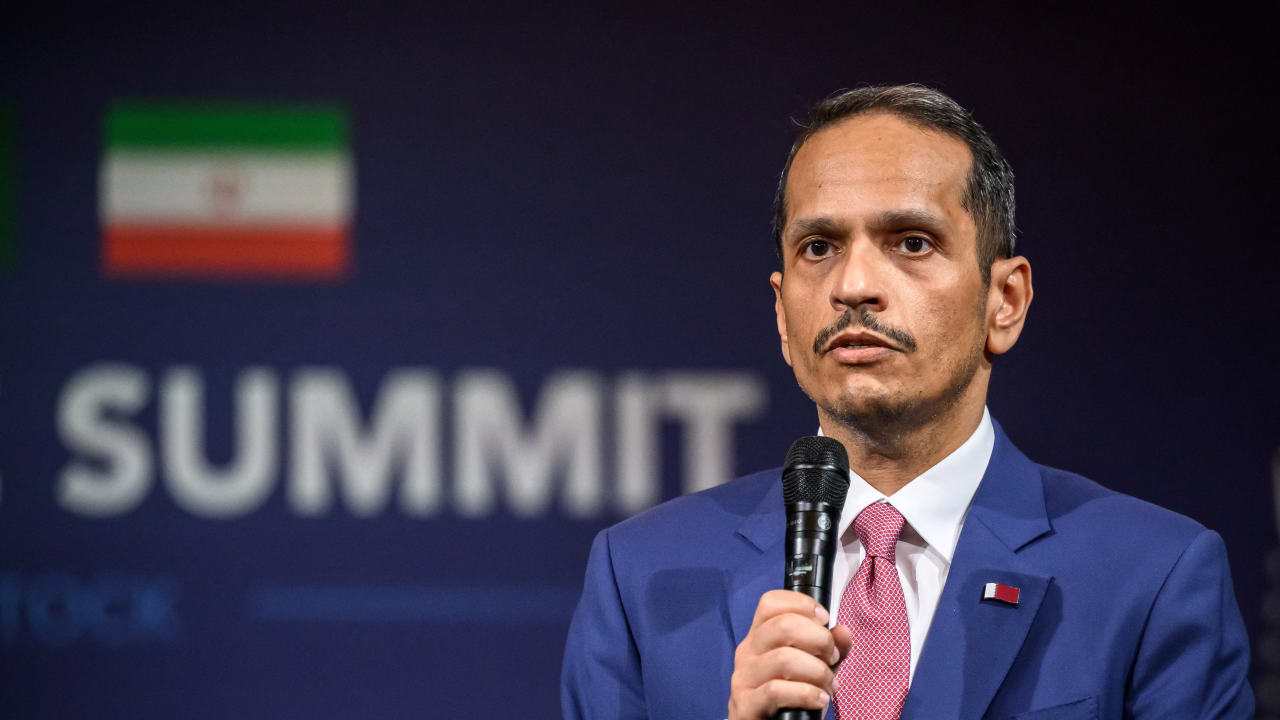
Qatari Prime Minister and Foreign Minister, Sheikh Mohammed bin Abdulrahman bin Jassim Al Thani, criticized Israel’s actions in Lebanon and their impact on negotiations, while also applauding the United States’ role in the process, in an interview with Al Jazeera in Doha on Monday.
Al Thani's comments came following the conclusion of the latest round of Iran talks in Switzerland.
"There are parties that want to sabotage the negotiations, but we have sensed from both sides the determination to reach a solution...Unfortunately, this is not the first time Netanyahu has caused a state of escalation in the region...[It's] Unacceptable that Israel killed nearly 100 Lebanese in just a few days during the ceasefire...Escalation anywhere in the region, whether in Lebanon or elsewhere, will impact the negotiations," the prime minister said.
"The continued occupation of Lebanese territories must end, and the sovereignty of Lebanon must be respected," the prime minister added.
The prime minister applauded the role the United States was playing in relation to Israel's ongoing military activity in Lebanon, saying, "The United States is playing the right role in response to the Israeli actions in Lebanon."
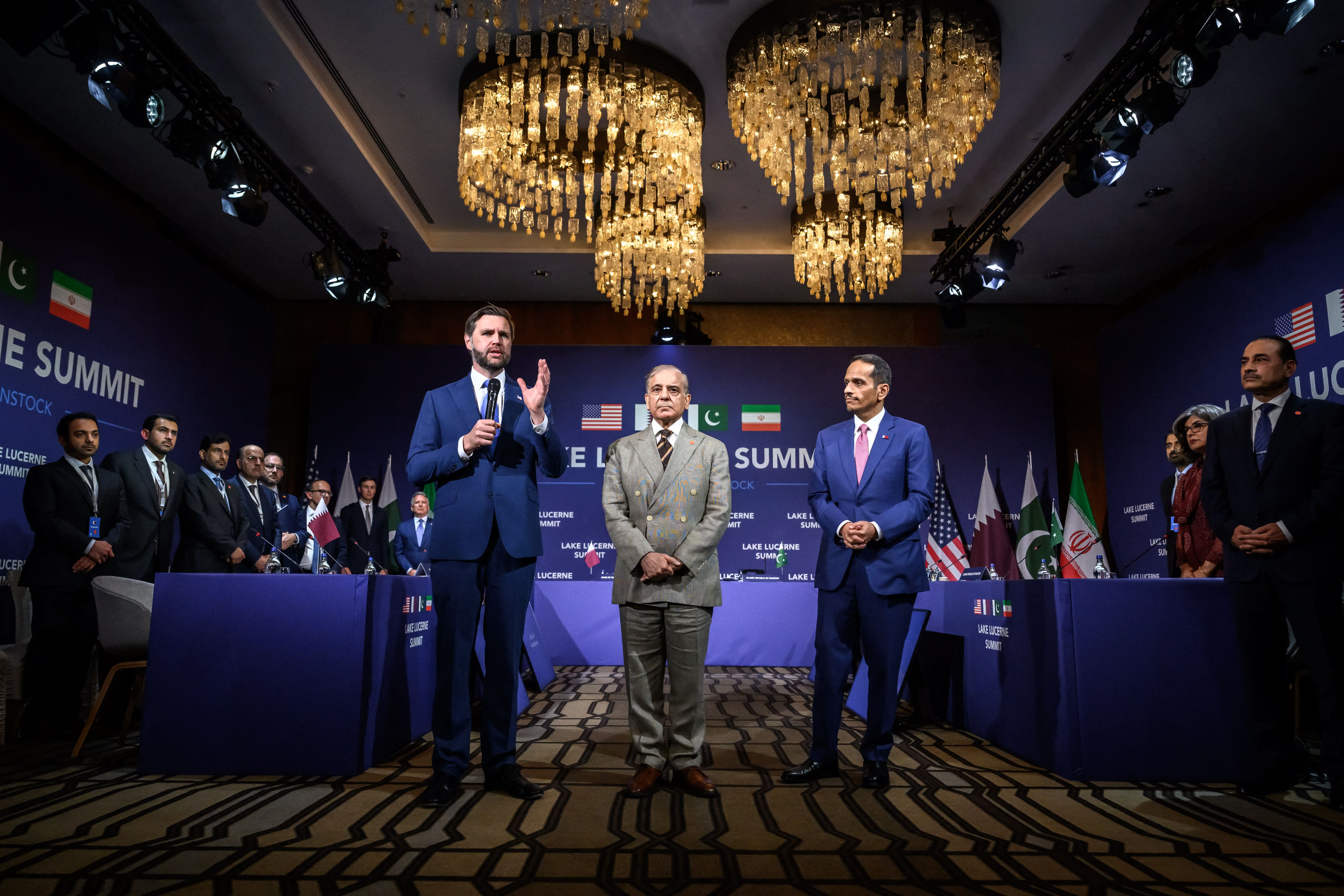
The prime minister emphasized the opportunity with these negotiations to bring about a Palestinian state, saying,"We hope that the negotiating momentum includes the Palestinians by achieving a Palestinian state."
Qatari PM and FM shares his impressions of the talks in Switzerland
During the interview, the prime minister shared his impressions of the talks in Switzerland, which included its complexities, condemnation of Iran's actions during the war, while also expressing optimism for the future of the region and with the West post the 60-day period.
"There will be many points of contention in the negotiation process between Washington and Tehran," the prime minister admitted.
"Efforts must focus on protecting the negotiations and reaching an outcome to prevent escalation...Efforts must focus on protecting the negotiations and reaching an outcome to prevent escalation...The solution must be diplomatic to prevent the escalation of the crisis and it from getting out of control."
Specifically talking about the role of Qatar and Pakistan in the negotiations, the prime minister said, "There was insistence from Qatar on confronting the complexities by employing capabilities through negotiation...The priority of the State of Qatar is to extinguish the fires in the region and reach a stage of calm...We are continuing with Pakistan in mediation to find solutions for bridging the gap between the parties...We worked with Pakistan to establish a framework that protects the negotiation process to make it more robust."
Challenges of the negotiations and the role of the MoU
Discussing the direction and the challenges the negotiations still face, the prime minister said, "There is political will from all parties to engage in negotiations...We faced problems related to Lebanon and the Strait of Hormuz, and we have put in place mechanisms to address them...We have laid the foundations, and now is the construction period for the final agreement between Washington and Tehran."
"The institutional framework presented yesterday is good, and the technical discussions are ongoing...The memorandum of understanding is based on the commitment of both parties to meet periodically and resolve deadlocks...The memorandum of understanding contains technical elements in addition to the political aspects," the prime minister said.
Of the role of the Memorandum of Understanding, the prime minister said, "[The] Memorandum of Understanding Establishes Institutional Framework for Negotiation Process...Matters are being discussed between Washington and Tehran, such as the nuclear issue and others with the region, such as security and Hormuz...The objective of the memorandum of understanding between Washington and Tehran is to stop the war and lay the foundation for negotiations...The memorandum of understanding took great efforts with our partners in Pakistan, with regional support...Through the memorandum of understanding between the United States and Iran, we have reached a ceasefire...We want to put in place a mechanism that ensures the money will help the Iranians and will not fund terrorism."
The status of the Strait of Hormuz
The prime minister also addressed the status of the Strait of Hormuz, saying, "According to the memorandum of understanding, Iran commits within 60 days to providing safe passage through the Strait of Hormuz...Our vision for the Strait of Hormuz is that it be open and that passage through it be free...Qatar's principled stance is to reject changing the status of the Strait of Hormuz from what it was before the war."
The methods of handling the region, the prime minister said, "We have put in place a mechanism to avoid any escalation in the region by addressing any event before it occurs...[An] Agreement [has been] reached to establish a hotline to resolve any dispute."
The prime minister shares his optimism for the region post-talks
The prime minister shared his optimisim for the negtiations and the future relations he envisions for the Gulfwhich includes regional security and stability saying, "Outcomes of any agreement between Iran and Washington do not affect only them but the region...What Iran did to us and to the brothers during the war is unacceptable...We look forward to a unified vision for the Gulf Cooperation Council for a security framework that ensures stability...We want to see Iran cooperate with Gulf countries based on a high level of trust...There is a Gulf consensus to achieve a shared vision for dialogue with Iran to resolve problems."