
Pakistan’s Sindh administration on Saturday issued a conditional no-objection certificate for Aurat March Karachi, allowing the annual women’s rights march to take place from 3:30 p.m. to 7:30 p.m. on Sunday at Beach View Park in Clifton, while imposing 28 conditions on participants.
The restrictions included a ban on promoting LGBTQ content, a prohibition on “objectionable clothing,” and limits on anti-state and anti-religious slogans, banners, speeches, and other material.
As of 4 p.m. Karachi time, the march was scheduled to be underway, but reliable post-event reporting on turnout, speeches, police conduct, or whether organizers complied with or defied the permit conditions had not yet emerged.
Aurat March events have been held since 2018 in major Pakistani cities, including Karachi, Lahore, and Islamabad, to mark International Women’s Day. This year, organizers did not hold the Karachi event on its usual March 8 date because it fell during the holy month of Ramadan. They later announced that the march would be held on May 10, which this year coincided with Mother’s Day in Pakistan.
The permit came after a confrontation on Tuesday evening outside the Karachi Press Club, where police prevented Aurat March organizers from holding a press conference about the planned May 10 march, and several activists were detained.
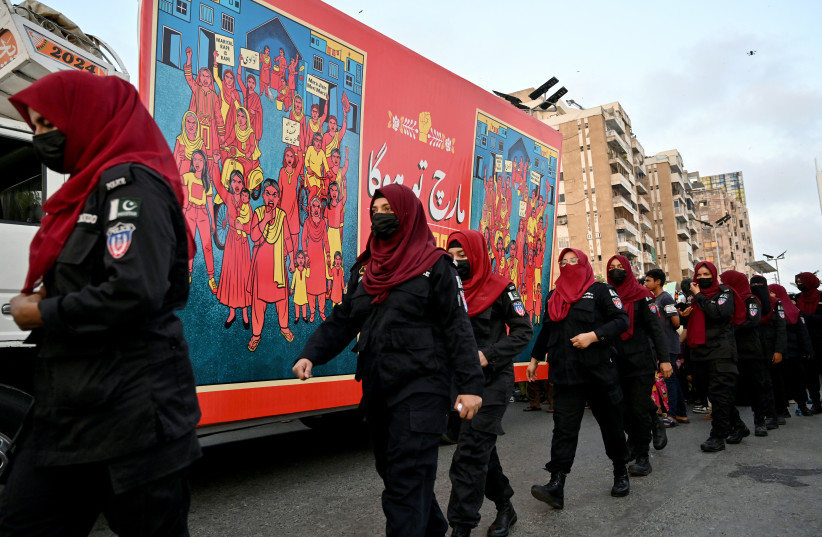
Those detained included Sheema Kermani, an organizer of Aurat March; Muneeza Ahmed; Safina Javed; transgender activist Shahzadi Rai; and several other women activists and volunteers. They had arrived to speak to the media but were not allowed to enter the Karachi Press Club.
Despite protesting the move, Kermani was reportedly dragged out of her vehicle by women police officers and taken away in a police vehicle. Voicepk reported that five women and two transgender activists were detained for several hours before being released.
The incident triggered strong criticism, including allegations of police misconduct and unlawful detention of activists.
The Sindh government later suspended officials involved in the handling of the confrontation, including a senior police officer.
Aurat March Karachi claims no-objection received, but not signed by the org.
Speaking to the media, Kermani said the no-objection certificate had been sent to Aurat March organizers, but that no documents had been signed by the group. She expressed surprise at the condition regarding women’s clothing, saying the government had never raised such a point during negotiations. Kermani said organizers were consulting with one another and would decide how to respond.
Aurat March Karachi also rejected suggestions that it had signed or accepted the terms of the no-objection certificate. “This is not the case. The NOC was issued to us by the government last night as directives imposed upon public assembly,” the group said. It said it would march against marital rape, the Prevention of Electronic Crimes Act, defamation laws, patriarchal violence, and attacks on the right to protest and assemble.
The group also rejected the condition barring LGBTQ content and restrictions on clothing. “Mera Jism, Meri Marzi [my body my choice] is our core demand. We invite you to wear whatever you like and feel comfortable in. We will continue to fight for our right to complete bodily autonomy and agency,” it said.
This year’s Aurat March theme focuses on intergenerational trauma and “Good Daughters,” addressing societal pressure on women to conform to idealized roles and the challenges mothers face.
Aurat March has long remained controversial in Pakistan because it sits at the intersection of competing social, religious, and political narratives. Supporters view it as a platform for raising women’s rights issues, including gender-based violence, workplace discrimination, legal protections, bodily autonomy, unpaid labor, and freedom of expression. Critics argue that some of its slogans, themes, and public displays challenge traditional cultural and religious norms.
The visibility of placards, speeches, and artistic expression during the march has repeatedly triggered debate over public morality and the limits of protest.