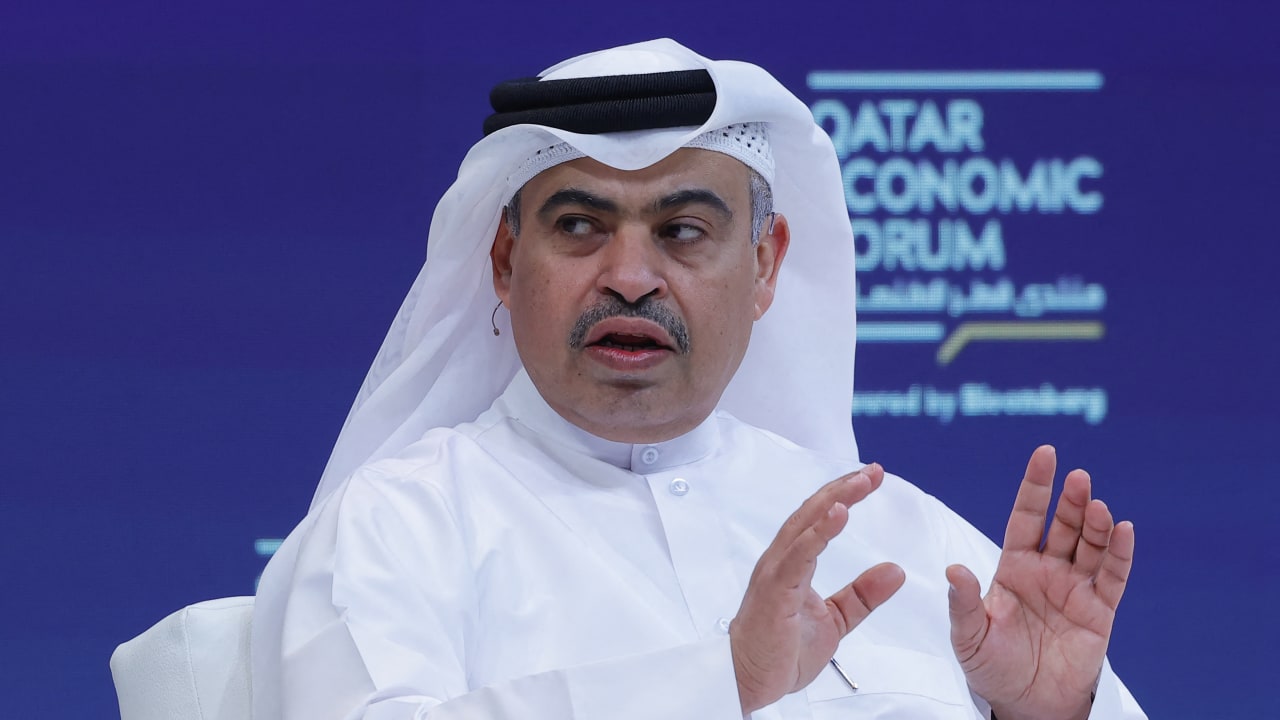
The global economy is about to feel the full economic impact of the Iran war, Qatar's finance minister said on Wednesday, but he added that his country's finances would be able to ride out the problems for at least a year.
"A full-fledged impact is coming, and it is not far away," Ali Ahmed Al-Kuwari said at an International Monetary Fund (IMF) discussion in Washington, describing the recent spike in global prices as just the "tip of the iceberg."
"I think in one month, two months' time you are going to see really a huge economic impact globally," he said.
"Very soon, you are going to have a problem of energy availability, not just prices. So even if you can afford to pay you are not going to be able to source, which is a major, major problem."
There was also the threat that the sharp reduction in global fertilizer production and supply from the region would see farming seasons missed around the world, triggering a food crisis too, he added.

Qatar coping with missile strikes, impact of war
Economists at JPMorgan have warned that Qatar's economy is now likely to contract by around 9% this year after Iranian missile strikes on the country's giant Ras Laffan Liquefied Natural Gas (LNG) plant wiped out 17% of its production capacity.
Al-Kuwari said the war's overall impact on the country's fiscal situation remained manageable, though, given its buffers.
"Managing the fiscal (situation) is fine," he said, pointing to its "conservative" pre-war budget and its "shock stability fund."
"We can go six months without tapping the Qatar Investment Authority, which has a high level of reserves," Al-Kuwari said, referring to the nation's sovereign wealth fund, adding that it could also tighten its budget, borrow if needed, and delay some investment projects.
"We are not seeing a major issue, and we can go for a full year without this," Al-Kuwari said.