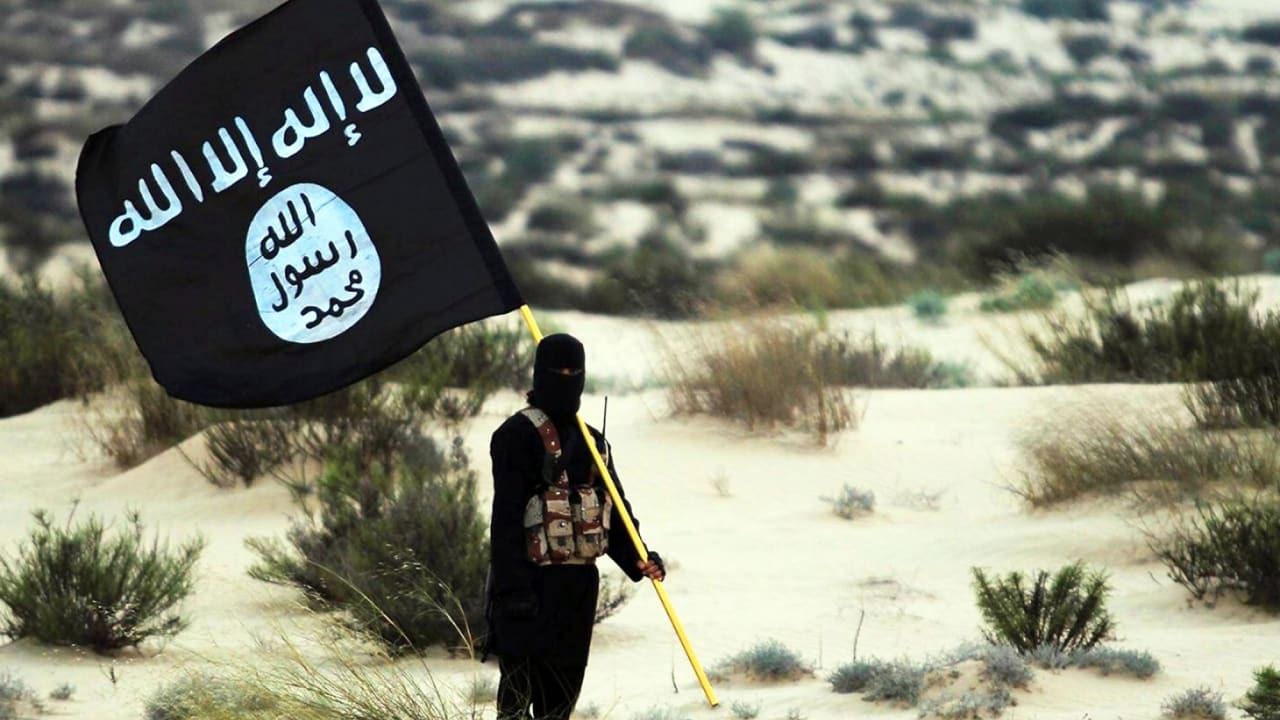
Several camps in Eastern Syria continue to hold tens of thousands of members of ISIS. These are primarily families of ISIS fighters who surrendered in 2019 in Syria.
They were moved to two camps, al-Hol and Roj. While some have been repatriated over the last six years, many remain.
Adm. Brad Cooper, commander of US Central Command (CENTCOM), visited al-Hol camp to discuss the security arrangements with the US-backed Syrian Democratic Forces (SDF), media sources in Eastern Syria reported last Wednesday. The SDF is primarily a Kurdish-led force established in 2015 to fight ISIS.
“Cooper visited al-Hol camp in Hasakah with a senior delegation to discuss security, aid, and management with camp authorities,” the North Press Agency in Eastern Syria reported.
This comes amid reports that the US is trying to revive talks between the Eastern Syria authorities, known as the AANES, and Damascus. SDF leader Mazloum Abdi met with Syrian President Ahmed al-Sharaa in March. Since then, however, the road map to integration has stalled.

Australia is deliberating whether to take back some of its ISIS citizens and their descendants from al-Hol and other camps in Syria, North Press reported.
“A political dispute has erupted in Australia over reports that another group of wives and children of Islamic State (ISIS) militants may soon be repatriated from detention camps in northeast Syria, local media revealed on Wednesday,” the report said. “The media said that more than a dozen women, children, and young men are expected to be evacuated from Roj and brought to Australia’s New South Wales and Victoria before Christmas in a secret operation.”
Many women from Western countries joined ISIS in 2014 and 2015. Some of them participated in crimes against humanity, such as enslaving members of the Yazidi minority and enabling their husbands to rape and murder Yazidi women and children.
Continued threats from ISIS in Syria
One couple from Germany was convicted of murdering a five-year-old Yazidi girl who ISIS had kidnapped. They were accused of tying the girl outside and leaving her to die.
Many Western countries have sought to prevent their citizens from returning, expecting the cash-strapped SDF to deal with the problem instead.
Now that the SDF may integrate with Damascus, however, Western countries will not be able to use the excuse that the AANES and the SDF are not “governments” as a reason to keep their citizens in Eastern Syria.
As Eastern Syria inches closer to becoming part of Damascus’s rule, these Western governments know they cannot expect Syria to deal with their problem. Many of these countries knew that their citizens were becoming radicalized before leaving to join ISIS.
WHEN THOSE citizens or their families resurfaced in 2019, detained by the SDF, many countries moved to prevent their return and to stop the prosecution of ISIS members.
The ISIS members in al-Hol continue to be a threat. Sixty ISIS members had tried to escape, but they were thwarted, Beirut-based newspaper Al Akhbar reported Wednesday.
“Al-Hol camp currently houses approximately 27,000 people, including around 15,000 Syrians and 6,300 foreign women and children from 42 nationalities, in addition to roughly 5,000 Iraqis, camp official Jihan Hanan told the AFP in late August,” the report said.
Meanwhile, “during [Cooper’s] visit, the co-chair of al-Hol administration, Hanan, told Ronahi TV [a Kurdish news channel] that Adm. Cooper’s visit focused on evaluating the camp’s situation and reinforcing collaborative efforts to safeguard the camp,” Hawar News Agency (ANHA), a Kurdish news agency linked to AANES and the SDF, reported. “[Hanan] emphasized the critical importance of international coordination to ensure the safety of residents and to mitigate potential threats within the camp.”
The Iraqi government is seeking to discuss the issue of al-Hol with the wider international community during the upcoming UN General Assembly in New York.
The Iraqis did not invite the SDF to the meeting, Rudaw Media Network, a news channel in the autonomous Kurdistan Region of northern Iraq, reported.
“The Iraqi government has not invited the Kurdish administration in northeast Syria (Rojava) for a key conference in New York regarding the fate of thousands of individuals held by Rojava authorities for their ties with the Islamic State (ISIS),” the report said.
Iraq plans to hold the conference on September 26 on the sidelines of the UN General Assembly. The event aims to accelerate the repatriation of ISIS-linked individuals from al-Hol.
Last Wednesday, Kurdish official Sheikhmous Ahmed, who oversees all internally displaced persons and refugee camps in Rojava, told Rudaw he welcomed “the move by Iraq but expressed his disappointment with Baghdad’s failure to invite the Kurdish administration in Syria to the event,” Rudaw reported.
“Officials from the AANES should have been invited, as they are related to this issue,” Ahmed was quoted as saying. “Unfortunately, we have not received any official invitation from the Iraqi government or the UN,” he said.
This is yet another example of how the international community expects the SDF to control the ISIS members but does not even invite it to meetings.