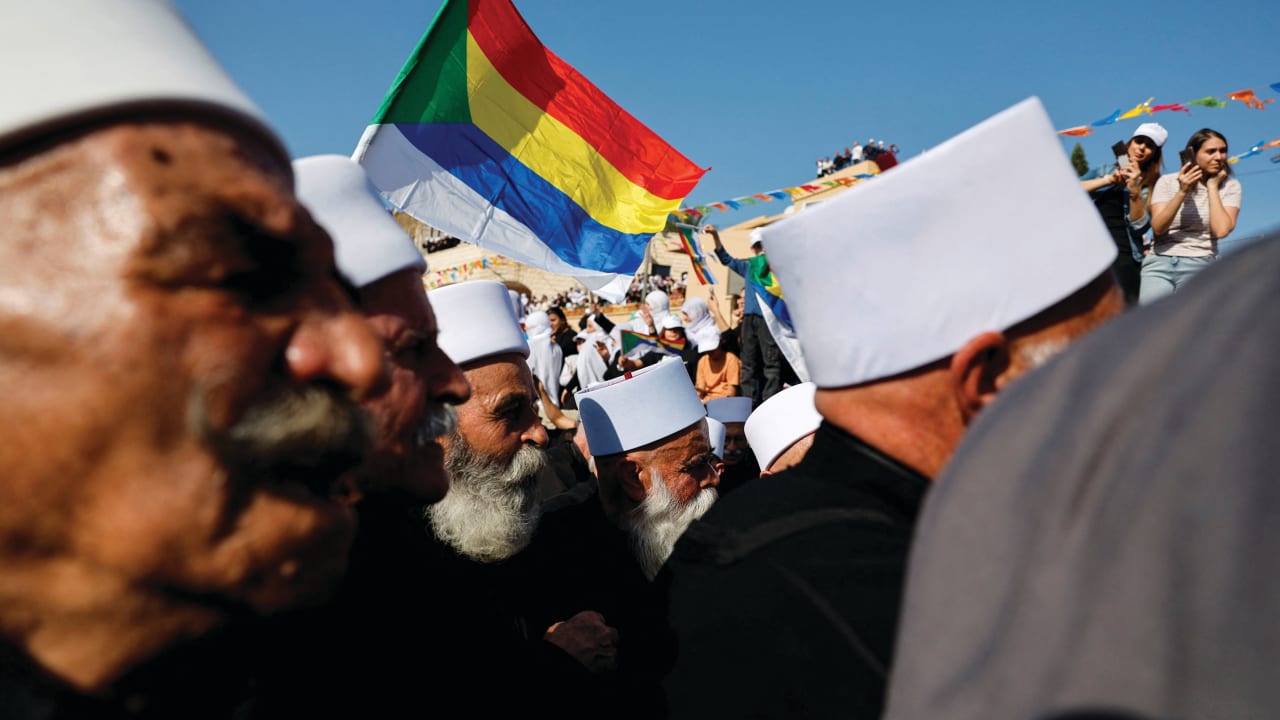
Various Druze factions and groups in Sweida in southern Syria have combined their forces into a “national guard” that will operate under Druze leader Hikmat al-Hijri, a report on August 23 suggested.
Meanwhile, “a prominent Druze leader in southern Syria demanded on Monday the creation of a separate region for his minority community, as he seeks to unite local armed factions following sectarian violence last month,” Asharq al-Awsat reported last week.
The report referred to Hijri’s call for a separate region, noting that he is one of three prominent Druze spiritual leaders. Other news outlets and social-media reports have made similar claims about the drive for more autonomy and independence in Sweida.
Following the deadly clashes with local Bedouin Arab tribes in which many Druze were killed, the Druze community was now under threat, Hijri said.
He is now appealing to the international community for more backing, calling on the “world and free countries” to support his separate region. Threats to exterminate his people necessitate this move, he said.

At the same time, Israeli leaders have continued to express support for the Druze in Syria. In fact, Prime Minister Benjamin Netanyahu and other members of his cabinet have made this a cornerstone of their Syria policy.
Israel has increased attacks on Syria since the fall of the Assad regime, and last week, it carried out several days of airstrikes.
Israeli officials have referred to Syria’s transitional president, Ahmed al-Sharaa, as a “jihadist.” In addition, not only has Israel said it will defend the Druze, it also wants southern Syria demilitarized.
Jordan and other states in the region have condemned Israeli actions in Syria. The bombing has also led to concern in Washington. The White House has backed Sharaa, and members of Congress have been visiting Syria more frequently and expressing support for the new government.
This appears to place Israel far outside the regional consensus in terms of dealing with Syria’s current government.
Possible meeting between Netanyahu and al-Sharaa
Despite the rhetoric backing the Druze, there are increasing Israeli media reports that Israel and the new Syrian government are actually inching closer to a deal and that there have been talks.
“Israel and Syria are expected to sign their ceasefire agreement the day after Sharaa’s inaugural address at the UN, with the entire initiative’s pinnacle being a potential summit between Netanyahu and Sharaa at the UN gathering,” Israel Hayom reported last week.
COUNTRIES THAT are friends with Israel and Syria, such as Azerbaijan, have sought to mediate. Ankara, which backs the new government in Damascus, has been much more critical of Israel.
Meanwhile, “The first aid convoy entered on Thursday the Sweida southern province via the Damascus highway,” Syrian Arab News Agency (SANA), Syria’s official news agency, reported last week. “This is the 21st aid convoy, which comes within the humanitarian response program for the southern region.”
Trucks containing various supplies had arrived in Sweida, the report said, adding: “The aid was provided with support from the World Food Program, UNICEF, and the United Nations Population Fund.”
This further reinforces how Sweida has become cut off from government control in Damascus.
Hijri may have been emboldened by Israeli airstrikes and support in July and thinks this could lead to Druze independence.
Nevertheless, it’s not clear how his region in Sweida would function as an independent entity. It would likely face opposition from the Syrian regime, which doesn’t want countries breaking apart. This could lead to clashes and violence.
While Israel has said it supports the Druze, involvement in a complex war of independence in southern Syria or backing a breakaway Druze country would be much more complex than a few airstrikes.
The history of these types of breakaway republics or separatist regions is not positive. Would the Druze end up like South Ossetia, an unrecognized republic in the Caucasus?
Would they become like the Donbas republic in eastern Ukraine or Somaliland? Or would they suffer the fate of Biafra and Katanga?
There are instances where small states that are composed mostly of one group or a minority have broken away. Kosovo is an example, as are East Timor and South Sudan. However, they received international support.
It is unlikely any countries would back a Druze state, and despite Israel’s rhetoric, it’s not clear whether it wants to be involved in this complex adventure.
At the same time, it is also unclear what ramifications this might have for the Kurdish-run region in eastern Syria.