
Parashat Shmini is read at the beginning of the days of the Counting of the Omer – the period between Passover and Shavuot. It symbolizes a process of purification, similar to the journey our ancestors underwent from the Exodus from Egypt until the giving of the Torah at Mount Sinai.
The central theme of the Torah portion is the observance of dietary laws – one of the essential and foundational pillars of Jewish life.
The principles are clear and straightforward: God permitted a person to eat only that which does not harm the soul, with the understanding that everything that enters the bloodstream of the body also affects the soul. As it is written: “Only be strong not to eat the blood, for the blood is the soul” (Deuteronomy 12:23).
Many studies point to a connection between a person’s diet and his or her character and sensitivity. Coarse foods can influence coarseness of spirit, while refined foods contribute to emotional and spiritual sensitivity. Cultures that consume impure creatures tend toward emotional detachment and even cruelty.
For this reason, the Creator gave us clear guidelines – not only for what benefits the body but primarily for what enables the soul to remain open and receptive to spiritual awareness. We are called to avoid introducing elements that disrupt our inner system.
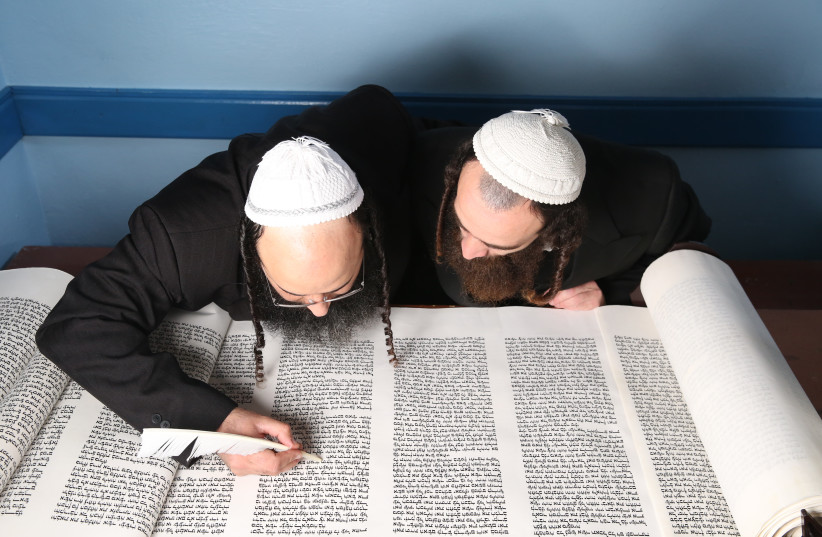
The Torah's unique expression on forbidden foods
Regarding forbidden foods, the Torah uses a unique expression, as interpreted in the Talmud: “Rabbi Yishmael taught: A transgression dulls a person’s heart, as it is said, ‘Do not defile yourselves through them, lest you become defiled by them’ (Lev. 11:43). Do not read it as ‘defiled’ but as ‘dulled’” (Yoma 39a).
The Hebrew word timtum means “blockage” or “dullness.” A person who has become “dulled” is one whose heart is spiritually blocked. Forbidden foods can lead to this blockage – to emotional numbness and a diminished ability to perceive spiritual depth.
This helps explain a familiar phenomenon: Some people strive to draw close to God, to study, and to pray – yet feel nothing. Others, however, are deeply moved and transformed by even a single mitzvah. Often, the difference lies in the purity of the heart, which is shaped in part by adherence to kashrut.
Mussar literature compares this to a shield coated in oil – arrows cannot penetrate it. So, too, spirituality cannot penetrate a heart covered by a layer of blockage. In contrast, one who purifies his or her body experiences a new openness and a depth of feeling previously unknown.
This idea is expressed clearly by one of the great commentators, Rabbi Shlomo Ephraim of Luntschitz:
“The purpose of the dietary prohibitions is spiritual healing, for the forbidden foods defile the pure soul, drive away a spirit of purity and holiness, and give rise to dullness of mind and a tendency toward cruelty” (Kli Yakar, Lev. 11:1)
The human soul is like a precious diamond. Even the smallest blemish can dim its brilliance. Our responsibility is to keep it polished and clear – not only by avoiding what is explicitly forbidden but also by maintaining a high standard of kashrut, so that nothing, even inadvertently, enters and dulls the heart or weakens spiritual sensitivity.
In the modern world, where culinary abundance is vast and temptations are everywhere, this challenge is even greater. Travel, exposure to different cultures, and diverse cuisines constantly test a person’s resolve. Yet many attest that those who keep the dietary laws benefit from this. The heart remains clear, and the spiritual connection stays alive and vibrant.
It is not always easy. But as the wise man taught: “The body is the vessel of the soul, and when you choose what to place in your mouth, you are choosing the raw material of your spirit.” The result follows accordingly.■
The writer is rabbi of the Western Wall and holy sites.