
Throughout all the Torah portions in the Book of Genesis, until now, the line between the “good side” and the “bad side” was clear: Adam and the serpent; Noah and his generation; Abraham and Lot; Isaac and Ishmael; Jacob and Esau.
Suddenly, in the Torah portion “Vayeshev,” a different kind of conflict unfolds between Joseph and his brothers, the 10 tribes. Here, there is no wicked figure against a righteous one, but rather a dispute between two worthy sides.
Anyone who studies the portion finds himself in an emotional storm: Joseph, the “son of old age,” born to Jacob and Rachel, whom Jacob so loved, receives special affection from his father. His brothers, the sons of Leah and the maidservants, grow jealous of this love and struggle to tolerate his dreams and words.
This is not a clash of good vs evil but a deep disagreement about leadership and the path by which the people of Israel should develop. However, this disagreement leads to a harsh outcome. The brothers nearly kill Joseph, until Reuben steps in to save him. Joseph is cast into a pit full of snakes and scorpions (according to the Talmud), and then is taken out of the pit and sold to merchants, who take him to Egypt. There, he endured 22 long and difficult years, separated from his father.
To understand this painful process, we must pay attention to a subtle hint in the Torah’s language. At the beginning of the Torah portion, Jacob instructs Joseph to search for his brothers. He loses his way and suddenly meets “a man” – according to Jewish tradition, the angel Gabriel – who asks him what he seeks.
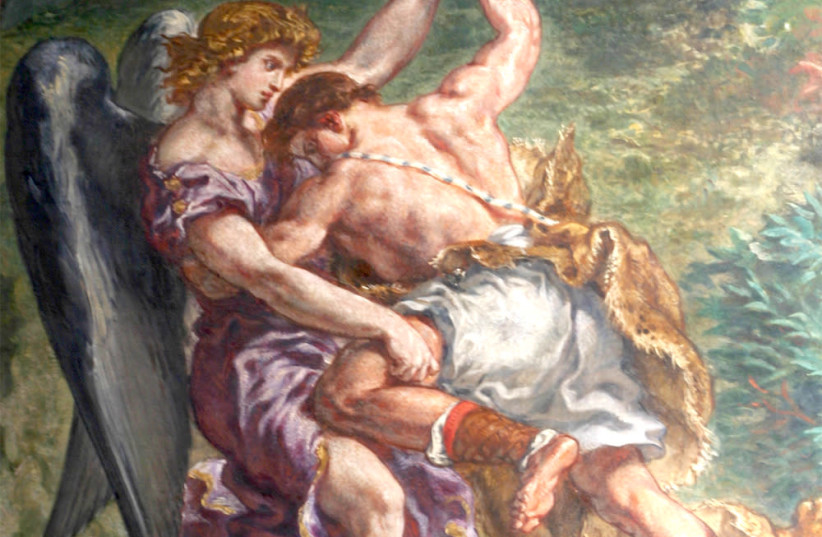
Joseph replies: “I seek my brothers; tell me, please, where they are pasturing?” (Genesis 37:16).
The “man” directs him to Dothan, where the brothers are grazing their flock. When he approaches them, the Torah says:
“They saw him from afar, and before he came near to them, they conspired against him to kill him. They said to one another, ‘Here comes that dreamer’” (Genesis 37:18-19).
Here, the contrast is stark: Joseph speaks of his brothers with affection – “I seek my brothers” – while they refer to him as “the dreamer,” a term expressing alienation rather than brotherhood.
The Ohr Hachaim explains the cause of this shift in attitude: “‘They saw him from afar’ – meaning from a distance of the hearts; they did not see him as brothers see a brother but as someone distant from them.”
The grandson of the Chatam Sofer, Rabbi Shimon Sofer, in his commentary Shir Ma’on, adds: “One may explain by way of allusion: They did not have a close relationship with Joseph and did not truly recognize his lofty character and righteousness. Therefore, they suspected him, thinking he intended to harm them and rule over them.
“Joseph understood that because they were distant from him, they did not know his inner truth, and so he was suspect in their eyes. He wanted to draw close to them, but before he could come near, they had already judged him.
“This is the meaning of ‘they saw him from afar’: intellectually, they saw only his exterior; they had already plotted against him before he had drawn close to them and they could learn his true nature.”
These teachings reveal a profound human truth: Most conflicts in the world do not stem from malice or negative intention but from a lack of genuine understanding.
When people look at each other “from afar” – emotionally, culturally, or socially – they fail to see the depth of the other person. Instead of understanding, suspicion, division, and conflict arise. But when people draw close, when they allow themselves to hear and be heard, hearts open and difficulties fade.
The danger of distance is greater than ever
In the modern age of digital media, the danger of distance has grown even greater. In a world where firm opinions are formed in seconds – based on a picture, a headline, or a rumor – division and strife flourish. People express views about things they have never encountered, about people they have never truly known.
But having many opinions is not the problem. It is a natural result of diverse backgrounds. The shared ground among people is far greater than what divides them: Everyone seeks good, everyone yearns for a life of meaning and dignity.
If we learn to draw near – to understand, to listen, to truly see the other – we can build a world of unity and peace.
The writer is the rabbi of the Western Wall and holy sites.